Hello blog – it’s been awhile, hasn’t it. 2019 was a busy year for Christine and I. We bought a condo on the isthmus of Madison and have been preoccupied the past few months getting it somewhat settled. It’s winter break again for us, and we decided to keep our travel close to home, acquiesce to my parents’ suggestion, and do something relatively unusual all in one – a visit to Cuba. My parents visited several years ago with a homestay and guided tour and absolutely loved it, so we already had a connection. It was a simple matter for them to put us in contact with their host, a jubilant, extremely friendly woman named Tamara.
Tamara gave us all the information we needed to feel confident about buying the plane tickets. She scheduled the tours and most importantly, the transport (gasoline is about as expensive in Cuba as it is right now in Madison, WI – $3 a gallon. But the average Cuba makes about $60-70 a month – not really comparable). Our tickets would have us do an overnight layover in Mexico City first. Great! We were there in spring 2018 from Panama, this would be a great chance to get tacos again.
And it was! Unfortunately delays at O’Hare meant that we didn’t get to Mexico City until 9pm or so, and our Midwestern stubbornness (read: lack of preparation) meant that we walked for 30 minutes from the airport to a bus stop, where we would have paid 7 pesos per person (about 30 cents) for the option to ride an hour to a stop 15 minutes walking from our hotel. Then Christine pulled out her phone, risked the international roaming fees (we hadn’t bothered to find out that AT&T had made roaming in Canada and Mexico free in the past couple years before leaving, and both of us – me with AT&T prepaid, and she with post-paid – would just use our plans as normal while in these two countries) to determine that an Uber would be 48 pesos. About $3 in other words. We looked at each other at the bus stop. This seemed like the better deal… What the heck were we doing. We got our uber and were delivered to our hotel in 10 minutes.
The DF (districto Federal, even though they don’t use the name anymore) is a huge city. Unfortunately the region we were in wasn’t teaming with action. Heck our hotel was in a shopping mall and it took us another five minutes to figure out we needed to go through the underground parking garage to reach the elevator to take us into the hotel itself. The place was nice though, and the sympathetic attendant told us that around here, there would be no late night tacos. She was truly sorry. Unless we didn’t mind taking a taxi or uber? She could recommend a 24-hour place, in that case.
The two of us continue to be somewhat gluttons for punishment. “surely there has to be an open taqueria at 10pm in the area, this is the DF” one of us probably said. We then proceeded to waste the next 45 minutes circling a large trash dump a block away from the hotel, searching for a google maps-recommended “tacos de Sergio” which was open til midnight, so we had to hurry. We passed oozing open mounds of trash split open on the sidewalk, a muttering man in a winter coat with a huge pit bull on a leash and 4 other barking dogs around him, but when Christine and I walked through a section of town without street lights past a pile of garbage that suddenly tinkled with unexpected movement, she shrieked and bolted away from me at high speed, power walking in a way that would make Richard Simmons proud. “My mom has said she’d like to visit the City with me,” she muttered as I jogged to rejoin her. Christine and I have always traveled el cheapo all the years we’ve been dating. “We’re getting an uber back from this, though” – (note, we didn’t – I just took her around the other side of the dump that was on the main road which had all its street light working. Savings!)
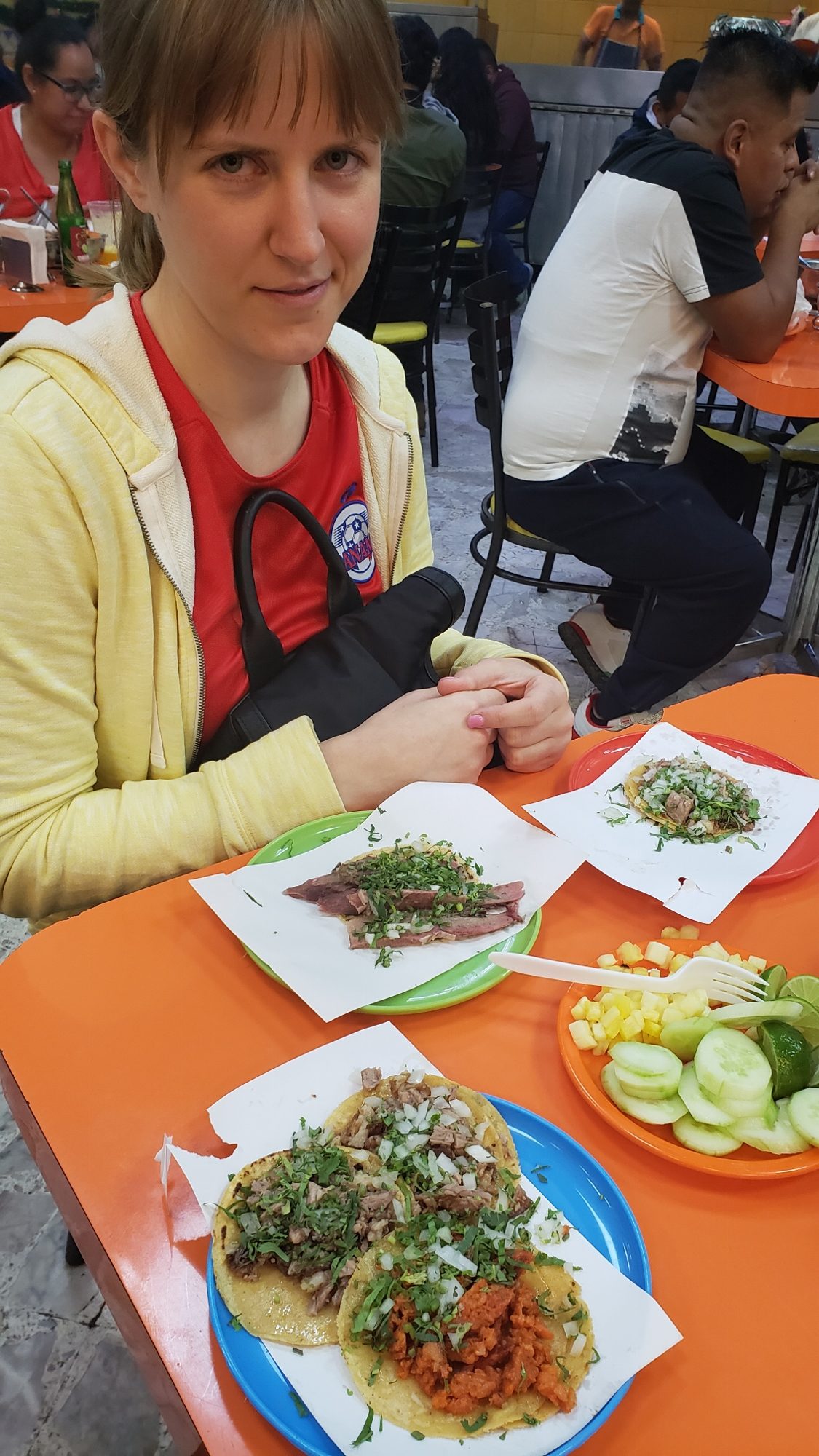
Mission 1 for tacos a failure, we regrouped at the hotel, discouraged and smelling slightly of sewage. The recommended taco place shown like a beacon in our minds, and we didn’t begrudge the $3 ride to Tortas Gigantes de Sur 12, the hotelier’s recommendation. A great find! Hopping with hungry nightlife and with a bonus second street taco stand a block away, we ate our fill of tacos, milkshakes, and fried sweet plantains for an hour. There were so many taco options on the menu we couldn’t even translate them all, and we waddled, grease-laden, back to the main street to collapse into another uber, fully giving ourselves away to convenience over thrift.
Three hours later, our alarm clocks awoke us at 4:30. The free shuttle (yes!) from the hotel to the airport left promptly on each hour, and our flight to Havana would be at 7:30. There was much patient, mind-numbing waiting in queues in the airport – despite the fact that we never check baggage anymore, when you’re flying to Cuba, special “travel cards” are needed to be purchased and confirmed at the check-in counter. Make sure you buy your travel card for approx 20 USD at the appropriate counter first, before waiting at the check-in line. Ask me how I know.
Continue reading this post…