HeiseHeise.com

The Personal Blog of Zach Heise

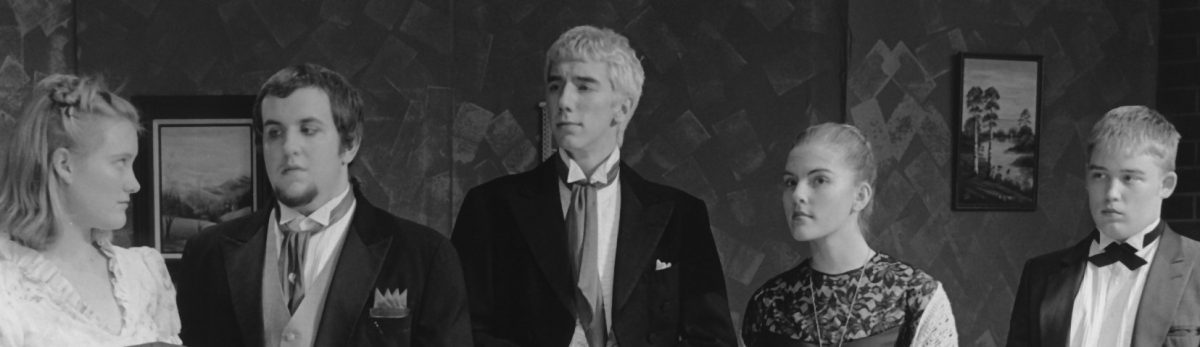
The Importance of Being Earnest, 2002 - C: Forrest Herr
The Importance of Being Earnest, 2002 – C: Forrest Herr

A random image. Reload page for more. Want more info?

Category: Biking

  • Oaxaca Rocks, big and small

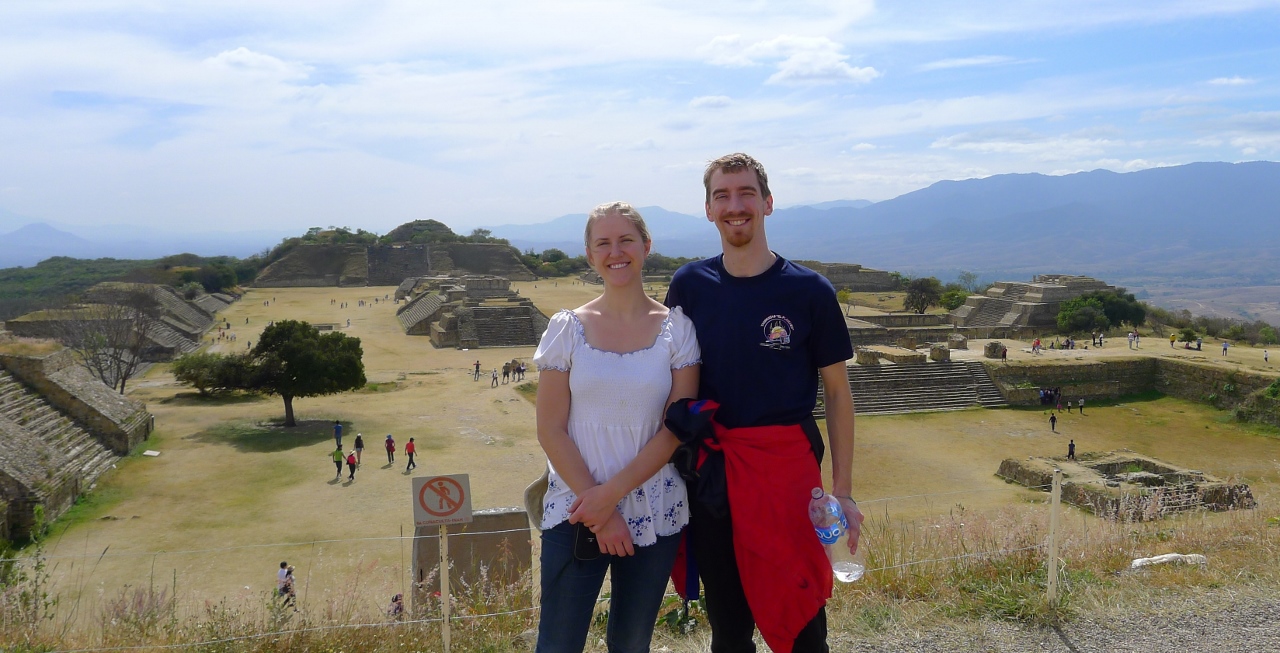
    Monte Alban, North main platform: Here's squinting at you, kid
    Monte Alban, North main platform: Here’s squinting at you, kid

    Like most ancient ruins of ancient civilizations, the Zapotec/Mixtec ruins of Monte Alban are filled with big rocks. Built on a large mountain overlooking the modern city of Oaxaca (the priestly/ruling caste of the Zapotec had a thing for being able to overlook their subjects), Alban has a serene, tranquil feel to it even during the post-Christmas high season. Christine and I took a 60 peso shuttle with a bunch of American-Mexicans on vacation to their homeland to the site and were dropped off in a parking lot filled with vendors hawking cowboy hats, combs, and masks. Admission was a mere 59 pesos each, or about 4 dollars – a far cry from the 70 dinar – or was it dollars? – that one had to pay to see Petra back in 2010.

    Visually, Alban isn’t as impressive. Exposed to the constant sun and summer rainy season, and to the fact that a modern city is only 15 minutes away by car, a lot of the big rocks are missing, leaving only the foundations of the most important buildings, jagged rocks that if you were to lay on them, would either be great massage therapy or painful torture. The homes of the common people would have been built into the hillside below us in terraces (ancient Mesoamericans love them some terraces) and out of mud or daub, and have long since been eaten up by time and the brambles of cacti and scrubby trees.

    To me, Monte Alban could be summed up into three main parts – the central ‘field’, and the north and south raised platforms. We didn’t hire a guide and the English/Mixtec/Spanish informational signs were few and far between, but the empty field seemed to me like it would have been where simple markets and vendors would have set up little tiendas and stands to buy and sell things, with the priestly temples and important political houses surrounding them on the sides. In the middle of the field were a large rectangular raised area which again, was probably for announcements and rituals, but more interesting to me was the angular, offset base off something which the signs thought might have been an observatory. A common theme of every part of the ruins was that it was straight lines, perfectly arranged in north-south alignment. Everything was either squares or rectangles. But if you look here, you can see that the only thing that didn’t fit with this is this ruin, which would make sense if the scientist/priest caste was using it to track particular stars or constellations that didn’t fit with north-south alignment.

    We toured the north platform first, climbing up the steps to high points (which originally had shrines and temples on them) and getting some good pictures and wondering to the farthest north points to see some houses. The guide signs referred to almost everything in the far north by “Tomb Number XX” -> after the Zapotec civilization fell apart around 600-800 AD, the Mixtec people slowly moved into the newish ruins and made the stone buildings into tombs for their important dead. The signs used the words “residencies” and “tombs” interchangeably – it didn’t seem like the Mixtec were much into building their own stuff, preferring to use the probably-still-impressive buildings left behind by the politicians and priests. And of course, they seemed to be happy to cart off some rocks from other buildings down the mountain to begin to create what would eventually be the modern Oaxaca, where plenty of Mixtec-speaking people still live today.

    After lunch at the gift shop’s tasty outdoor restaurant (Christine eating a tamale and me with Oaxacan quesadillas) we briefly stopped by the south platform, which was more of the same but notable mostly for the massive set of steps that were necessary to climb. It seems common in most religions that steps to climb upwards are needed; in order to keep from breaking your neck, your head must be bowed, looking down at your feet, and not looking up and perhaps disrespectfully making eye contact with the religious icons at the top of the steps.
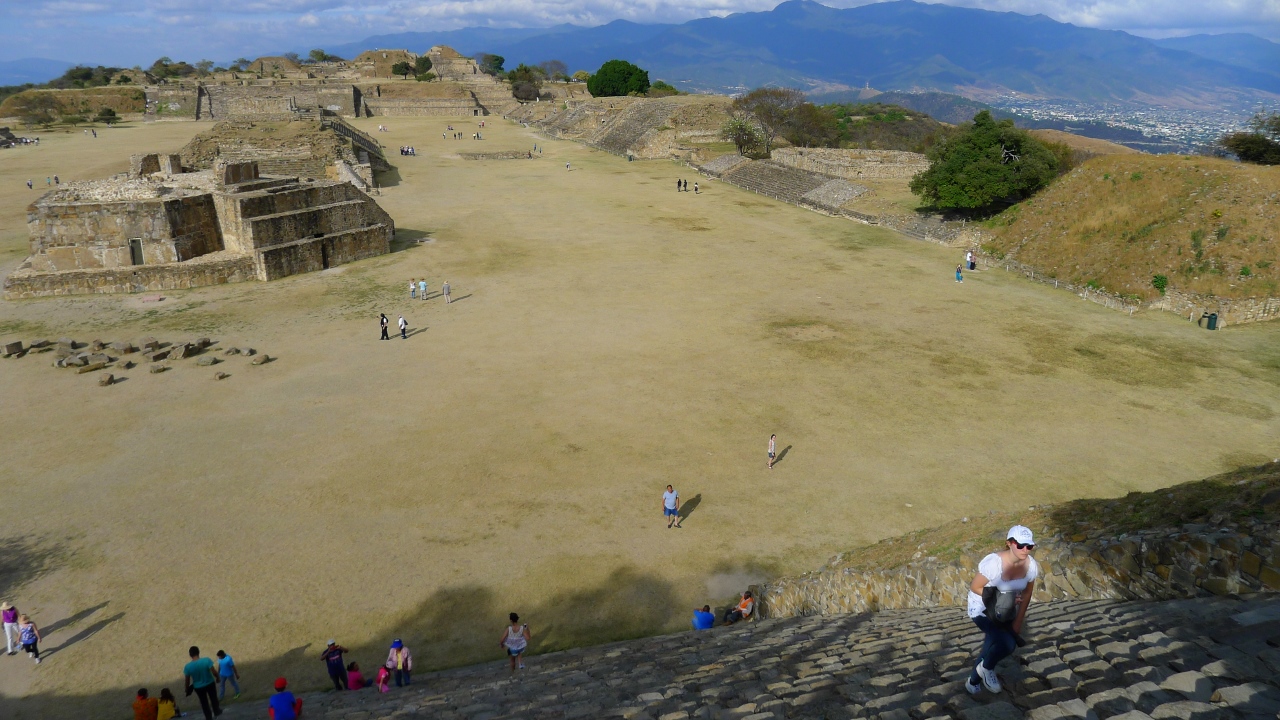
    Christine Carefully Climbs
    Christine Carefully Climbs

    A common theme with Christine and food here in Mexico has been that she will save a few tortillas or, if I let her, a bit of my meat. She’ll wait until no one seems to be watching her, then quickly stuff everything into a napkin or two and into her purse. We haven’t seen a single cat in Oaxaca. Not even one; street cat or otherwise. But there are plenty of hungry street dogs who are almost always frightened of humans and slink away as Christine inevitably crouches and calls pleasantly to them to be petted. Monte Alban was no exception; down near the parking lot where we were to meet our shuttle bus again 3-5 skinny dogs lounged in the shade. I don’t speak much Spanish, but I can hear people talking about time in Spanish and I’m pretty punctual. Our return shuttle was for 4pm, and Christine let a bunch of other people with stubs for 4:30 or 5 take our spots on the bus – I teased her that it was for the express purpose of having more time to feed the dogs the tortillas and meat she had in her backpack! The dogs were, of course, extremely grateful and one of them even consented to be petted. The others guilty grabbed the food and hurriedly retreated away to glonk it down their throats (glonk is the verb I have created to describe how a dog attempts to eat, snake-like, a big piece of food by just swallowing it whole when they’re in a hurry).
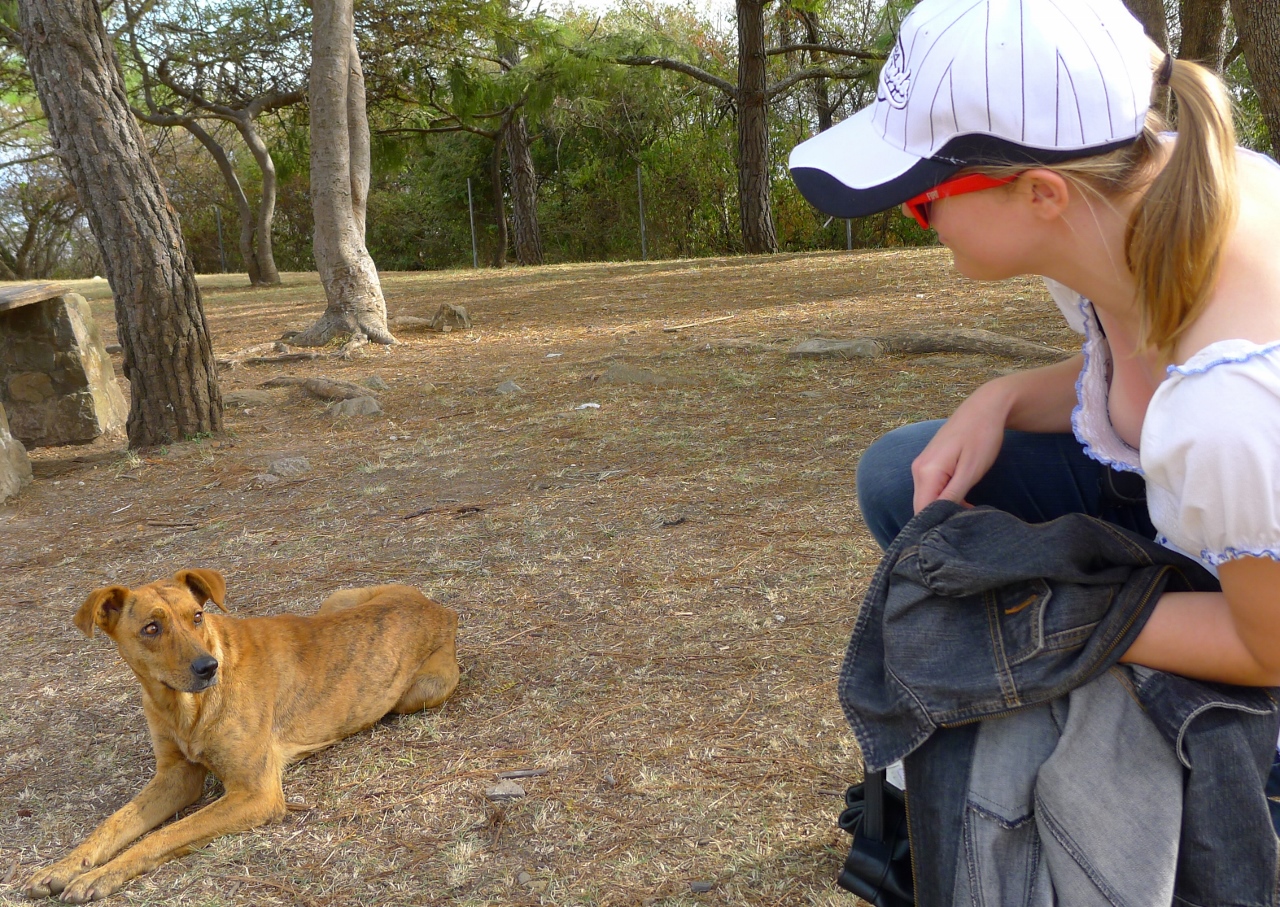
    Yeah, both me and the dog are onto you, Christine!
    Yeah, both me and the dog are onto you, Christine!

    (more…)

  • Serendipitous biking and camping in New Glarus

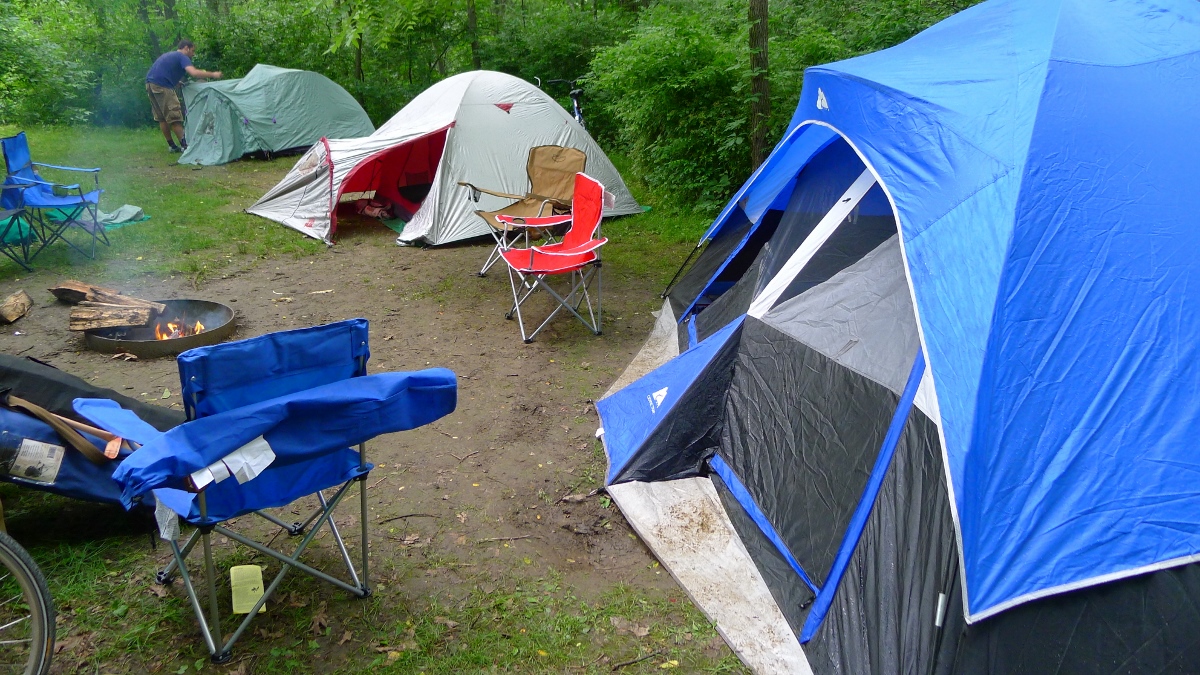
    I just returned from a great weekend of biking and camping, and I didn’t need to leave the state this time to do it! My friend and colleague Caitlin recently purchased a new bicycle, a cyclecross type, and she was eager to put some more long haul miles on it. She and her boyfriend Branden extended a cycling and camping trip invitation to me and some other friends of theirs; a 30 mile ride from Madison down to the New Glarus State Park. Despite living in Brodhead for almost a decade while growing up, a town literally connected to New Glarus by the Sugar River bike trail, I’d never actually been in the town before for any reason, and I was excited to hit the trail, the camp, and a town that’s known for the most famous beer in Wisconsin, Spotted Cow.

    I started from work, taking a half day off on Friday afternoon, and met Caitlin on the Madison trail with serendipitously perfect timing coming from her house, and once again with perfect timing we met Branden coming out of his office building as well. We were all a little nervous about the dreary overcast sky, and the fact that Wisconsin weather has been deluging for the past month. However, as we hit the Capitol City Trail heading southwest out of the city, the cool breeze and shady sky was actually quite a blessing, both for temperature reasons and the fact that we had the trail almost entirely to ourselves. We were all wearing biking clothes, and thankfully we had friends in cars carrying our camping stuff down to New Glarus for us, otherwise it would have been a much more difficult and encumbered ride!

    We stopped for lunch in Belleville, where we flipped a coin and picked one of the two restaurants listed on the Chamber of Commerce website for the town – we had just turned right off of the bike trail and down main street in the city, when Branden happened to look back behind us at the traffic – he shaded his eyes a bit and said “no way…” – it was their friends and our fellow campers Kate and Patxi, her Spanish boyfriend. What serendipitous timing, Branden exulted – what were the chances that we would detour through Belleville, and happen to meet them on the street mere moments before we would have gone into a bar and grill and missed them? The bar, J&M’s (no relation to Brodhead’s M&J’s, I think), served us some amazing swissburgers (lightly charred and crispy on the outside and tender on the inside), and the bartender, Barb, got out her book of “best Wisconsin small pubs” and showed us a few of her favorites since she heard we were heading to the brewery tour.

    Conveniently enough, the clouds opened up and started pouring rain only a few minutes after we went inside, and stopped again right as we were finishing up our second or third pints. Across the street from our pub, a large group of older cyclists, fit men and women in polka-dotted outfits, were getting gear out of a van – our groups recognized each other as fellow spandex-wearers, and they hailed us from across the street and asked the best way to get back on the trail toward Madison – it turned out they were all from Des Moines and were doing a “capitol to capitol” bike ride. Something for us to aspire to, perhaps…

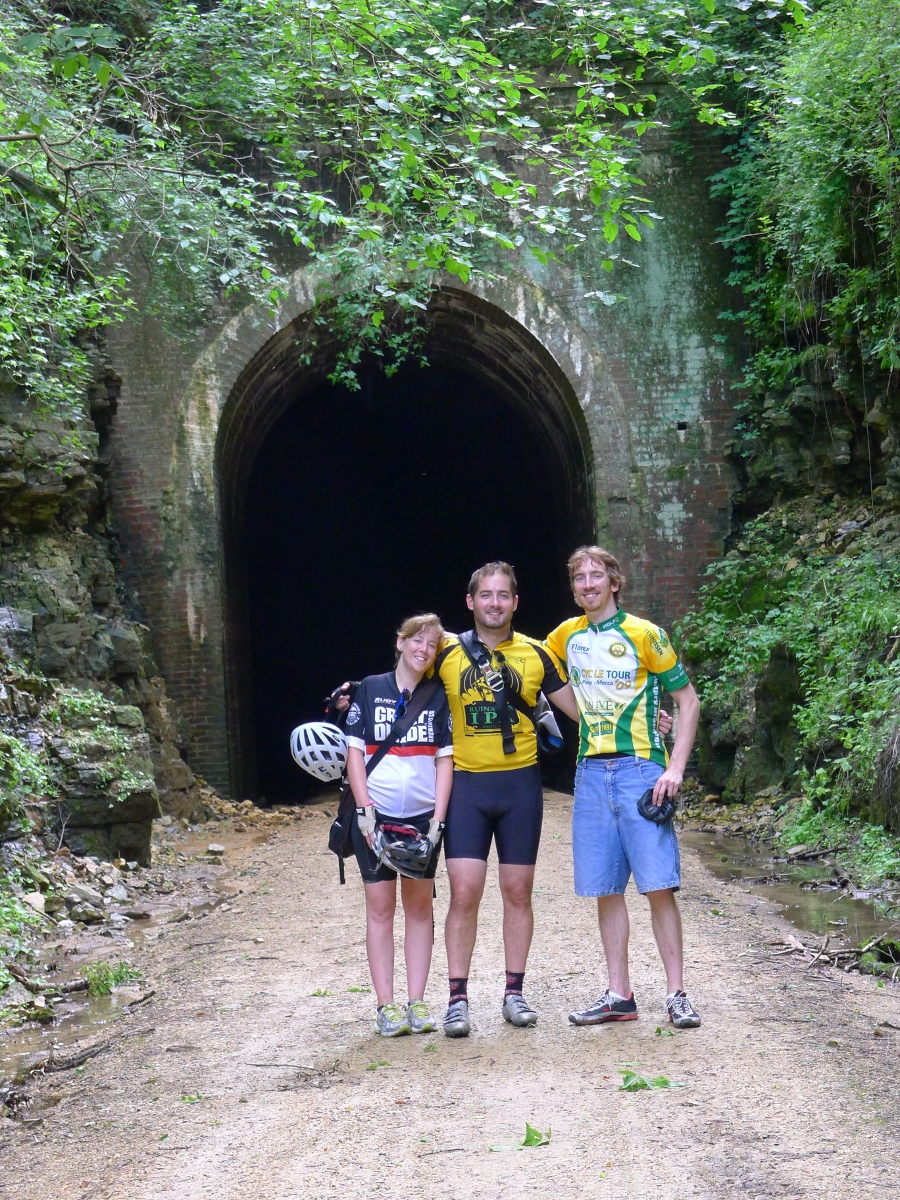
    After another half hour of biking, we came to the New Glarus Tunnel – a massive train tunnel built in 1888 that was surrounded by blasted-out cliffsides that over the past century had become overgrown with beautiful moss, lichen, and low hanging trees. No fewer than two or three springs seemed to be bubbling out of the cliffside; I assume they were springs as they seemed to start in the middle of the rock, and weren’t coming down from the top of the cliff like a creek or stream might. Inside the tunnel, which stretches for almost 1,300 feet, it was pitch black and there were puddles of rainwater as deep as half a foot. Caitlin, on her small new bike, seemed a bit concerned by this, but Branden told us not to worry – just cycle as fast as possible to keep your forward momentum in the water and we should be able to keep our feet dry and the bikes from toppling over. With headlamps and bikelights glowing dimly and with water drips echoing around us, we went forward as fast as we dared – it took us about 2-3 minutes to get through. My bike had fenders – however, theirs did not, and I was the only one who made it to the campsite with an unsullied back.

    Our site had three tents, the other had two. We jokingly referred to ourselves as “base camp zero” – the other was “site B”

    The folks with cars (Danno, Dan, and Kate/Paxti) had already arrived, and it was nice to flop down in my chair (after I had unloaded it from Danno’s car) and relax in front of the fire that they had already started. There was a bit of bad news though – our last couple bikers, leaving a few hours after us on sleek road/racing bikes, had some rough luck on the muddy trails and one of them had gotten a flat. Thankfully, one person’s car had a rack on the back and and Hobbes and Jude were only a few miles away from the end, just after the tunnel. The car sped out there, rescued them, and we were all reunited. (more…)

  • From Moped, to Motorcycle, to Camaro

    Back in my college dorm days, my friends and I were all at the mercy of the Madison Metro bus system, our bicycles, or our legs. If you knew a guy who knew a guy who had a car, you were king of the hill. Of course, once you get out of the dorms in your sophomore year on up, a few of your friends bring their cars from home to store at their new places (if they want to pay the often-ludicrous prices of parking), and once we all graduated and started slowly dispersing either out of Madison altogether or at least to off-campus locations, a car just became part of normal adult life.

    Of course, as my dear readers already know, some of us tried desperately to escape from adult life and the responsibilities therein by becoming fugitives in foreign countries on the other side of the world. By the time this particular escapee returned in 2010, the transformation was almost wholly complete: everyone in Madison that he knew had cars, and he didn’t. It was like high school all over again, except I lived in a city with an employer-paid unlimited bus pass and dozens of bike routes. Getting a car was never high on my priority list.

    However, that’s not to say that I didn’t sometimes long for more readily available transportation. There’s only so many times a guy can get a lift from his girlfriend, or his little brother, or his buddies, before feeling somewhat emasculated. As far as I knew, my buddy David and I were the only folks left in Madison that didn’t have cars.

    Ironically enough, it was on a trip to the Wisconsin State 4-H Fair in early August with David that the hands of fate conspired to end my lack of motorized vehicle ownership. I had borrowed Josh’s car to go to the fair, something I like to do every year on the Showcase Singer’s alumni day – I was a chaperone for them, after all – and afterwards David and I were wandering about the Expo Center, killing time and gazing with glassy eyes at various tawdry sales pitches. Suddenly, we happened upon a display of Chinese mopeds, sold by a local distributor – Propel Imports. A large sign hanging over the largest of the mopeds stating that one of them could even go at 60 miles per hour.

    Although I’d never given mopeds a second glance before – why would I need to, when I have a bicycle? – this gave me pause. I didn’t know that mopeds could even travel that fast, and this one was being sold for around a grand and a half. I envisioned myself mopeding serenely to Brodhead, or to Florida. “She gets about 110 miles to the gallon, and about 110 miles on a tank of gas,” I’d say to the awe-stricken onlookers as they admired my shiny plastic vehicle. I’ve always prided myself on thrift, and a vehicle that could go 60 mph, get ~100 miles on a gallon gas would solidify my thrifty credits. I got the name of the Madison branch for Propel, and dreamt that night of my glorious new mode of transportation.

    State Street Scooters was very helpful, and highly recommended. You have to hand it to the owner of a small store when he’s willing to talk himself out of a $1,500 sale and give an excited, enthusiastic buyer like myself the bottom line – the Daytona 150cc scooter is not what I wanted. In fact, he didn’t carry anything that I wanted. “Sure, you can go at 60 mph for a few minutes,” he told me. “But it sounds like you want to travel long distances on this thing, and at highway speeds, I’d worry that you might damage the engine. It just wasn’t meant to run that fast for that long. You might be fine on it, of course – but I wouldn’t risk it if I were you.”

    I will admit to being crestfallen, and I probably looked that way too. The owner said to me, “Have you ever considered a motorcycle instead?” I told him that I had never thought about it; being from the land of Harley-Davidson, I’d always assumed that it was standard procedure for a motorcycle to cost as much as an automobile, on the order of 10-20 thousand. He laughed in disbelief. “No way, man! Check out Englehart’s or online; geez, you can get perfectly good used cycles for 2-6 thousand. If you were ready to drop $1,500 on the Daytona, you should look into going all the way.” (more…)

  • Jordanian favorites: wadis, cycling, and choir

    Carrying on from my previous blog entry, I awoke the next morning with the sudden realization that I didn’t know what I would have for breakfast or lunch. Whenever I did wadi hikes previously, it was with a house of my own and a well-stocked fridge. I decided to test my luck and hope that Abu Jbara would be open already at 7:40 in the morning – and they were! Six falafel sandwiches over the course of 12 hours? No problem!

    Original bins

    Grace and I rendezvoused with her friends at 7th circle on the way out of town, heading towards the Dead Sea. I had the opportunity to see how the recycling drop-off point, constructed by Entity Green, had changed over the years. When I left, it was a couple of bins with a big sign over it right next to the Cozmo grocery store. Now it had been moved further away into a parking lot, but it didn’t seem to be a slight – the bins had changed into a mobile home-sized green-painted building with separate room, diagrams of how recycling helps the environment, and separated slots for 5-6 different items. I noted they were still collected stale old bread, something that EG used to collect when I was around and resell to farmers to use as feed.

    Entity Green's Cozmo recycling center – it's so big!

    All told, we were eight intrepid hikers heading south through the surprisingly green countryside toward the less-green slopes near the sea. Only a month ago, Jordan had issued a minor “emergency” of several inches of snow, causing school to be closed for two days and throwing the city into chaos. Jordanians barely are able to keep from crashing into each other in good weather days; the addition of any extra element into roads is understandably a recipe for disaster. However, the added moisture had done wonders for the appearance of the rocky terrain, and the weather was warm and sunny.

    When our two cars reached the point that Nelle had told us about, precisely at the “55km to Amman” road marker across the highway from the Dead Sea’s “O Beach”, we found a nice little semi-cleared flat lot. We could expect to see Bedouin on the trip, as Nelle had pointed out a watermelon patch that her groups had walked through on their way back out of the wadi on the northern cliff overlooking the wadi. The Bedouin’s influence on this area would turn out to be quite beneficial to us later in the day.

    At first, I have to admit that we were disappointed. Although there was the usual concrete bridge holding up the highway and allowing the wadi to drain into the Dead Sea…it was absolutely dry. I’d never seen that before in any of the Dead Sea wadis we’d visited before, and I worried that this was going to be more of a rock climb that anything else. Grace even called Nelle (thankfully for us, the nearby hotels mean that there are plenty of cell towers nearby to prevent any loss of coverage, in case of any accidents) to make sure that we were in the right place.

    We shouldn’t have worried – the ground grew damp bit by bit, and finally a small trickle of water was found vanishing into the dust. From there, the trickle turned into a small but steadily gurgling stream, filled with the typical thick green strings of algae so common in Jordan’s wadis. As pretty as it is, it’s probably caused by the overuse of fertilizers by Bedouins – it’s commonly known fact in Jordan that crop farmers receive water and fertilizer subsidies from the government even though the GDP from crops in the country is quite small. Many activists in the country wish the government would stop the subsidies in order to try to encourage Jordanians to grow crops more suited to the desert, but of course that’s not likely to happen anytime soon.

    As we walked through the canyon, we passed in and out of shade quite frequently, a sign of fluctuation in the width and height of the canyon walls. The high exposure to sun, the small amount of water, and the numerous waterfalls, big and small, reminded me a lot of the Wadi Himara hike I’d taken a few weeks before my departure in 2010. Truth be told, although we saw a lot more frogs and crabs than any other wadi hike I’d been on, there was nothing particularly special about the wadi. It boasted several very large waterfalls (probably in the top five in the country, after the country’s largest which is in Himara) that made for a good place to relax and snack in the pleasant shadows of the 40 meter tall canyon walls.

    If you squint, I'm the tiny black dot on the wall of the canyon. It was a slippery climb!

    It wasn’t without dangers, either. One of our eight members, a tall and quiet Asian fellow named Charles, nearly slid to his death (or at least probable injury) as we were climbing up an almost sheer rock face that Nelle had aptly named “the sketchy part” of the wadi hike. Basically, in order to reach the sought-after deeper water pools further up the stream, getting to the top of that 40 meter waterfall was necessary and the sketchy route was the only one we knew. A slight misstep and a strangled “whoa” and I saw Charles begin to bounce down the slope. He was saved by a large fern plant which stoically grabbed at the edge of the canyon wall, and its large fronds waved in his face as he shakily pulled himself back to his feet. I was the last one in the line of our party of eight – Grace and I probably had the most wadi-hiking experience, and some of the members, including Charles, had none at all. None of us had ever been to the wadi before. The only other close calls that we had – and me personally, too, was people bouncing baseball sized rocks past my head as we struggled up the side of the cliff. I encouraged us to fan out as much as possible on the cliffside to prevent a misstep from dislodging killer rocks on each others’ heads.

    (more…)

  • An accidental artistic model!

    Back in early March, I got a comment on this blog from a woman named Leanna who wanted to know if she could use one of my pictures from the 2009 Dead 2 Red race as a model base for a poster she was making for school. Of course I was more than happy to allow her to use my photos however she wanted, and all I asked was that she send me a copy of the finished product that I could display here.

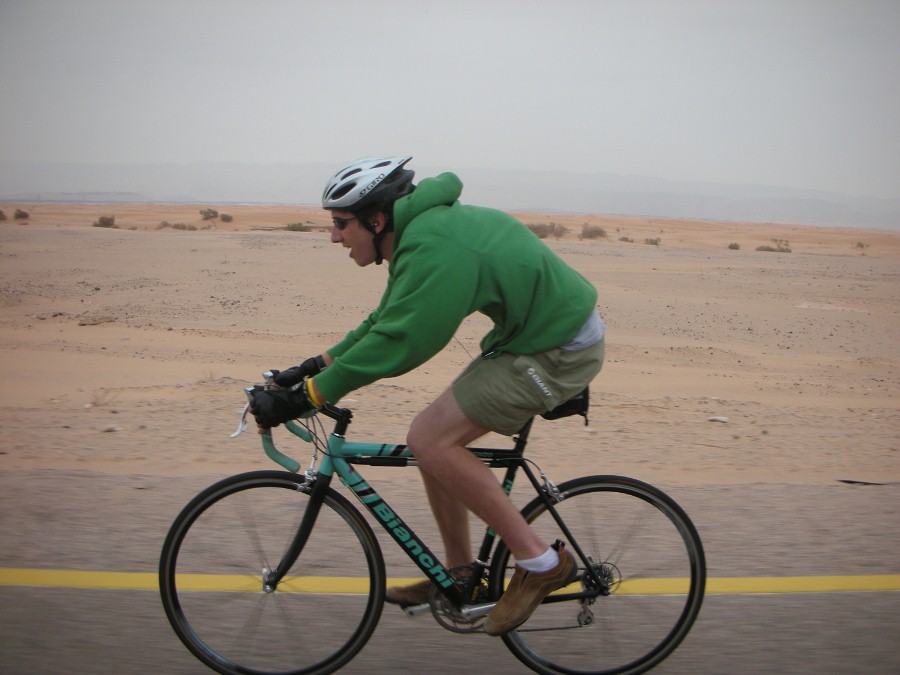
    Here’s the original photo below (and here’s a link to the entire original story of “what is the Dead 2 Red race and what was I doing in it?”

    I never thought that riding a road bike instead of a hybrid bike could be so rewarding!
    Just looking at this photo now, two years later, gives me a longing to be back on that dusty highway with robed men shouting encouraging (hopefully) things at me as I biked through their villages

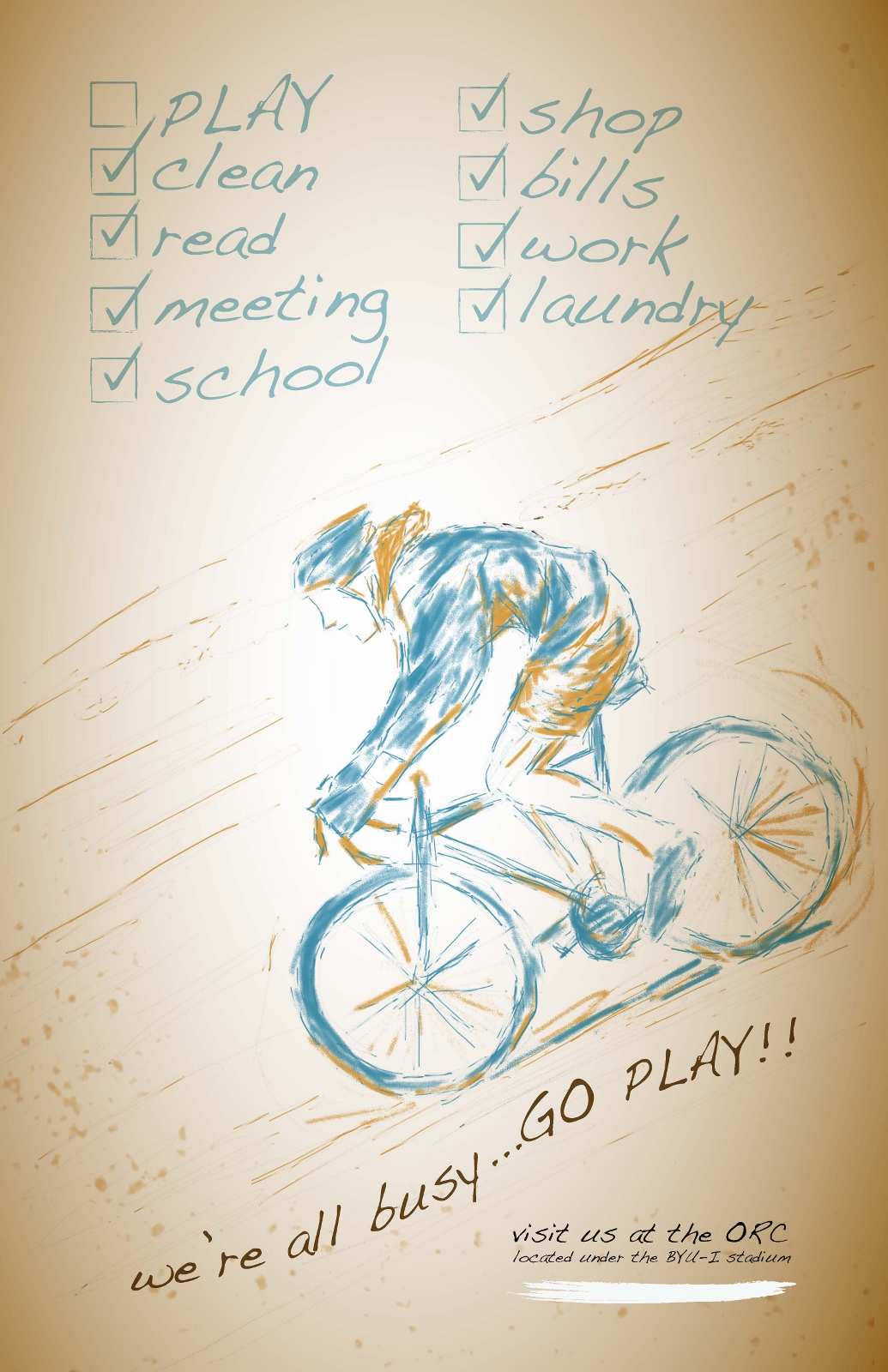
    And here’s the poster art that Leanna made for her sporting organization for her university. I look good in muted earth tones! Thanks for sharing it back with me, Leanna, and I hope that it increases interest in the Outdoor Recreational Club! You can see more of her artwork at her Tumblr webpage.

    This might just be my new Facebook photo for awhile
    This might just be my new Facebook photo for awhile
  • Whiffenpoofs in Jordan

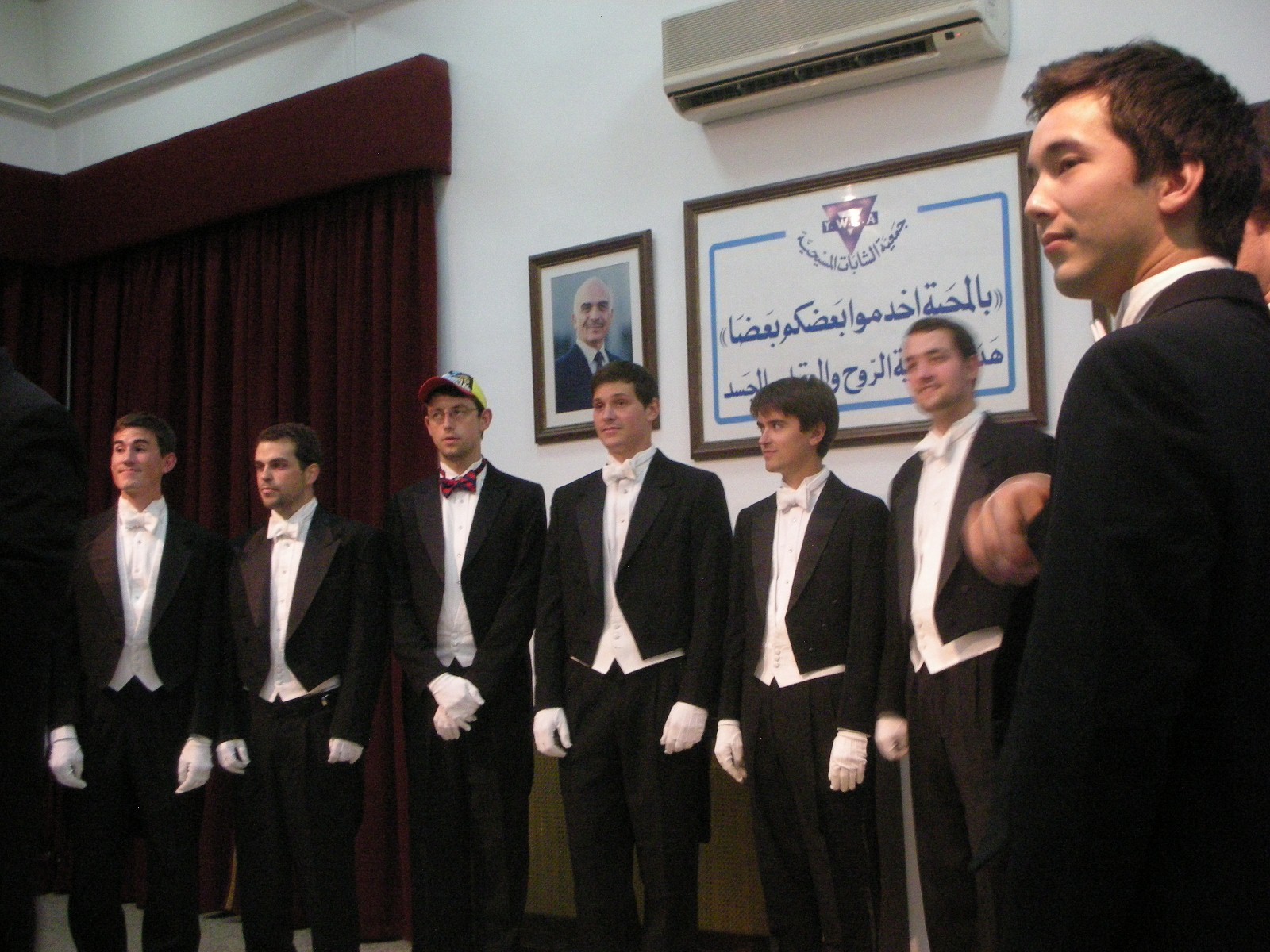
    This past week, Amman had a visit from America’s premier collegiate a Capella group, the Whiffenpoofs. The 14-man choir is currently in the middle of their annual world tour and thanks to the efforts of one of Dozan wa Awtar’s choir members, we were able not only have a joint concert with them this past week but also a little party-social event, too.

    The guys assemble for their first song as the late King Hussein of Jordan watches over them serenely
    The guys assemble for their first song as the late King Hussein of Jordan watches over them serenely

    It was great to be doing a choir event again. My summer has been relatively low-key so far, and part of that is due to the lack of work and lack of choir events. Dozan has been on summer hiatus since the Germany trip returned, and it’s strange to have my Monday and Wednesday nights back again after so much meticulous practicing for those proceeding three months! Thankfully, Dozan will be re-convening for the fall “Quiz Night” in just a couple days now, so we can all go back to having our bi-weekly choir fix again. Last year’s Ramadan Quiz Night was such a big hit that it was almost a given that we’d do it again for 2010.

    For this “mini-concert” with the Whiffenpoofs, we didn’t have our full Dozan choir assembled (many people are gone on vacation) but we sang a few Arabic songs for our standing room-only audience. That was only about 12 minutes, though – the majority of the concert was of course for the Whiffs. After listening to them sing for an hour, the history and tradition that comes from a 101-year-old senior-class choir group with dozens of recorded albums and the pick of the thirty-something other a capella groups on the Yale campus.

    For their rendition of the Flight of the Conchord’s “Most Beautiful Girl (in the Room)” they picked my fellow Austria-traveler Mai from the audience to be the butt of their perfectly-harmonized complimenting/teasing.

    We had a good old college-style party for them at a friend’s house the next night, after they came back from a day’s touring down in Petra (what else would you visit in Jordan if you only had one day to sight-see?). It was relaxing to be able to kick back with the guys when we were all in casual street clothes instead of dressed up in tuxedos and suits!

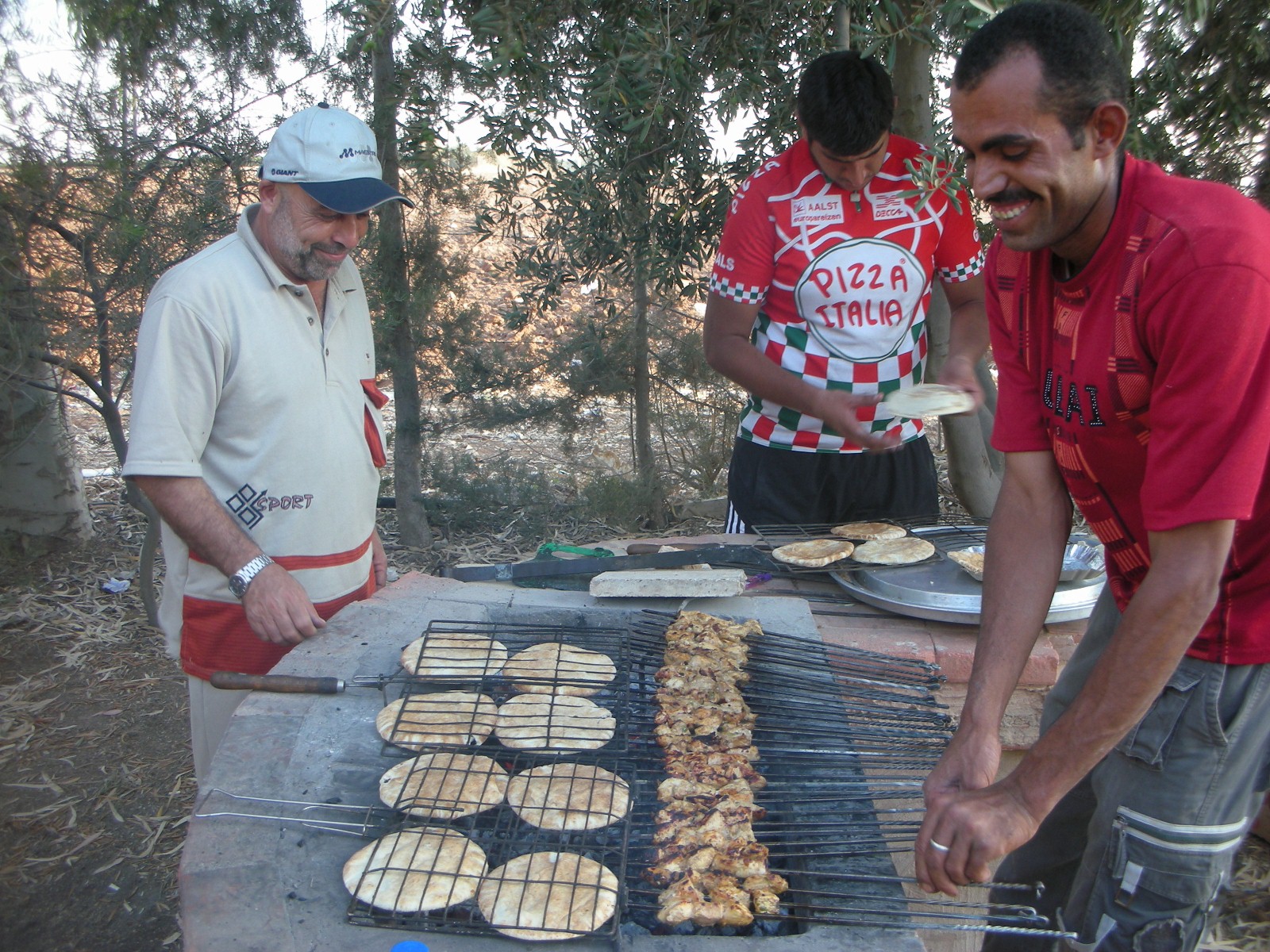
    Today’s my 24th birthday, and I’ll be taking it easy thanks to being sore and stiff-jointed from yesterday’s Friday Ride of 90 kilometers. The Cycling Jordan guys insisted that I join them down at the company farm in Madaba for the post-ride barbecue that the beginner biking group has every Friday evening after their 25km ride. It was a great day, with 60km of hard uphill riding in the morning, and then 30km of gentle Madaba farm roads in the afternoon, with kebab, shish tawooq, and ariys to top it all off. I have to ask myself; I can’t believe I’m leaving Jordan and the delicious food behind! I need to open up a Jordanian restaurant back in Madison, I think.

    Abu Khalid and Ahmad the farm's guard grill the Ariys (flatbread with kebab meat inside) and shish tawooq (grilled and seasoned chicken chunks)
    Abu Khalid and Ahmad the farm's guard grill the Ariys (flatbread with kebab meat inside) and shish tawooq (grilled and seasoned chicken chunks)