HeiseHeise.com

The Personal Blog of Zach Heise

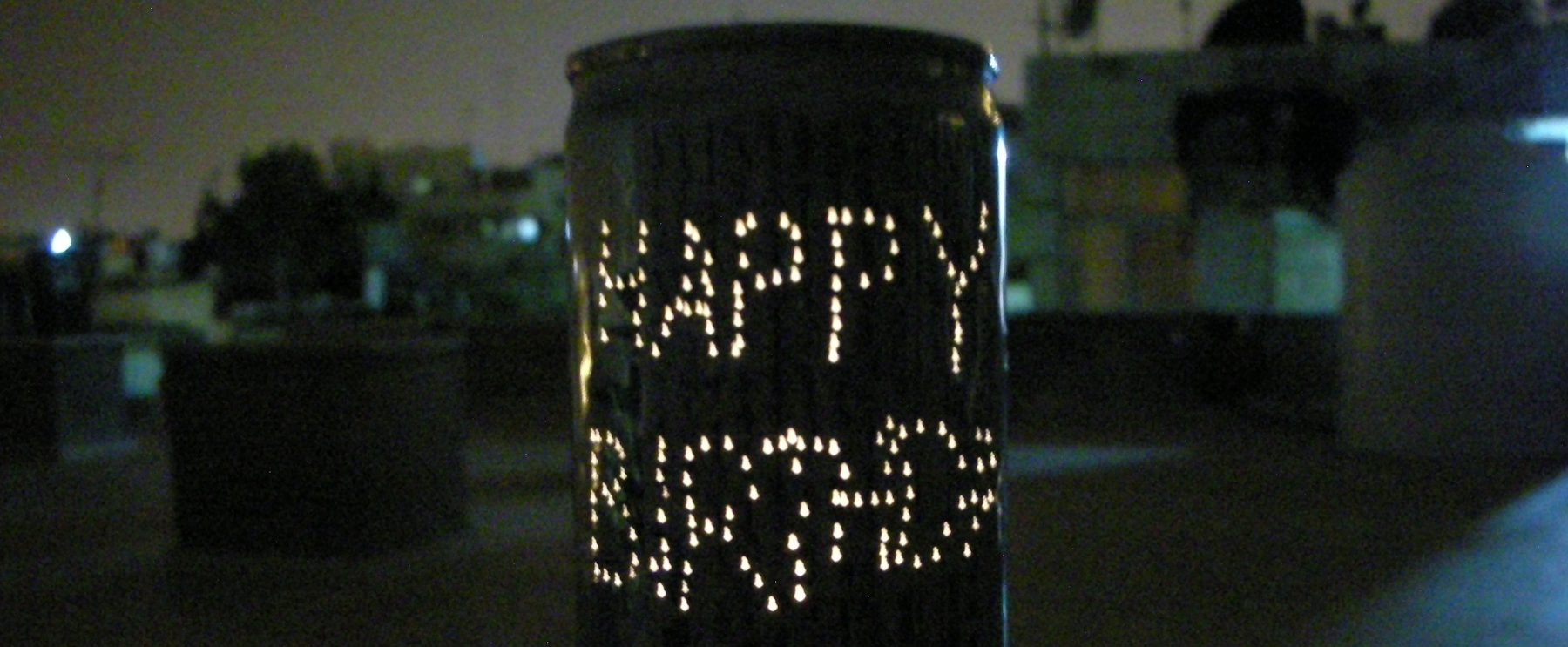
Birthday - can art
Birthday – can art

A random image. Reload page for more. Want more info?

Category: Tanzania

  • Safari day 3 – Serengeti

    Animals seen (new in bold) 

    • The now typical combined herds of gnu, far less zebra though with them
    • A few dozen scattered herds of Thomson Gazelle 
    • Two or three dozen elephants, including four babies born in the past month or two
    • A family of a couple dozen banded mongoose
    • 14 Topi antelopes in a family unit
    • 12 lionesses and their eight month old cubs. No adult males in sight
    • 10 hyenas who were half asleep in a big mud puddle right next to the road 
    • Around 8 Cape Buffalo. First we’ve seen them since the Crater
    • 2 leopards in trees. One got out to unsuccessfully hunt a Bohor Reed buck. Hard to perform when 14 tourist trucks are starting and stopping next to you
    • 2 cheetah females. One immediately after leaving Hugo camp, drinking at a watering hole then walking, sniffing, looking for Thomson gazelle but not seeing any. Another about an hour later in open savanna tracked a gazelle but was stymied by an alert zebra who bellowed and informed the Thomson to keep its head up
    • 2 silver jackals baring their teeth and snapping at
    • 7 vultures who were all hooding and guarding a bit of dead meat
    • 2 ugly Marabou storks following the vultures around. They were picking up bits of bone and offal and cracking it like walnuts in their long beaks 
    • 2 crowned cranes at the same watering hole as the cheetah

    We awoke with the sunrise. More specifically Christine did – I had already been up,  tossing and turning on my cot and trying to find a comfortable way to lie. I had heard several hyenas laughing through the night but none had been close enough to make me worry. The tent was barren of everything but us and our electronics anyway; I was sure there wasn’t enough in there to make us smell interesting, just like scary humans. At several points I had thought I  had heard long spans of something breathing, very close by and rhythmically… But then eventually I turned over and my ear positioning changed and I realized it was just the metal tent zipper scraping slowly across something, over and over again. I seemed to sleep a little easier after discovering that.

    Outside the tent, alone, before Christine awoke, I stopped over to see how Rebecca the Dung Beetle was doing (fine) and heard a quiet rustling in the bushes. I stared hard, wondering if the hyenas had waited until now to pounce. Instead, sprinting away from me with an amusing lumbering run, was a honey badger. Thanks to the Internet’s interest in the HB and its inability to “give a fuck” I recognized it immediately. It was only in my line of sight for about 3 seconds before it ran behind another bush,  farther away, and was out of sight.

    Our morning game drive turned up a couple cheetah as described above as we moseyed north from Ndutu to the Serengeti. They both seemed interested in hunting, with the first one sniffing and slowly turning her head in every direction and walking a pretty clear one-way line. At one point she even briefly climbed a tree (albeit to a very low branch), stared around hard, and then came down to the ground and curled up in a very housecat kind of way. The hunt seemed to be over for her,  at least for now. The same was true in the wide savanna north where we saw the second, but at least in that case there was a definite stalking of a Thomson gazelle. If only the zebras and gnu hadn’t saw/smelled the cheetah and sounded the alert for the otherwise oblivious Thomson, we could have seen a good hunt. However,  Paul pointed out the hyena lurking nearby, about 400 meters away. Even if the cheetah had made a successful kill,  there’s no guarantee she’d have been able to keep it.

    We stopped under this sausage tree (see them hanging in the background?) to eat lunch on the way to the Serengeti.
    We stopped under this sausage tree (see them hanging in the background?) to eat lunch on the way to the Serengeti.

    On our way north, we stopped by a tiny little airfield at the edge of the Serengeti for Paul to register us, and we watched a tiny little 12-seat bush plane filled with tourists take off laboriously, possibly heading towards a private game reserve vs the public national parks that can get semi-crowded during high season.

    Soon afterward we had a bit of minor car trouble- a flat rear driver side tire. We could hear it suddenly start leaking air even with the engine still on! Christine and I sat and read our Kindles under an acacia tree while Nicholas and Paul replaced the tire with one of their two spare tires that are attached to the back of the truck.

    Nothing like a mud bath to keep your fur cool on a hot day

    The roads got rougher – Paul said that unlike Ndutu, where we could basically drive wherever we wanted, in Ngorogoro and Serengeti all the vehicles had to stay strictly on the roads, which resulted in some deep ruts and teeth rattling bounces. Besides a couple of young elephants leaning against trees, gloating mud onto themselves in the heat, we didn’t see any other animals (besides, of course, zebra and gnu).

    Until right before we reached the public campsite, Nyani, we’d be staying at to drop Nicholas and the gear off. We saw at a distance about 5 tourist trucks pulled up around something, and of course we’ve learned that means something special must be nearby. And it was! Our first spotted leopard was lounging in a tree, relaxing with its back to us, tail dangling down like a pendulum. More and more trucks started appearing and then, as if on cue, the leopard stretched, leapt down from the tree and stalked between the vehicles to the east, where a Reedbuck was standing alone, staring off into space.

    A few trucks (there were 15 now,  the most I had seen in one place to look at an animal) kept starting, stopping, or pulling around to try to give their tourists a better view. The leopard’s ears twitched in annoyance at the squealing brake sounds. After about 20 seconds of crouching and looking at the antelope, it suddenly darted back across the road, quick as a flash. The Reedbuck started, and suddenly screamed a rather horrific piercing call several times – obviously a warning call. We watched the leopard angle for position for about 15 more minutes, even after out of the other vehicles had given up and left, but finally the leopard climbed into another tree to rest and even we admitted it was time to move on.

    Just hanging out behind a public bathroom. Y'know, like the cool kids in high school did.
    Just hanging out behind a public bathroom. Y’know, like the cool kids in high school did.

    As we waited for Paul and Nicholas to unload the truck at the campsite, I noticed a small, lean, tube shape running around the wall of the bathroom. It suddenly stood up on its hind legs and jerked its head around. I followed at a distance. Was it a meerkat, completing my Lion King collection? I rounded the corner and suddenly two dozen pairs of beady black eyes were looking at me. I remembered from Paul’s book that these must be banded mongooses.They ranged in size from about 1.5 feet to little 6 inch long sausage babies, a few of which were tussling and making cute little squeaking sounds.

    They stared at me in watchful interest. A few started bowing their heads up and down while still making eye contact. I did the same. They chattered excitedly, standing up on their hind legs. I crouched and rose at the same time. More of them gathered in front of me, bowing and bowing again. I tried to copy them exactly. I had about 15 in front of me, squeaking and coming closer. We all bowed rapidly at each other like we were about to close a business deal in Tokyo.

    Then Christine came around the corner, “what are you doing over here?” and the mongooses immediately scattered, squealing, into the underbrush. A few heads popped up from the weeds and looked back, but the spell was broken. At least, until Christine started tossing little chunks of banana to the group. Suddenly I was forgotten and the little tribe had a new best friend.

    A big family group – males, females, and babies. I wish other species allowed for this!

    Back in the truck, we bounced down the well-suited paths and found a herd of elephants, the largest group we’d seen together yet. There were some adorable little babies, about a month old in Paul’s estimation, running about gleefully with their trunks up in the air, crashing into things like toddlers often do. I noticed something on the mothers that I’d never seen on any other mammals – instead of the nipples  being located on the belly in a line, the elephants had two nipples, each located just behind the forelegs. From that point forward it became easy to recognize male vs female elephants.

    NSFEW - Not Safe For Elephant Work. Something I never thought I'd write on this website.
    NSFEW – Not Safe For Elephant Work. Something I never thought I’d write on this website.

    We saw a second leopard, but it didn’t do too much – just sat in its tree and gazed down at us for about 2 minutes after we arrived, then fell asleep, both tail and one rear leg dangling from the tree. After that, we stayed for about 15 minutes at a pride of no less than 12 lionesses/cubs, the latter were extremely adorable 8-month-olds who made tiny roars, played with each other, flopped onto their backs and waved their paws in the air, and nursed their mothers while growling in contentment. Paul pointed out there was no male adult in sight or sound – contrary to the image portrayed by the Lion King, elder males tend to eat baby males, who they (rightfully) recognize as a threat to their leadership of the pride.

    "Don't make me come down there and like, eat you or something."
    “Don’t make me come down there and like, eat you or something.”
    "Don't mind me though, I'm an adorable restless lion cub with my mom, aunts, and cousins"
    “Don’t mind me though, I’m an adorable restless lion cub with my mom, aunts, and cousins”

    Back at the campsite, the party was in full swing. There were two main pavilions – one filled with shouting, hardworking Tanzanian cooks, and the other filled with smoking, shouting European tourists, about 30-40 by my count. Seriously, the smell was pretty bad. I wish I could say that someday they’ll ban smoking “indoors” at the public campsites but considering the pavilions are mesh screens halfway up the wall, it’s unlikely. And the Spaniard table talked and smoked all night as I was trying to post the last two blog entries (in case you couldn’t tell, diligent readers of Jan 9, 2017, I’m a little bit behind). I had a cough for the entire next day.
  • Safari day 2 – Ndutu Area

    Animals seen (new in bold):

    • At least 5 thousand gnu, running through a river valley with
    • At least a thousand zebra, including adorable brown-striped baby zeebs
    • A few hundred more Thomson gazelle, mostly at a distance though vs yesterday
    • A hundred or so “Superb Starlings” with glorious iridescent plumage
    • A couple dozen Masaai giraffe
    • A couple dozen Cokes Hartebeest
    • Around a dozen ostriches, mostly black and white males but a few brown speckled females
    • 11 cheetahs!!! The highlight of the day
    • 10 lions – but only one male with 3 concubines. Six females were alone many kilometers away, lying in the shade
    • 5.25 dikdik antelopes
    • 3 elephants – 2 bulls and 1 female
    • 3 silver jackals
    • 3 Secretary birds
    • 2 Marabou storks
    • 2 red-beaked hornbills
    • 1 hyena. Technically we saw one yesterday,  at a distance, but it could have also been dead,  and/or a log.
    • 1 Bateleur Eagle
    • 1 (living) leopard tortoise, 1 empty shell with several missing plates
    • 1 industrious dung beetle at our campsite,  who Christine adored.

    We awoke early this morning at 6:30am, ate a quick breakfast and were in the car and heading towards Ndutu. Almost immediately,  we saw a small family of giraffes at a distance and I started snapping pictures that are pretty terrible. I wasn’t sure how many more we’d see. But over the next hour of driving we saw at least a dozen more striding through the acacia trees, delicately sucking the leaves off. We were joined by strikingly beautiful chirping blue birds,  who Paul said were called Superb Starlings. What a name! We later saw them on the ground,  fighting over scraps of bread and cackling. They ran like little robins –  head down, focused, then stopping and popping back up to stare around at everything.

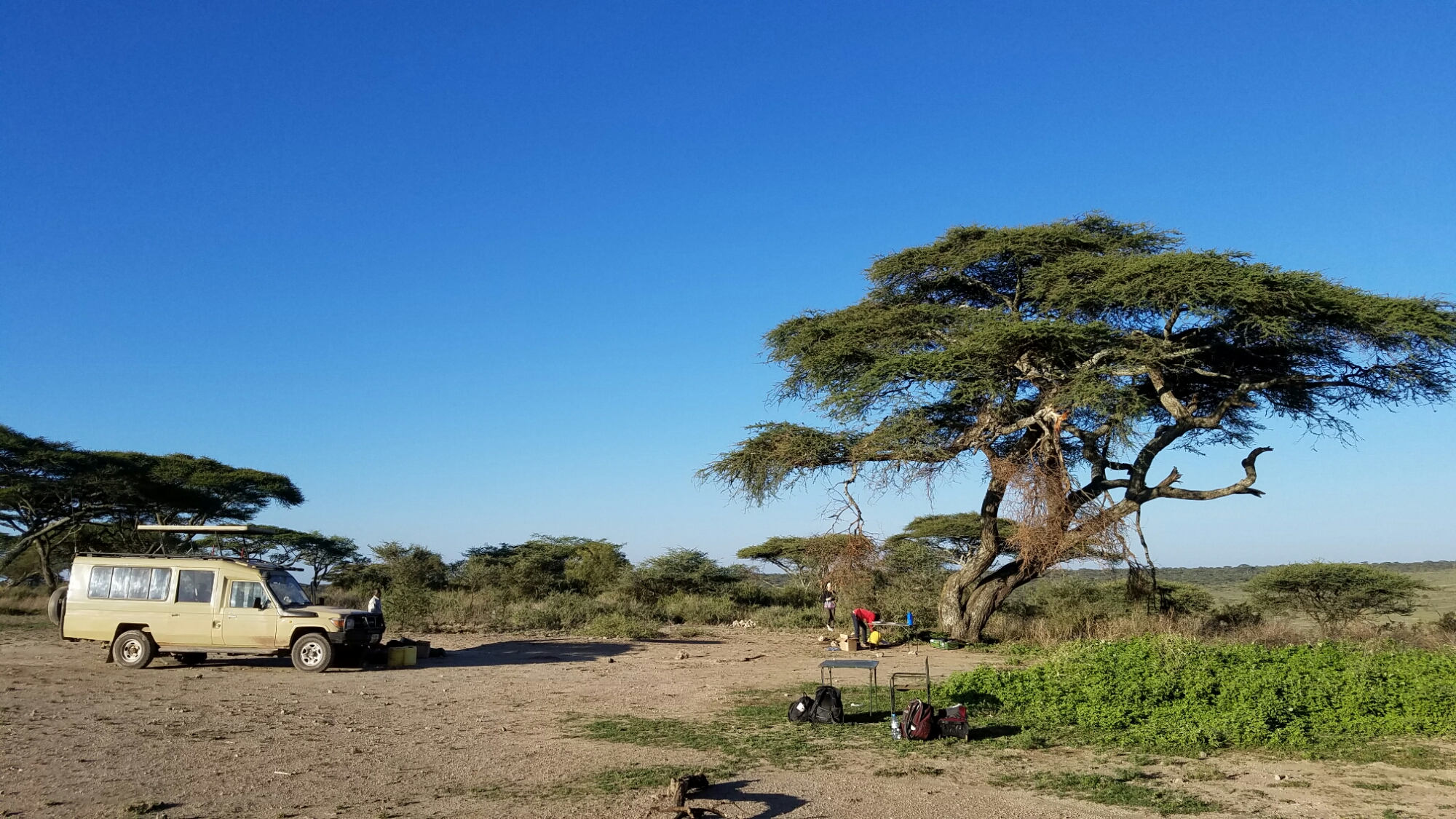
    Hugo campsite. Nicholas cooked under the tree for us.

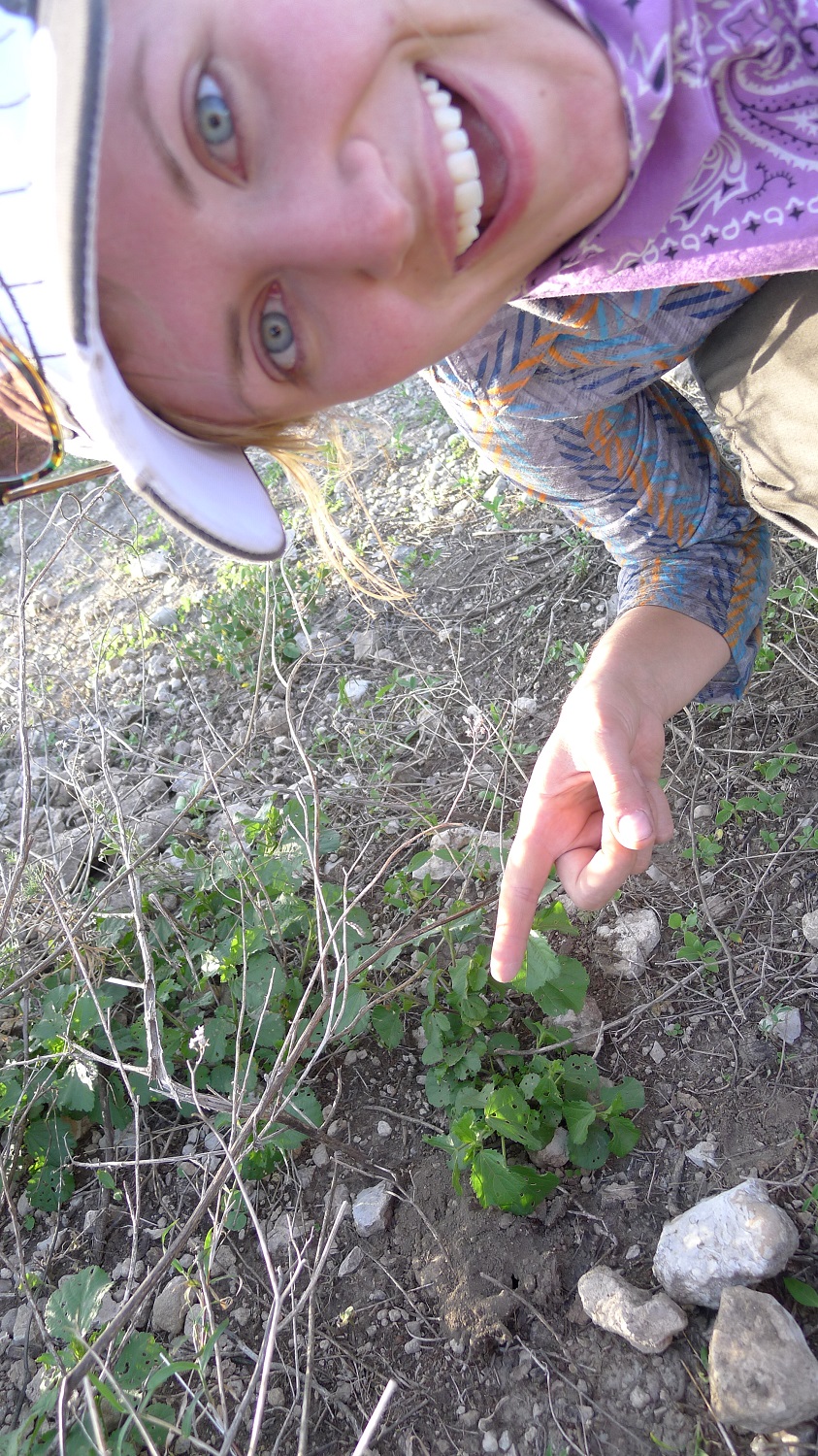
    When we reached Ndutu,  we dropped off Nicholas at our campsite –  called Hugo Campsite after a European who had spent many years here documenting the wildlife – this seems to be a common theme. He would be preparing all the tents and cooking the food. Christine found a little dung beetle pushing a ball of its namesake,  and followed it along its journey of…three more feet. It dug a little hole in the ground,  dragged its ball of dung in after it,  and disappeared. Christine promptly named her Rebecca and set up a bunch of rocks in a pile nearby so we could check on her progress later.

    We descended into a shallow valley that stretched Northwest/Southeast as far as we could see. It was filled with the Great Migration,  the most numerous of all of Tanzania’s wild animals,  the gnu,  and their companion zebras. A couple of hideously ugly storks stood on a nearby bank. Their beaks were so mottled and speckled with grey and brown,  and they had huge pink bladders/sacks under their beaks.

    The front facing camera on the S7 is ridiculously poor but it does the trick, especially on this 3G data plan

    The prey animals stayed down in the valley,  but we soon headed back up onto the western bank and saw a photogenic elephant mugging for a couple of tour buses. Paul estimated him at about 50 years old,  with jagged,  slightly broken off tusks. He was wandering a slow circle around an acacia bush (different then the acacia trees the giraffes enjoy),  pulling shrubbery off the ground and posing all of his sides for the delighted tourists who had far,  far better cameras than me.

    Such big beautiful eyes on the little lady
    Such big beautiful eyes on the little lady

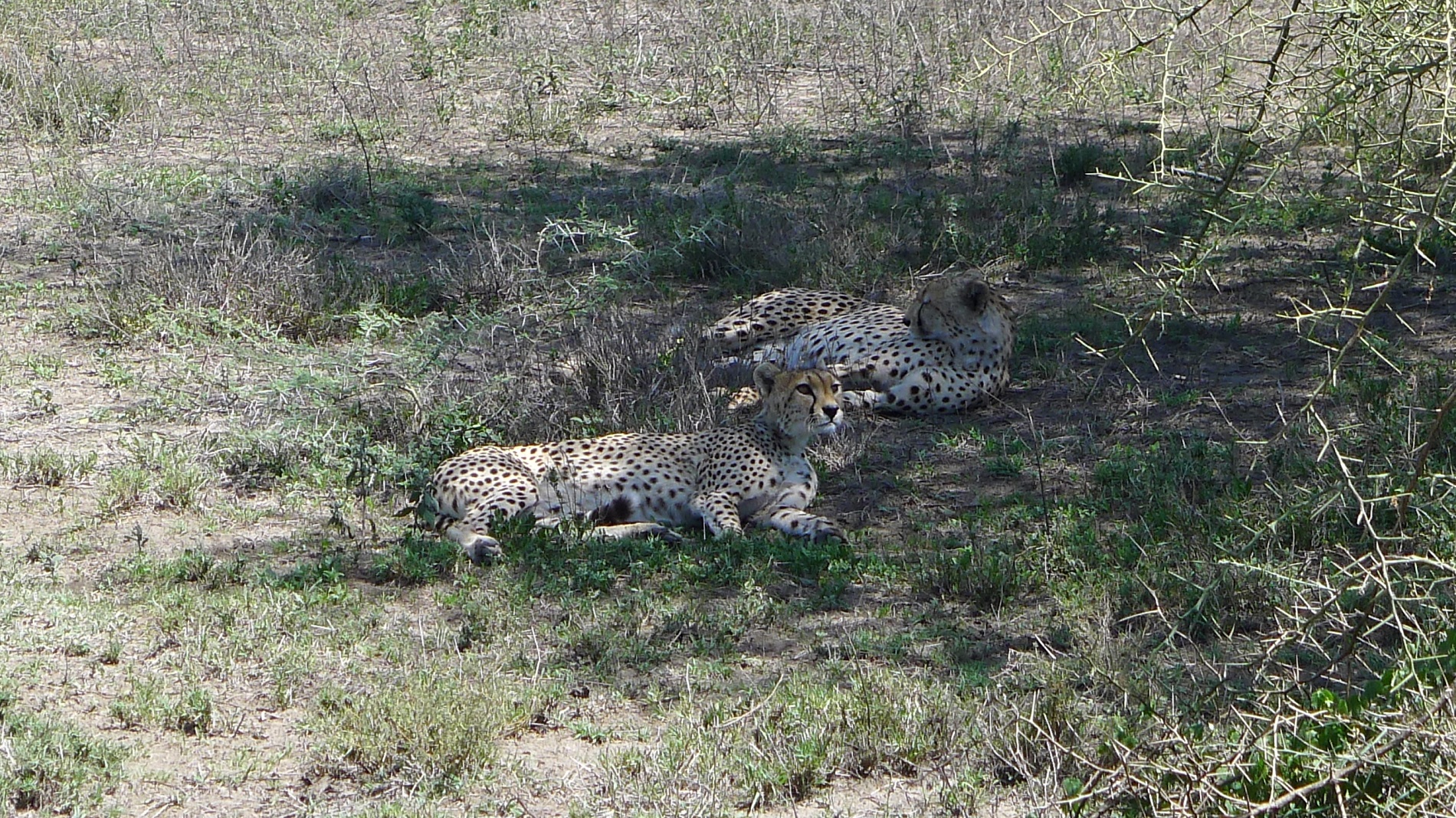
    Moving on,  we came across a pair of cheetahs, and another famous animal could be checked off our list. The pair was lounging on the ground in the shade of a tree, a male and female, with as many as 9 buses around them. They seemed completely nonchalant,  only glancing up from licking themselves and snoozing when a bus started up again to leave (and then be replaced by another one barreling in from some other direction. Paul told us the Swahili we were hearing through the radio were the different buses letting each other know what they were finding.)

    Later on,  on the other side of the valley, we found the cutest possible discovery – a mother cheetah and her cub. Paul estimated the little ball of spotted grey fluff to be about 2 months old. He gazed sleepily at our assembled vehicles, basking in our “awwwws” and nursed his nonplussed mother for a good 15 minutes before the two of them got up and wandered off. We had been wondering where the father was = a few minutes later,  Paul spotted him – or at least another young male cheetah, lounging under a different tree about 200 meters away. The two adults had been casting long glances at each other,  like they were playing “who can stay mad at the other the longest” with each other.

    Note: the next four paragraphs contain some gross stuff, and I’m writing it as descriptively as I saw it.  Skip em if you have a sensitive stomach

    Another 600 meters or so away, we found the grossest discovery yet – a third adult cheetah, the largest one yet, a female,  that was in the process of finishing off the final point two five of a baby dikdik. We parked the vehicle about 10 meters away from her and watched –  and listened – to her crunching away on the shoulder. The “good stuff” had been consumed already – all of the internal organs of the torso were long gone. The four skinny legs and pelt were the majority… And the glazed dead black eyes stared almost accusingly at us, jaw hanging slackly open. “I’m a baby dikdik. I’m really cute. You would have rooted for me to win the race, wouldn’t you? But I didn’t. And now you’re watching me be eaten.”

    This matron cheetah really knows how to...get ahead. Sorry.
    This matron cheetah really knows how to…get ahead. Sorry.

    The shoulders were eaten after about 5 minutes… Then the cheetah started on the head, neck first. Paul then admitted this was a first – in his ten years of tour guiding, he’d never seen a cheetah go for a skull. It was the first time he’d told us that he was seeing something new.

    The crunching noises took on a more solid sound as the skull was crushed and then yes, the cheetah paused and licked the brains right out. The left eye turned from black to white and popped out as the cheetah chomped that side, working on dislocating the dikdik jaw from its joint – then that half of the dikdik head was gone. Christine shuddered a little bit – I didn’t see her, since we were both intently focused on the cheetah, but she said quietly “I know it’s not, but it almost looks like its tiny little mouth is screaming in pain every time the cheetah takes a bite; it opens and closes like that.” The right eye didn’t have a chance to venture out of its socket – the cheetah,  sensing mealtime was almost over, consumed the entire right side of the face in two bites.

    The cheetah licked its bloody muzzle and gazed quickly around it. Paul told us that a single cheetah like this would be nervous other animals might try to sneak up and steal its food – or worse,  attack the distracted and not-good-in-a-one-on-one fight cheetah. “It’s okay girl, we’re watching out for you,” I told it. The cheetah settled down and licked at the spindly little chopstick legs and pelt that was all that remained. A bit of greasy fat and skin held the fur together, and the cheetah carefully licked it clean.  “That’s going to be one hell of a hairball later,” I told her. She didn’t seem to mind, and crunched a leg, showing red-white marrow inside. At long last, she got up, stretched, and walked away at a solemn, stately gait. Paul told us that this was normal – a cheetah can’t win many fights with scavengers like hyenas and would never hang out around the smell of blood which would be sure to be already attracting other meat eaters for miles around.

    As we meandered through the trees, I caught a glimpse of the ears of another cheetah and Paul followed my lead – it was five cheetahs sprawled comfortably around a tree, two pairs cuddling each other with their heads resting on each other’s ramps, and one keeping a laissez-faire watch from under what looked like a thorny weeping willow. They still had the little fuzzy mohawk hairdo on their necks denoting them as young, not yet fully grown teens, about 3 years old. It would be another two years before they’d find mates of their own and try to find their own territory, which Paul told us would be about 20km square. “These nine cheetahs are a family unit.” It was likely that the oldest, largest cheetah was a grandmother of one of the cheetahs with the cub, and she might have been the mother of the 5 three year olds. Most litters were of two, but some could be as large as four. But they would certainly be a family unit –  cheetahs, unlike any other of the big cats, refuse to eat food killed by anything other than a member of their family unit, and they will fight any other cheetah that enters their territory.

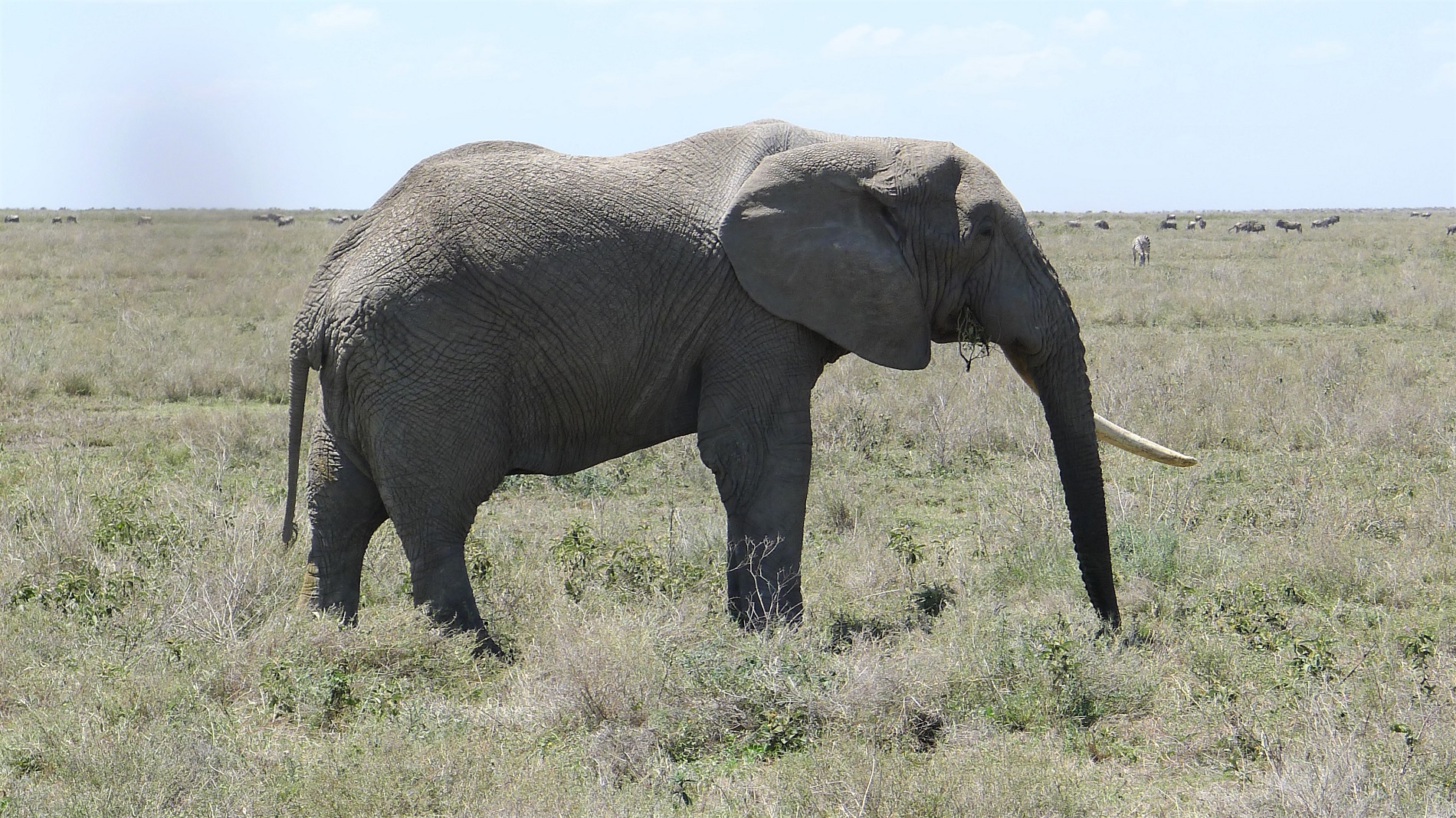
    We were happy with our finds for the day – giraffes and cheetahs were Tanzanian must-sees. Between our two cheetah families, Paul had headed up out of the valley to the far west, where we found a strange and to me,  somehow sad sight – an ancient bull elephant, standing alone in a field. Paul said this was unusual – they like trees, not empty plains. The bull had a single magnificent and huge tusk on his left side, but his right tusk was ripped clean out – not a single piece of it remained. Paul estimated him at 50-55 years old, out of an average lifespan of 60. I thought of the (likely fictional) stories from Kipling’s elephant graveyards…an ancient wise beast, heading off alone to a place no human will ever find, ready to let his body become food for the earth. Or just a slightly senile ol’ boy enjoying the sunlight and brush grass and going to meet his family the next valley over. One of those two. Probably.

    "Don't worry about me, young'uns, I'm just out for a stroll"
    “Don’t worry about me, young’uns, I’m just out for a stroll”

    We broke for lunch under an acacia,  no animals in sight (besides an ostrich strutting eastward toward the valley and ignoring us) and Paul climbed carefully out and walked seriously around the truck, staring at the ground. He was looking for snakes, he said – in the southern hemisphere near the equator “most of them” are poisonous. Also scorpions. Hurray! We chose to eat inside the truck.

    Afterward, we took a meandering route back across to where we’d later meet the cheetahs which would keep our attention for a couple hours. On the way, Paul’s keen eye found a single hyena, brown and muscular, sunning himself on a pile of dirt. When he heard us stop nearby he got up and walked away, displaying a…six inch long penis hanging limply from his belly, practically dragging along the underbrush. “Aren’t they normally pack animals?” I asked Paul. “His friends probably abandoned him because of his weird gross penis,” Christine retorted. Poor hyenas; she never forgave them for their part in overthrowing Mufasa.

    The sun starting to throw the truck’s long shadow to the east, we hurried back to the camp where Nicholas had a delicious dinner waiting – the courses just kept coming and coming. Coffee and bread to start, with a zucchini ginger soup, followed by breaded fish, breaded potato chunks, and a vegetable stew. An avocado salad, and finally freshly sliced mangoes for dessert. Fruit is a typical dessert here and since it took 45 minutes for the courses to all appear it was the only way to know when we would be done eating! Nicholas did not eat with three of us – he was working hard over the portable stove.

    Christine went and checked on Rebecca the dung beetle. She now had a nice, 4 inch tall mound of dirt where her hole had been before, which Christine praised her for. She had been reading in our guidebook that the dung beetle helps keep the fields clean, happily rolling away the mountains of poop the zebras and gun create and making fertile soil for plant life. Go dung beetles!

    Go Rebecca! Dig that mound! Lay those eggs!
    Go Rebecca! Dig that mound! Lay those eggs!

    Paul settled in and told us some important rules for “Bush camping” like we’d be doing tonight. No shoes outside the tent – the hyenas will eat them. When leaving the tent for the call of nature, sweep flashlight both right and left,  looking for reflecting eyes looking back at you. No food or even toothpaste or shampoo in the tent – anything with strong smells. It attracts hyenas. I laughed a bit at this. Paul met my gaze. “I am not joking,” he said in his soft voice. “No food in the tent or in the night it is you who will cry.” Paul is a blunt guy, and I appreciate that. I urged him – begged might be a better word – to continue. Trust me,  Paul, I am listening to every word. I really don’t want to screw this up.

    Sadly, as diligent readers might guess from my lack of posting on the day of, Airtel has let me down. We had barely left Karabu the previous day before 3G and even Edge speeds vanished, leaving me with a strong voice signal but no data. You live and learn, I’ll write a quick post at the end of this laying out where I had data and where I didn’t so other travelers might choose different carriers while traveling to the same places or using the same tours.

    For now, goodnight! Here’s hoping the hyenas don’t find my breath too fresh.

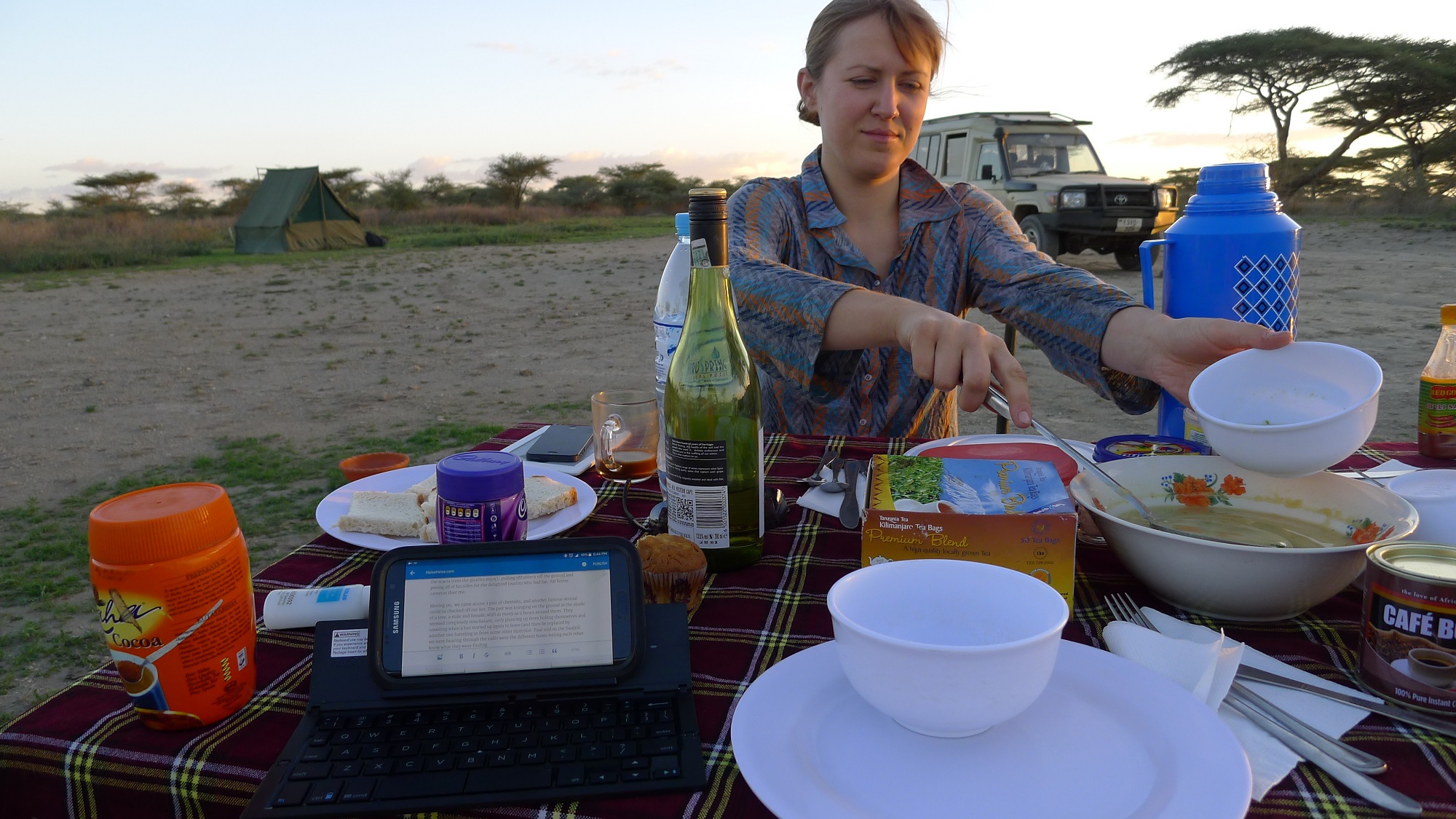
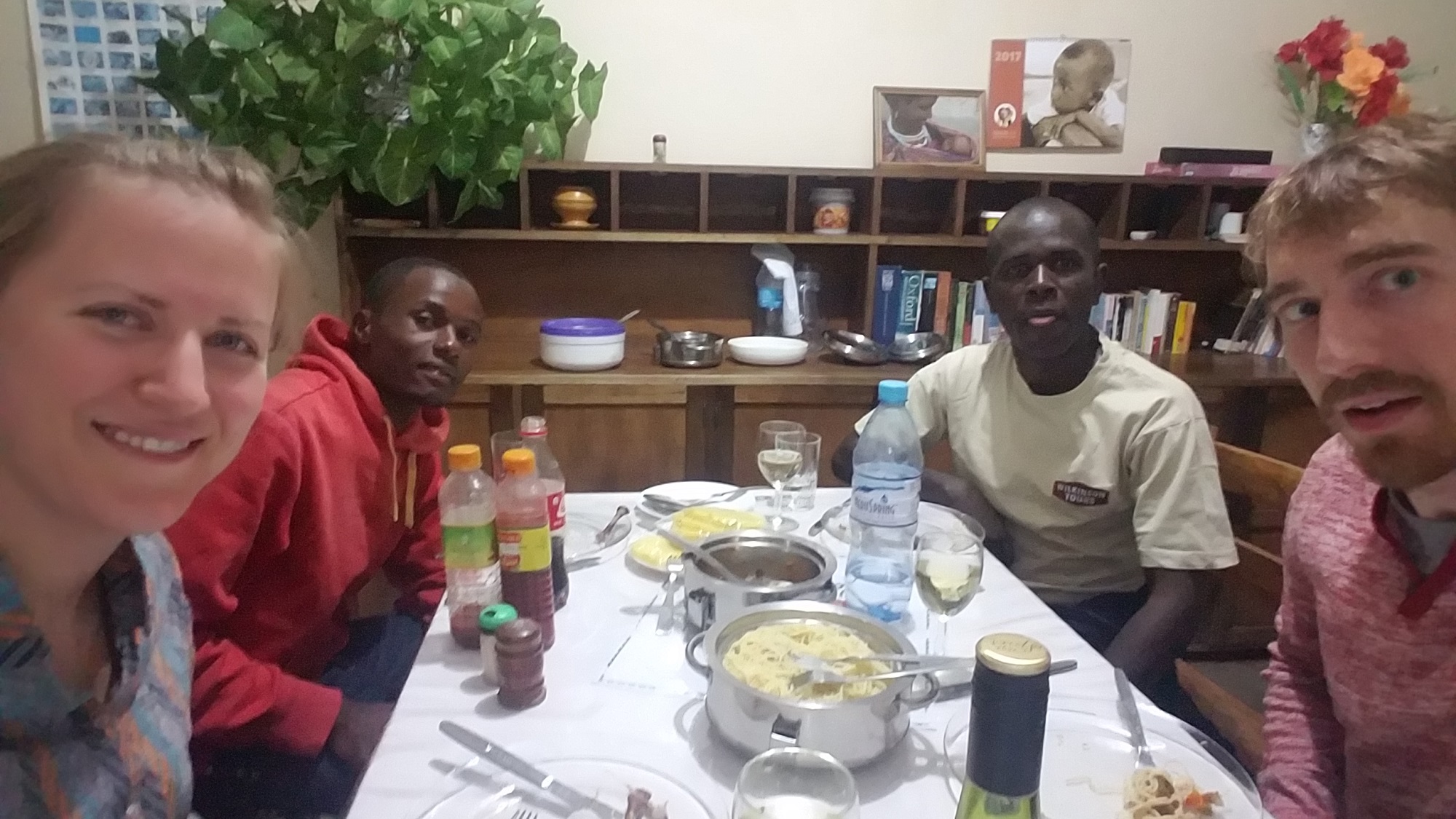
    Dinner, wine, good company, and blog-writing on a phone.
    Dinner, wine, good company, and blog-writing on a phone.
  • Safari day 1 – Ngorogoro Crater

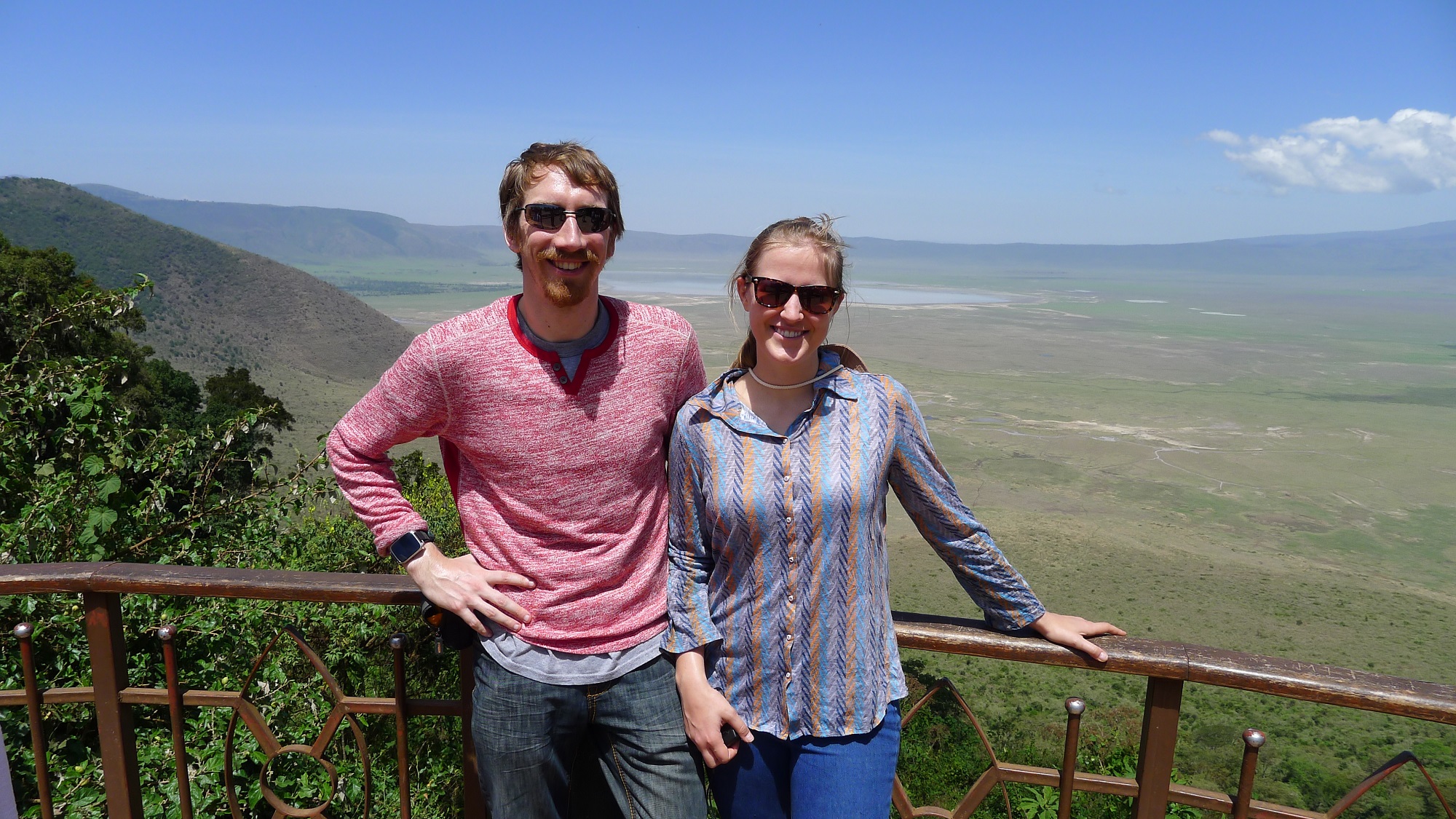
    At the crater's edge
    At the crater’s edge

    Animals seen:

    • Massive herds of wildebeest/gnu
    • Almost as massive herds of zebra 
    • Fairly large groups of Cape Buffalo 
    • Scattered groupings of Thomson gazelle
    • A dozen or so warthogs and their adorable pint sized piglets
    • Two troops of baboons
    • 11 hippopotamus (hippopotamuses?hippopotami?) 
    • 5 lions (one male) 
    • 3 elephants 
    • 2 cokes hartebeest 
    • One Grant gazelle hiding out in a group of Thomson
    • One black faced vervet monkey chilling with a troop of baboons (he had bright blue testicles)
    • One solitary sleeping black rhinoceros, at a great distance. Possibly a rock.
    • Lots of guinea fowl
    • Bands of Egyptian goose

    It was a successful day; we’ve already seen more species of animals then I thought we would. I didn’t dare to hope that we’d get so lucky, but Paul seemed quite confident. He told us that the giraffe would be the only thing guaranteed not to be seen; they can’t make the climb over the rim of the crater down to its floor.

    We began our day in the Park Bridge Resort with breakfast, chatting with a couple of Tanzanian young men about our age who turned out to be wildlife counters heading out to a job in Manyara. One of them pointed out a troop of baboons calmly stuffing grass into their mouths and grooming right in the resort’s driveway.

    The car ride to the crater began. We stopped briefly in Karatu, the largest/closest village to the crater’s main entrance and therefore a prime tourist convenience stop. We met John, the founder of Endallah Cultural tours, and some of his staff, including the Belgian man, Steven, who had been our primary email writing point of contact for us before we left. He was on holiday with his wife and kids, showing them where he worked. John introduced us to a friend of his who was part of the local government, and we all sat and had coffee while we waited for Paul and our new cook, Nicholas, who had joined us at the Park Bridge, went and got the tent supplies.

    We won’t use the friend’s name for privacy purposes. He was a member of Tanzania’s opposition, Chadema party, vs Joseph Mukafuli (I’m sure I’m spelling that wrong, but I have no Internet to check at the moment) the president’s ruling party of CCM. We asked the friend more about what the differences between what the two parties were – things like unions and striking (CCM will have their leaders secretly murdered) and education and schools (Chadema wants to build them). Chadema had never had a president before – when Tanzania became a “democracy” in the early 1960s there was only a single party,  and Chadema split off the ruling group about 20 years ago. However, said the friend, we are growing – we have 100 out of the 250 parliament seats now. We have lots of local leadership in the small towns around the country. We think that we won the presidential vote last year, but CCM controls the election oversight board and declared Mukafuli the winner before the votes were even half counted. John sat and quietly sipped his coffee, sometimes nodding – especially about the schools, which he founded Endallah to help fund. It seemed to us, Christine and I said,  that Chadema was like the Democratic party of the USA, and CCM was the Republicans. There was general agreement all around. Both men asked us how Donald Trump had won the election, surprising everyone. I feel like this will be a general theme of the trip.

    Paul and Nicholas rejoined us, and we headed into Ngorogoro, stopping briefly at the visitor’s center to have 1GB SD cards for 20USD hawked to us, and for Paul to register his tourists and the size and weight of the truck. We climbed up a very steep hill – the rim around the 20km wide crater. The Masaai were resettled here after the government made the Serengeti a national park and forced them to leave, and we saw lots of them in their bright red and blue robes tending their cattle and watching us go past with solemn, inscrutable gazes.

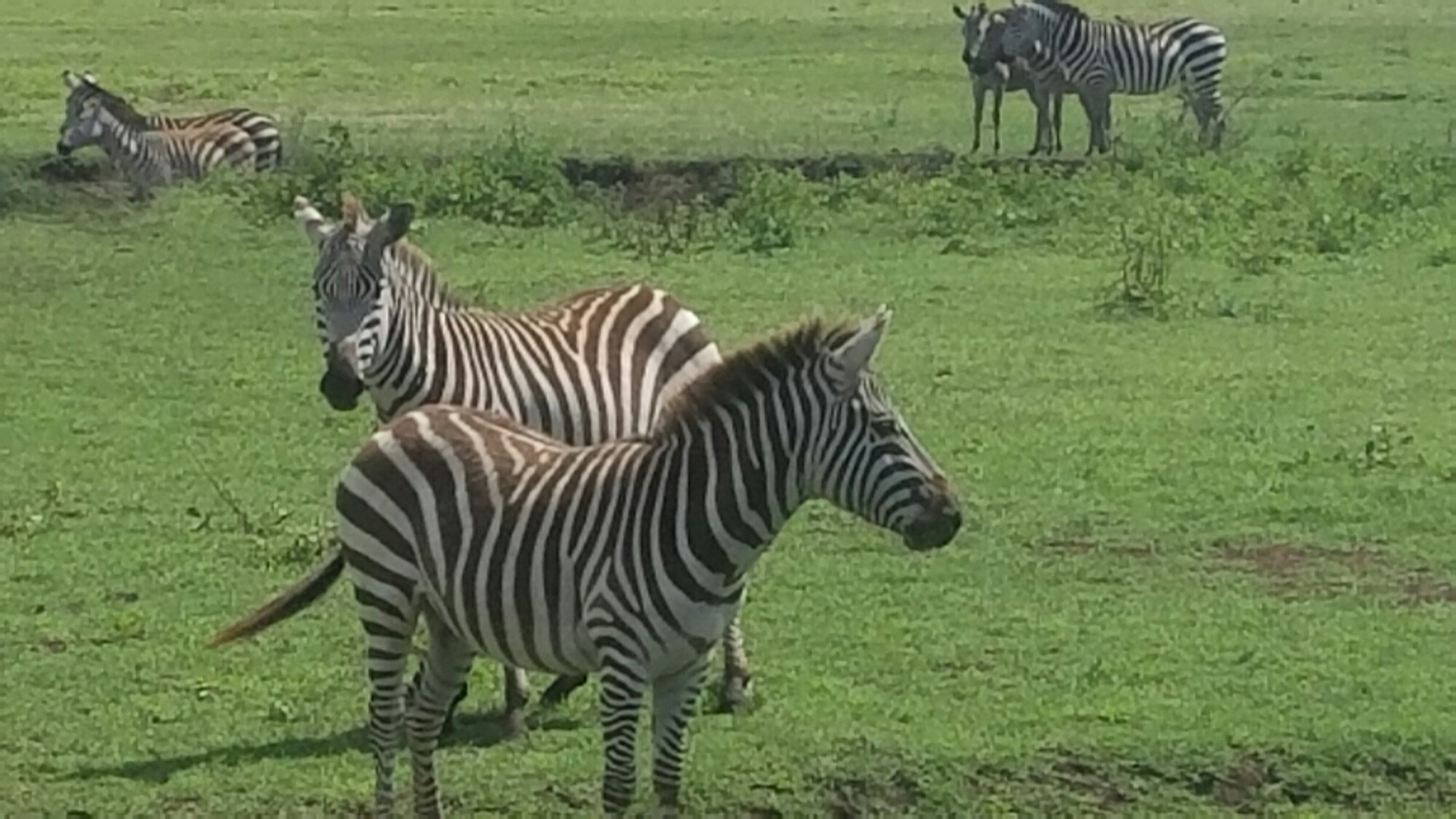
    The crater is 3.8 million years old,  said Paul, and the animals come to it every year in the Great Migration. We immediately saw zebra – lots of zebra, grazing peacefully next to gnu/wildebeest. The gnu have sensitive noses, and the zebras have strong eyes – they instinctively work together in order to protect the entire herd from predators. These two species seemed pretty laid back around us; we’re just vaguely human-and-diesel smelling metal beasts, roaming around their plains, not hurting anyone. The zebras in particular would just wander away from us, and the gnu would toss their heads in a rather comical fashion and galumph away, sometimes sideways, while kicking up their heels.

    "Hur hur hur, guys"
    “Hur hur hur, guys”

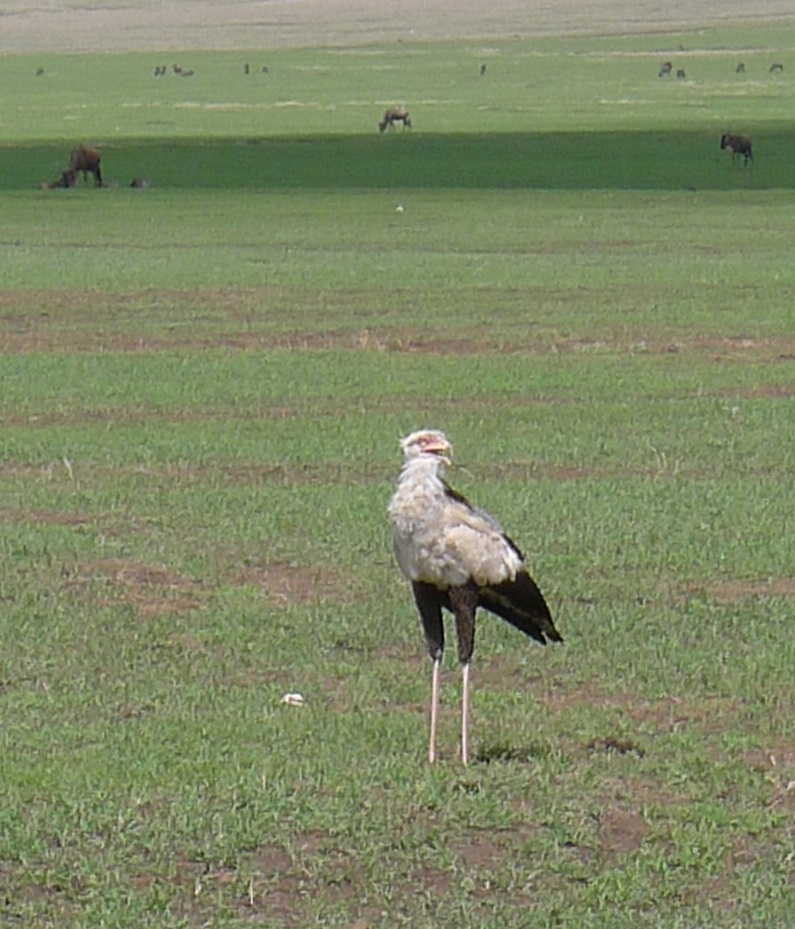
    We saw two elephants enjoying a mud bath, up to their legpits in muck and grabbing marsh grass off the edge. A secretary bird gazed at us with its raptor mouth open in a derpy fashion, tilting and cocking its head rapidly at various angles. I’d never seen one before, not even in zoos – their defining characteristic is the strange plumage of 6-10 blackish feathers stuck off the back of its head, like a mohawk, then jauntily running away on its storks like legs.

    Suddenly, Paul stopped the car and grabbed his binoculars. “Over there.” he said quietly. “It is a black rhinoceros.” It took a few minutes, using a hyena which might have been a dead log to find a rhino which might have been a grey rock, about half a kilometer away. Apparently it is a very rare find; the rhinos are all but wiped out, and the Crater is one of the only places where we’d even have the slightest chance to see one. So while I might have seen one now in the wild, the shape I saw with a twitching ear might be all I get!

    The Cape Buffalo were not nearly as dangerous looking as all the stories say they are. They looked like friendly docile cows with sort of Viking-style helmets of horn, and they chewed their cud and stared off into space. We certainly didn’t test that by getting out of the car, though. Paul told us that danger and disembowelment was only the first part – drones and high-powered binoculars were watching all the cars all the time, making sure no one strayed off the roads in their vehicles.

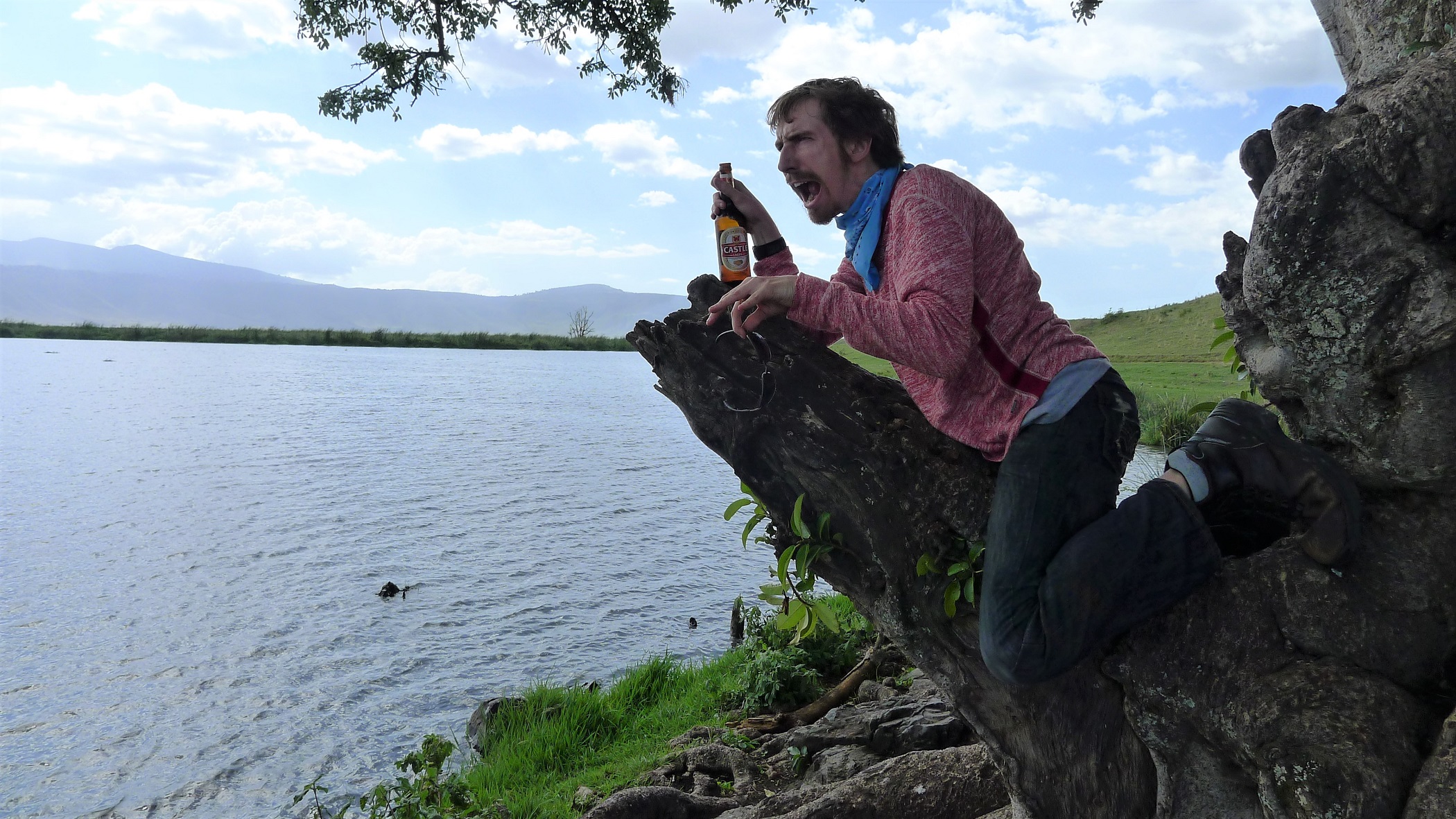
    We had lunch near a lovely little pond with some hippopotamus grunting and splashing themselves on the other side. A few black kite eagles and masked weaver birds flew around, demanding food handouts and in the case of the huge eagles,  sometimes taking instead of asking. Nicholas’s boxed lunches were very tasty – a leg of fried chicken, chappati bread, a banana, mango juice, and a container of noodles cooked in mayonnaise. The last one tasted pretty good despite sounding a bit weird. Other tourist trucks were all around us and the air was filled with sounds of chatting in many languages – I heard German, Spanish, and Italian at the very least.

    A wild animal stops for a drink at the crater's lake
    A wild animal stops for a drink at the crater’s lake

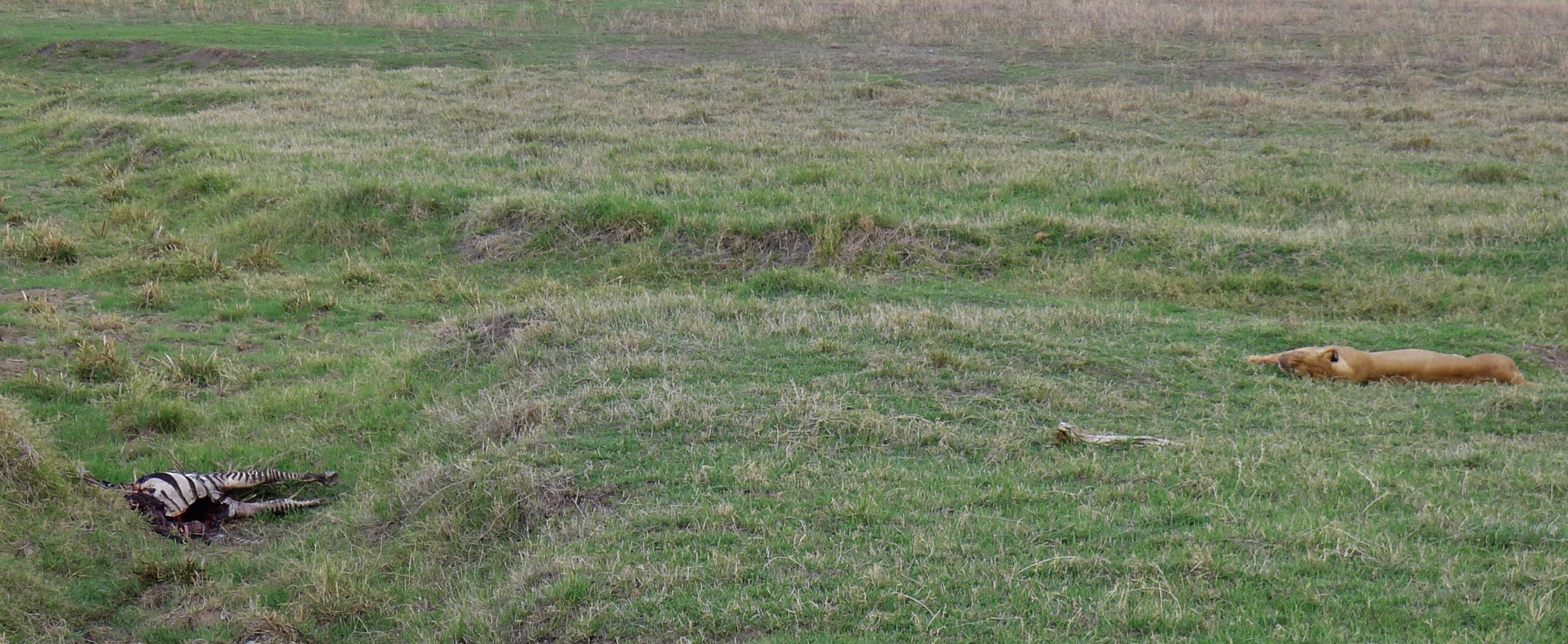
    After lunch we continued our roam around the crater, and the most interesting thing we saw was a sleeping lioness (the lions we saw earlier had also been sleeping – a common theme for lions in the day) except this one was next to a disemboweled, fly-covered half a zebra. The body was positioned next to the road in a ditch in such a way that we were looking right into the empty body cavity, with a pile of organs lying right next it. The upper half appeared to be completely gone.

    After a successful kill and dinner, you deserve a nap
    After a successful kill and dinner, you deserve a nap

    As we got near the edge of the crater and the exit road up (the only paved road in the entire place, it seemed, for traction purposes) a troop of baboons crossed our path. Paul thought they might be trying to casually escape from something since they kept looking behind and and a large leading male kept shouting “OH! OH! OH!” A little black vervet monkey was the odd one out, running along next to them seemingly trying to look like he blended in, stuffing grass into his mouth and scratching his blue balls vigorously.

    The climb out was beautiful, we passed through some very dense forest, almost jungle-like, before reaching the rim which on this side was a much more gradual slope down the the climb up it was this morning. The numbers of Masaai here were much greater than before, and we were waved at by a lot of smiling children. Christine wanted to offer them her chocolate bar she had gotten for lunch but not wanted, but she didn’t know if that was a good idea, or how Masaai felt about “outside” things.

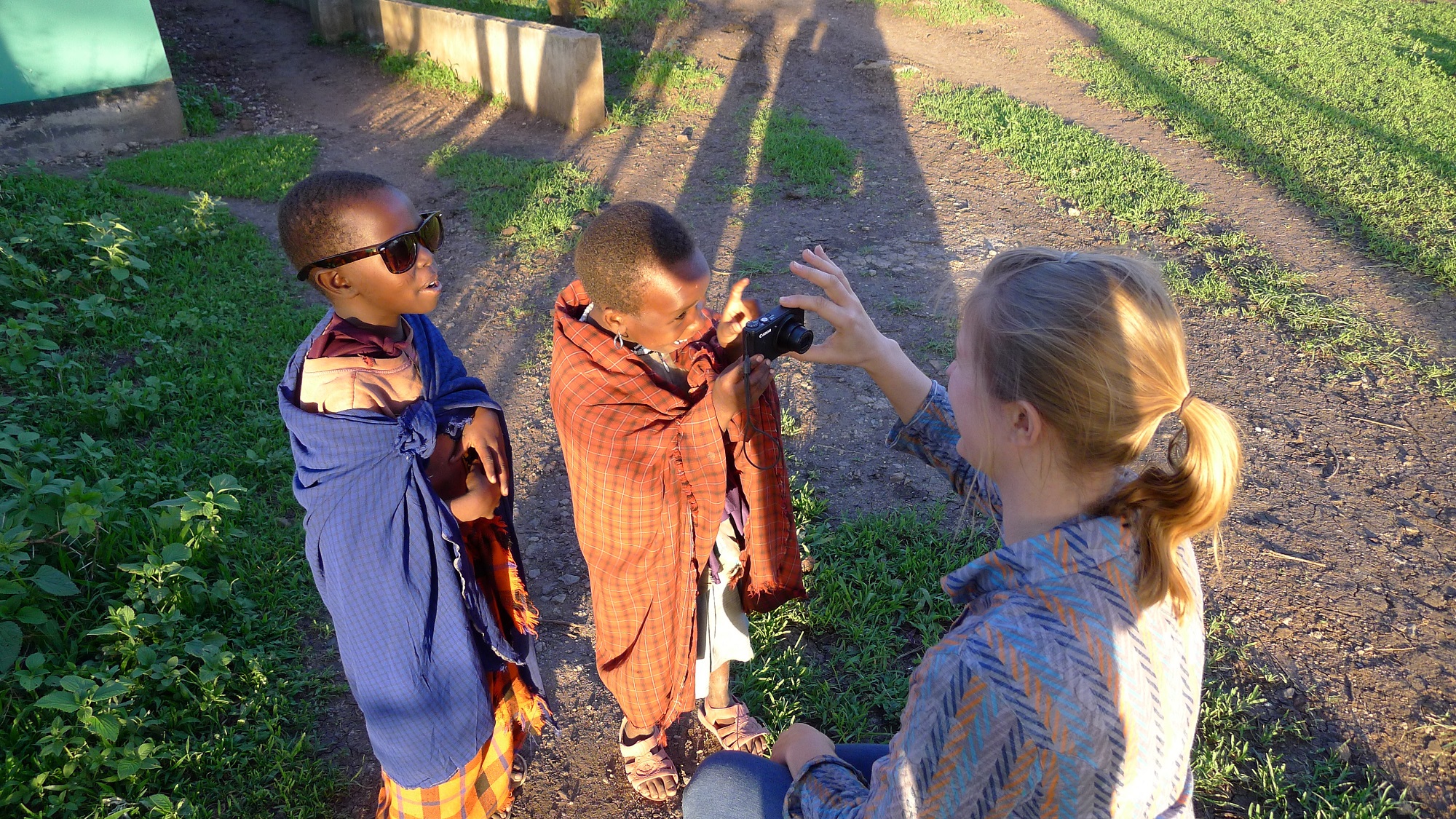
    When we reached Endulen Catholic Hospital, a little hostel and maternity focused hospital about 15km later, she put that question to the test. After tossing our bags in the room we went for a walk around the grounds, meeting some shy puppies who whimpered and whined and slinked away when touched (much to our disappointment – we’d been “looking but not touching” all day and we wanted to pet some adorable little dogs) but also two little Masaai girls who were fascinated by Christine’s sunglasses and camera.

    These girls loved trying on sunglasses, posing for pictures, and taking them
    These girls loved trying on sunglasses, posing for pictures, and taking them

    A fashion photoshoot proceeded, with one girl at the lens and another at the lenses. We tried to use our “ke-Swahili” (ke meaning language) with them but Masaai speak the Maa language and besides the word “baba” meaning father, we were completely without communication. The girl with the camera learned fast though; in 10 minutes she was zooming, pressing the playback button to review her shots (she took about 50), and taking video. She showed them off with great joy to other older Masaai passing by who regarded them with amused disinterest, none stopped for longer than a second or two.

    We found out later from Peter, the owner and impromptu Minister of Endulen that the words for “What is your name,” specifically when spoken to young girls, is “Garnali No” – he didn’t know anything besides that. I got the feeling that when we asked him right after leaving the girls, he went and asked one of the elder Masaai translators on our behalf, because he told us he didn’t know anything else. We thought about sending some of the best of the 50 photos to Peter to share with them, but then we found out that any Masaai here are just passing through on the way to market, and it is unlikely he would see them again.

    I think this actually might be our only photo with Nico :-\
    I think this actually might be our only photo with Nico :-\

    After dinner with Paul and Nicholas, prepared by Peter (Nicholas’s only night off for the entire safari, from what I gather!) I tried to take a shower, only to find the nozzle didn’t work. I asked Paul what the situation for showers would be and he told me, “hot buckets of water tomorrow morning when we get up, 7am). Sounds good to me!

  • Cycling setbacks

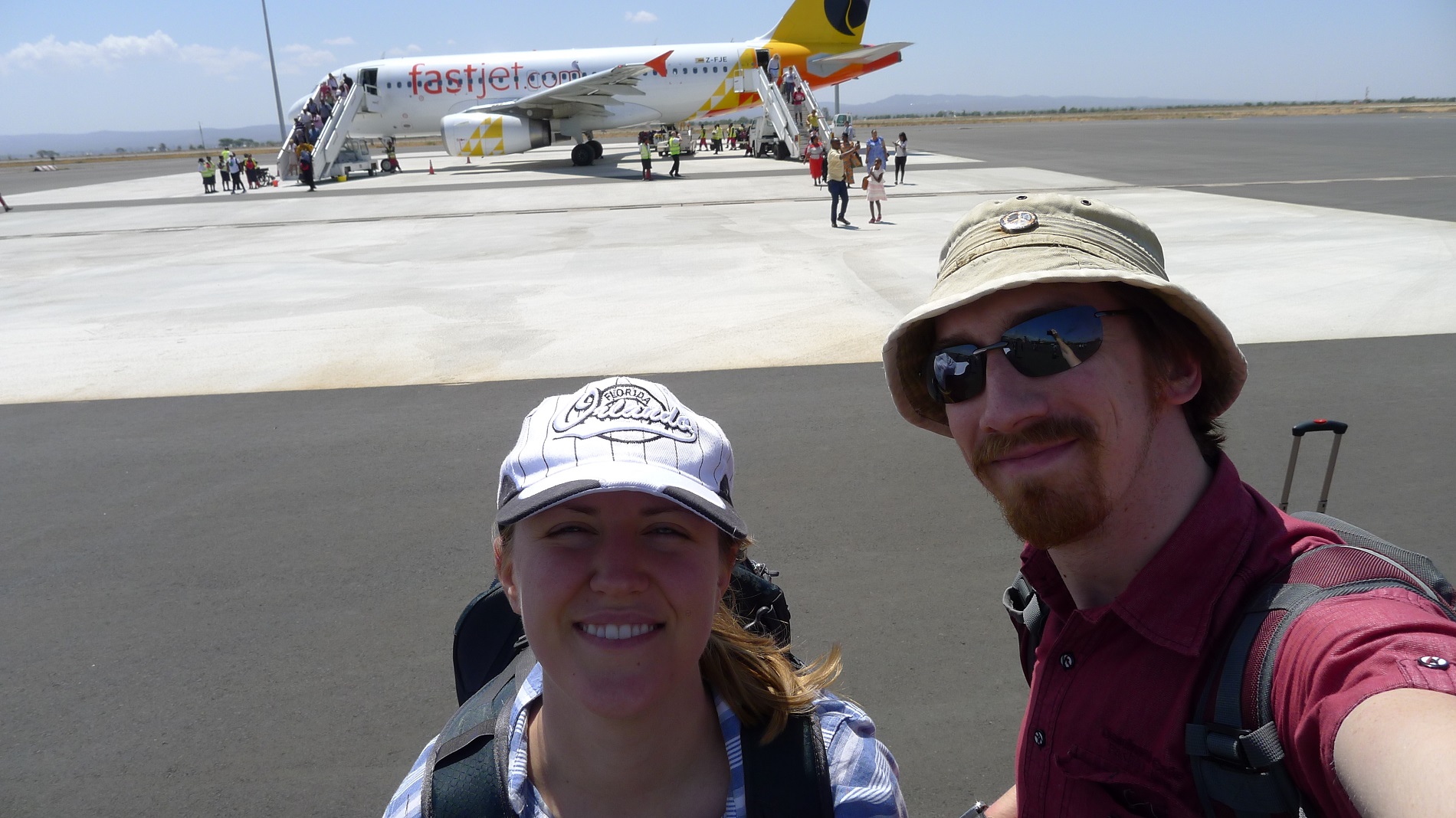
    At least the flight up to Kilamanjaro didn't have any problems...
    At least the flight up to Kilamanjaro didn’t have any problems…

    So there we were –  we’d just finished a nice buffet lunch in Arusha with our new driver and constant companion for the next 8 days,  Paul,  and given him the other 50% of the tour fee for the the safari. He’d just exchanged those cash dollars for literally several million Tanzanian shillings.  We were back in our huge, heavy Toyota 4Runner and on our way to the grocery store to get water for the trip (him) and beer (us). Christine and I were talking with Paul about something when suddenly,  we smash into the back of a black SUV.

    Rewinding it in my mind, I still have to shake my head at the stupidity and simplicity of it all. But then,  I’m sure everyone involved in a crash does.

    A white pickup truck was in our lane,  pulling out to turn right. Bear in mind they use the British driving on the left style here. He stopped,  blocking our lane,  to wait for an opening with opposing traffic.  The black SUV t-bones the white SUV. And then our beast of a truck,  almost in slow motion,  crunches into the back of the SUV.

    Instantly, most of the tinted back window of the SUV pops out like cork from a bottle,  separating with neat jagged lines from the rest of the glass,  falling outward with a tinkling noise against our hood, then completing the rest of its journey to the pavement. Our bumper,  protected with a cattle guard thing that of course every safari truck would have, pushes into the SUV’s spare wheel, denting and warping it. We push forward briefly,  a split second of inertia,  sandwiching the SUV between the white and tan slices of metal.

    And that’s it. In the seat next to me,  Christine lets out an exhaled breath and says something pessimistic. I’ve never been in a car accident of any kind before –  a real one,  mind you; denting the Camaro while changing glacial lyrics slow lanes in Chicago traffic rush hour doesn’t count. I don’t know what’s going to happen next. I don’t think about how this will affect the trip. I watch the SUV’s driver climb out of his vehicle,  as does the pickup truck driver. Then the mob descends.

    Everyone that had been walking on the sidewalk apparently stopped what they were doing to come up and surround the three vehicles. I hear lots of shouting and Paul,  who seems like a nice if quiet and a little preoccupied guy, gets out of the car too. A few people come up and start pounding on the glass when he gets back in and suddenly… Rolls up both his windows in the front seats. Christine and I look at each other,  and suddenly slam our sliding windows next to us shut too. He’s not telling us to do anything,  so we are willing to follow his actions.

    He calls a few people and speaks rapidly in Swahili. People keep coming up and tapping on the glass next to him. A couple do so to our windows,  but now that I’m focused,  I see they’re smiling and one says something that sounds like “don’t worry” – oh,  good. Briefly my mind imagined the three of us being pulled from the truck and beaten to death in the street,  or rather,  of course I don’t think that at all –  we’re just tourists sitting in the back seat,  why would they do that? I have no idea.  I have no idea what happens to people in car collisions in a east African country. But okay,  I’m not worried anymore.

    Christine and I climb into the farthest back of the rear six passenger seats with our important bags. She doesn’t look happy. I try to stay calm – at least no one was hurt, our car seems utterly undamaged –  surely this won’t affect our trip,  right? The police come and,  amusingly enough,  don’t even pay us any attention.  They start measuring angles and taking cellphone photos. I tried to imagine how the public would react if American police at an accident site didn’t immediately verbally check with every person in every vehicle and just ignored a couple passengers simply on the basis that “they look fine and their vehicle is solidly built.”

    In the end though,  things drag on. We finally climb out the car after about 15 minutes as with the windows shut,  it grows stifling hot. A man catches my sleeve and says seriously in good English “don’t go far.” I tell everyone around “jua kali! Jua kali!” several times,  meaning “hot sun!” – one of the few phrases I know. I see Paul talking with the police,  his small face set tightly as he gestures to the other drivers,  none of whom look pleased with the other two.

    Hoo boy. Is this going to be a bureaucratic nightmare? We have no clue.
    Hoo boy. Is this going to be a bureaucratic nightmare? We have no clue.

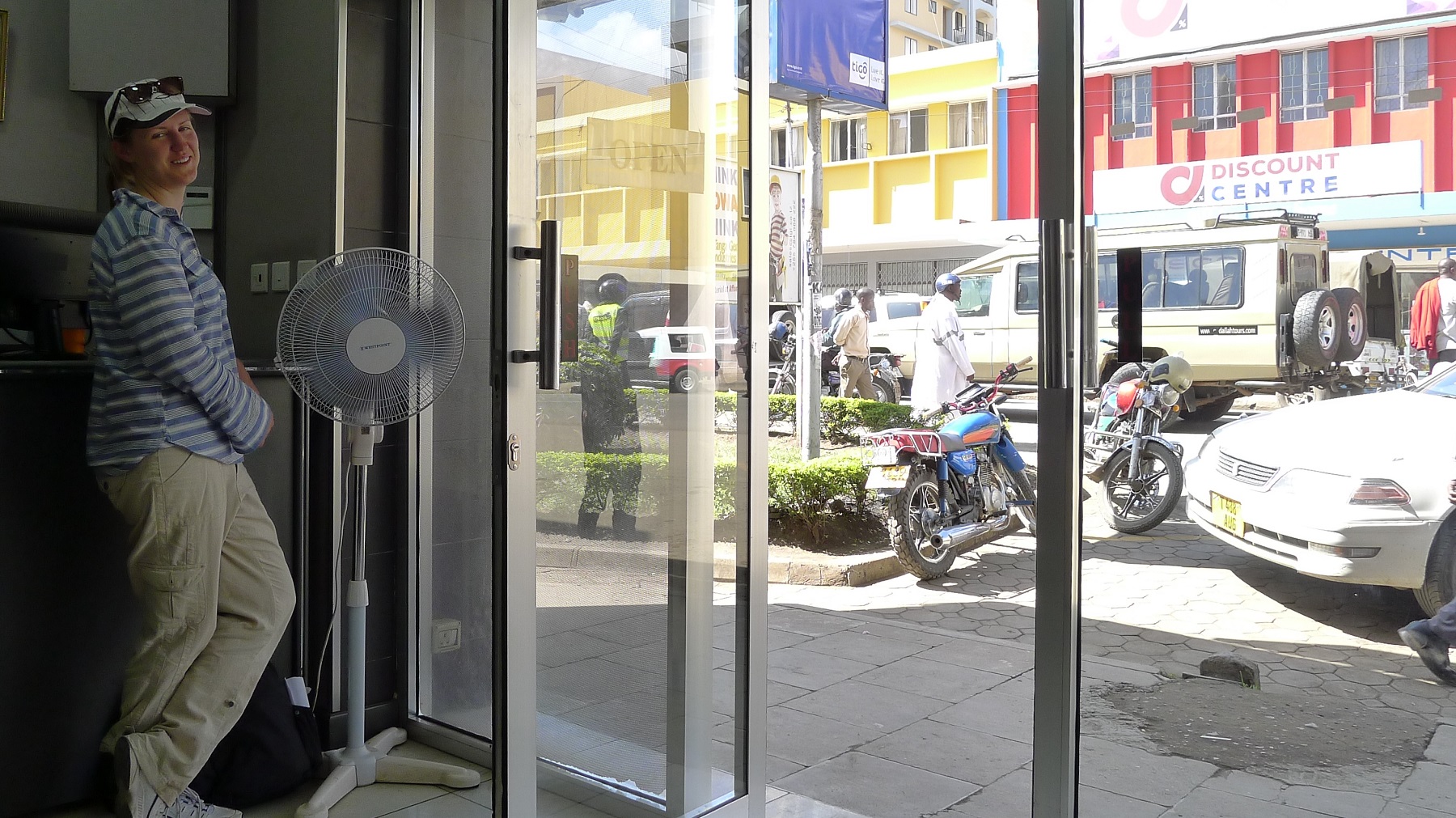
    We wait in a small Samsung reseller shop where a guy with great English,  David,  is rubber nicking the site. Now that all three drivers are conversing with the police,  the vast majority of the shouting,  car pounding folks have dispersed entirely. I wonder about Fedinand told us yesterday –  this is a big culture of making sure people who mess up or cause problems are reproach ed for it. Now that all three people are talking to the authorities, everyone has calmed down and life continues.

    David tells us he’s a tour guide with another company, and a friend of Paul’s. They’re all friend-aquaintances in this business. He tries to cheer us up as we sit in the cool shop surrounded by ads for TVs. I ask him,  in his opinion,  how long this will take. Do these travel companies have car insurance? Will Paul have to pay damages immediately to someone? David assures us that everything will be settled, our vacation will be fine.

    But the cycling tour,  scheduled for 4pm and requiring us to be out of Arusha by 3pm and on the road,  is our sacrifice. Paul has to visit the police station to fill out paperwork so he pays for a taxi to take us to a restaurant for that all-important driving hour,  and we wait,  morosely drinking a Castle beer and reading our kindles. By the time he comes to get us,  finally finished with his paperwork,  it’s too late,  he says – the cycling trip,  through a banana plantation and talking with the plantation’s owners about their work, can’t be done anymore tonight,  as we’d run out of daylight hours.

    The drive proceeds uneventfully from that point on. We pass through some villages,  seeing more and more Massai tribesmen,  the famous tall,  slender,  red kilt wearing cowherders that hail from the northern regions of the country. They’re talking and trading with the Bantu people,  who are the regular Tanzanian ethic group that has been almost everyone we’ve met so far. We see them out in their fields next to the highway,  tending cows among massive 4 foot tall termite/anthills and scrubby bushes.

    No trip can go completely smoothly,  I guess. On the plane ride up to Arusha I realized that I had misplaced or otherwise lost my T-mobile SIM card somewhere in the past hours. Christine said she was sorry to hear that and I shrugged and said “it’s annoying,  I’ll have to ask T-mobile for a new one,  but really,  on the grand scheme of things,  it’s a minor problem and doesn’t even affect the trip itself,  just the few days after I get back to the USA.” She chuckled and reminded me we still had 10 days left of the trip.

    Now,  as we get ready for bed at the “Park Bridge Resort” Inn in the Manyara National Park area, I guess things have gotten a little worse – we’ve missed out on one of the more special reasons we chose Endallah tours,  which is the social aspect and meeting the locals. I guess we got to meet several locals, unexpectedly, this afternoon. But I hope tomorrow’s visit to the Ngorogoro crater goes more smoothly.

  • 9am is subjective

    It was an embarrassing dinner. Using the newfound Power of the Internet, Christine and I found a restaurant just north of the Millennium towers called Rose Garden that had pretty good Google maps reviews. Side note – I’ve so far been very impressed with the diligence of business owners,  putting a dozen or so photos on Google maps of their wares. That’s better than most Americans do! But perhaps there are less competitors like Yelp, etc here.

    When we asked for menus,  the waitress smiled and told us she would read it to us, they didn’t have any. We each ordered a plate of spicy chicken,  me with the Tanzanian National dish Ugali, which Christine says is very similar to Togo’s fufu, and her with rice. We cracked open a couple of Tanzanian made Castle Lager beers, which the waitress specifically asked us if we wanted “cold”  or not. I remembered that was a thing in smaller villages in Jordan, too – refrigeration costs extra, otherwise you just get something out of a camping cooler. We ate our spicy food,  with our respective Ugali and Rice mashed in, and watched some music videos on the veranda. A couple of spotted,  almost Savannah or Bengal cat looking kittens cautiously played around our feet, not scared of us but also completely ignoring Christine’s fluttering napkin and inticement to play.

    The bill…caught us by surprise. After paying 2 dollars for chips and eggs and fifty cents, the total bill was 49,000 shillings,  about 25 dollars. And here I thought I’d walk without my wallet on me for an 11pm dinner and only had a mere 44,000 shillings on me. I went red with embarrassment. A muzungu Explorer in Tanzania, with his significant other,  unable to pay his tab? I knew I shouldn’t have ordered that second cold Castle. The waitress brought over a waiter with better English, and after they consulted a bit together, he said “go in peace, don’t worry about the 5000.”Well, I promised him that’d I’d come back tomorrow with 10,000 for his kindness and trouble. He told me he wouldn’t be there, but wrote down his coworker Shaderak’s name. We left quickly, avoiding eye contact. Someone tried to offer us a tuktuk ride and we said “we have no money at all. None.”As we walked away he said “then I will give it to you for free my friend!”

    We asked the receptionist back at Collobus, a pretty young woman who looked about 16 or 17, if we could have a taxi called for us at 9am. She seemed a bit confused by this,  still smiling but with a furrowed brow, but agreed. Fast forward to 4am…the room phone suddenly begins jingling and Christine blearily gets her arm tangled in the mosquito netting around the bed to reach it. I listen as she talks… “Yes… No… What?? What time is it now?” I grab for my phone,  with the correct Airtel-set Tanzanian time on it, and show it to her. “No… No we need a taxi for 9am.It is 4am now. What… No,  not now. 5 hours from now. Five.” Finally she hands the phone to me and I repeat what she says. The young woman’s voice buzzes through the old phone line,  but I can tell it’s her. She says “I call now then?” No,  I say… Five hours from now! “Now?” No! Finally she puts on another person, a man. He seems to have a similar problem,  until I count for him 1,2,3,4,5…and finally he says “9am? Five hours?” to which I exult yes,  yes that’s it exactly. Goodnight sir,  he says. We both lay back in bed,  partially wrapped in mosquito netting,  and burst out laughing from the weirdness of it all.

    The only things we can think of,  offhand,  is something I came across online that says that Tanzanian clock counting only goes by 6 hour time periods,  and then resets. I came across only a couple websites mentioning this, but perhaps that would explain the miscommunication? If I were on a real browser instead of the WordPress app,  I’d totally hunt for some links to add,  but it’s a bit of a pain on here.

    Now Christine and I are back at the airport,  ready for our hour flight to Kilamanjaro Airport and begin the safari.

    Packing up our spacious room at the Collubus
  • The crazy Wazungu

    “It means, ‘explorer’” said our city bicycling tour guide, Fedinand, this morning, when the first pack of cheering, smiling little children ran after our bicycles,  holding out the little hands to high five us. “It’s not a bad word, I promise. They really like seeing you guys here.”

    It was a word we’d be hearing a lot over the course of our five hour cycling and information tour today –  one that we almost thought wouldn’t happen! The flights from Chicago to Amsterdam, Amsterdam to Moshi, Tanzania,  and from Moshi to Dar es Salaam all went smoothly. Getting our $100 apiece visas also went very smoothly – a load off our minds,  considering that although we read online that it was possible for almost any nationality to get a visa at the airport,  we’d found very few peoples’ experiences documenting it. I’m pleased to report that while it’s a bit disconcerting to hand your passport and a hundred dollar bill to an agent and then told to “go stand over there”  for the next hour, things actually worked quite smoothly. We had a little gaggle of 2 dozen or so tourists standing in a corner of the customs area,  and every fifteen minutes or so a uniformed official would emerge from a windowed office –  we’d perk up,  Pavlovian-style,  whenever we saw him walking towards the door to see us  – with a stack of passports and start shouting off names.

    We were met by Edwin, a friendly but thankfully,  not overly chatty driver hired by our hotel to pick us up and deposit us at the Collobus Hotel,  where they take power saving to whole new extremes. The entire 20 foot square reception room was lit by a single fluorescent bulb and a TV playing a Keanu Reeves movie with Arabic subtitles. I asked the young woman who checked us in ($100 for two nights) whether or not she spoke Arabic, since the movie’s audio was in English,  and she stared at me for a good 15 seconds before saying “no…no…” She then proceeded to take my bag (not Christine’s) and haul it up 4 flights of stairs to our room,  so I gave her one of the only bills I had –  a 5,000 shilling note,  worth a little less than $2.50, out of the 200,000 shillings I’d withdrawn from the airport and were already threatening to rip through my pants with the stock’s thickness.

    The following morning,  we had been told via email we were supposed to be meeting a guide named Tende at 8:30 at the Millennium Towers. Tende was representing the group Afriroots Adventures, which specializes in more social-culture style tours. We had chosen the Collobus hotel specifically because it was a mere 15 minute walk from the tower –  a good,  tall city landmark.  However,  besides telling us “millennium Tower,  8:30” Tende had done nothing else to help us track him down –  no description of himself or his vehicle, no office on the ground floor to meet on. I suspected,  rightly,  that he didn’t have an office there –  he just used the place as an easy-to- tell people location.

    8:30 turned in 9:15 and we found an Internet cafe where we paid 1000 shillings for 20 minutes of Internet,  and another 1000 for a bottle of Coke – 50 cents each. It turned out as a stroke of luck that one of the proprietors was a friend of Tende – and called him for us. We learned that Tende…. Wasn’t actually anywhere near Dar es Salaam but was up in Moshi! So he put us in contact with his colleague Midje, who in turn told us the same thing… But he was sending a contractor,  Fedinand,  to meet us.  Midje was the only one who spoke to us directly –  Tende did not want to hear the choice words we had for him – and he apologized to us for “missed communication” and said Fedinand would be with us soon.

    Fast forward to… 11am. That’s how long it took before Fedinand found us (10:15) and then told us he’d be back in another 15 minutes with the bicycles.  It was getting a little infuriating,  and I was having flashbacks to Insha’allah everything when I was in Jordan.  Just follow through with your scheduling, people. Please.

    The omnipresent "travelin' hat" does double duty protecting one's hair from a shared bike tour helmet
    The omnipresent “travelin’ hat” does double duty protecting one’s hair from a shared bike tour helmet

    But at long last,  we were on our way,  we crossed the main road to head into the smaller,  lower class neighborhoods (Fedinand’s words,  not mine) and then,  3 minutes into the ride…Christine’s entire left pedal fell off. I stared at in,  then at Fedinand,  and asked him directly “exactly what kind operation is Tende running here?”

    Fedinand hopped on his bike,  grabbed Christine’s like he was leading a spare horse,  and promised us he’d be back in 8 minutes –  and he actually was! With a replacement! He rescued us with his return from a large bearded man who’d come across us and was teaching me,  with piercing eye contact and large back slaps,  different swahili words for eyes,  ears,  legs,  shoulders,  etc.  He’d point to one thing  – his nose,  for example,  and shout “POOHAH” and I’d repeat it back to him.  Finally at the end he pointed to his crotch and then… Shrugged,  slapped me on the back,  laughed,  and walked away. I’ll admit now that the only word I remember is nose. I’m a little exhausted at the moment.

    Fedinand was,  once we finally got underway with the replacement bicycle,  an excellent guide. He greeted and returned greetings to hundreds of people,  who seemed more interested in him as a leader of two tourists,  then us ourselves. He has a charismatic smile and personality,  and usually it was only the younger children – under 10 years old or so –  that reacted so happily to the two Wazungu. He explained to us that the reason that there were so many Arabic words in Swahili is because the Arabs colonized the Eastern coast of the African continent several hundred years ago – the first explorers that the tribes that would become Tanzania in the 20th century met. I asked him if Arabs,  then,  were also called Wazungu. He admitted that while the word meant Explorer,  it still meant only white explorers. It was the Germans that colonized the region in the 1800’s, before being replaced by the British after losing the world wars,  and both nations built lots of railroads, established trade routes,  and most importantly,  established the idea of a national school system. Fedinand seemed to really respect the colonizers for that. Happy they were gone and the Tanzanians could govern themselves,  but also happy that the West brought progress to his people.

    I wish I had more photos to share now – and I do!  But unfortunately they’re all on my actual camera, which uses a regular sized SD card instead of the microSD that this phone I’m typing on takes. I will to write as much as I can remember now,  and add photos to these entries when I return to America. To be honest, today was so information dense that it will probably be by far the most I have to write about – the national parks and safari will be beautiful and interesting and I plan to take lots of pictures but I don’t think I’ll have nearly as much raw information crammed into my head.

    I love Christine's expression in this one
    I love Christine’s expression in this one

    We stopped by a walking coffee vendor,  Fineas, who was a friend – Rafiki – of Fedinand’s. “He’s a Muslim –  see how he wears that flat topped hat? That’s how you know.” We were treated to strong Turkish coffee,  hand-ground with a mortar and pestle by Fineas,  as well as a kind of peanut brittle,  minus the brittle,  that serves as the sugar for the coffee.  They  never put sugar or milk into the coffee,  but the soft,  chewy peanut and caramelized sugar snacks paired well with it. “Yislaamu e-dayk” I told Fineas as he handed me the coffee –  the traditional Islamic phrase meaning “Bless your hand” that you say to someone as they hand you a beverage. Fineas looked at me in confusion and I told Fedinand what it meant.  Fineas laughed and jokingly shoved Fedinand a bit.  “Oh man I’m embarrassed guys… He’s not a Muslim,  he just likes wearing their hat.” We all laughed,  and Fedinand explained that the two religions got along well in Tanzania and no one minded borrowing culture,  clothes,  and phrases from the other.

    He explained as well that besides the Abrahamic religions, voodoo and black magic worship was also strong in these lower class areas,  and that he himself was starting to believe in it too,  just because he’d seen it work so often for friends of his.  For things like job interviews,  you’d take this kind of powder,  mix it with water,  and then sprinkle it on yourself – but be careful not to speak to anyone else besides the interviewer or the spell would be broken! Love struck men would offer charms to their women,  and women would put blessed water on their faces 3 times – precisely- to become more beautiful. He even showed us a tray of rotten eggs which you could use to curse someone.

    One of the things I think Christine enjoyed the most was having Fedinand show us the Kangas and Kitengas,  two similar kinds of women’s clothing that are extremely popular in the area. The former are originally a Nigerian invention,  simple rolls of beautifully and intricately patterned cotton with pictures of people or more usually,  phrases written along the edges.  Women use them to communicate catty or friendly sayings to friends –  and enemies.  He brought down a few and read them off to us in Swahili – “this one means roughly don’t speak ill of me because of how I am,  God made me this way. Do not hate me because I am beautiful!” and “May god give me strength to ignore the mean things you say” He also said politicians would pay factories to make custom Kangas with their pictures or slogans on them,  and more shady ones would pay off women to wear them.  Every politician he could think of at the very least had Kangas made.  He said there was an Obama one made back in 2008. I pleaded with him to tell me we could buy one right now but he told us that unfortunately they’d be sold out and no longer made for years.

    In the Kanga shop

    Speaking of politics, we were asked frequently where we were from,  and just for ease of describing,  we usually said “Chicago” – to which we were frequently told “Obama! Obama!” and sometimes “Trump good?” A hard lump of sadness and nostalgia rose in my throat when I remembered very similar broken conversations just after I arrived in Jordan,  with no grasp of their language either,  and was having similar but much more optimistic conversations with the Arabs about the new young president,  Barack Obama,  who had just won the presidency. Now, via Fedinand’s translation,  all we said was we had supported Obama,  and voted for Clinton,  and we were not happy with a Trump presidency.  The question askers merely nodded,  a bit sadly,  and we didn’t speak further on that subject.

    And we shall call it...goat mountain.
    And we shall call it…goat mountain.

    We saw other things, like a flock of semi wild goats running around horribly polluted local stream,  that the locals believed were protected by spirits and therefore no one touched or interfered with their roaming and grazing. We saw a small room with loud blaring little TV with an overdubbed audio track – this was the usual way for poor Tanzanians to get their movies,  we were told,  someone would rapidly read their interpretation of the plot in Swahili over the original dialogue and some of the music. Because it was the day after the new year,  the room we were in was filled with a couple dozen young children who immediately abandoned all interest in the movie,  turned around,  and stared at us with gape-mouthed faces.

    Seems like a pretty chill place to hang out with your friends on a holiday, really
    Seems like a pretty chill place to hang out with your friends on a holiday, really

    We saw a bareshouldered Muslim midwife named Bibi (grandma)  Zeitooni,  or Grandma Olive in Arabic,  who helped raise money for her community by selling doormats and pillows made from the refuse cloth from Kanga/Kitenga making. I bought one of the pillows from her for $5. We saw a funeral procession with two hundred mourners,  dressed in beautiful colorful clothing and chanting,  waiting,  stomping their feet as they walked through the street towards a nearby cemetery. A man in the front led the processional with a wooden cross,  with the deceased’s name and birth/death date on it. We saw a huge food and used clothing street market with spices,  an entire square city block filled with mango sellers,  and coconuts being allowed to “rot”  so they could be easily crushed for their oil,  which was being bottled. We also saw – or heard – a mother being loudly shamed by several dozen shopkeepers for apparently smacking her child quite hard when he misbehaved.  I didn’t see that happen but I heard the smack and we looked over across the stalls and saw shopkeepers raising their voices,  pointing at her,  and chanting a phrase over and over again.  This went on for about 20-30 seconds and the mother,  who looked about my age,  held her head up stoically and kept walking in silence,  not making eye contact with anyone. “Yes,” said Fedinand “Tanzanian people will always call someone out if they see them doing something they don’t agree with. We do not let bad parenting happen in silence.”

    We bid Fedinand a fond farewell back at the millennium tower after he bought us lunch,  a delicious salty snack of fried British style “chips”  mixed with fried eggs and hot sauce – “chips na mah-eye” which just means “chips with eggs” – we told him we’d send him the photos that we’d taken with the happy children who wanted to pose with us,  and he told us he’d print them off and give them to their neighborhood leader to put up around the area.

    We walked another half hour in the hot 4pm sun along a main road,  towards the Airtel phone company’s main office. I wanted to be able to get a SIM card to continue to write and upload from the National parks up north,  and Airtel supposedly had the best coverage up there. The building was huge and impressive –  easily 6 stories tall,  metal and glass,  with a half dozen entrances. We were a bit amused and surprised when,  upon asking for a SIM card,  we were directed back out of the building and to what appeared to be a converted cargo trailer out back,  where three very bored looking women were the official Airtel salespeople for SIM cards.

    We were hot,  sweaty,  bedraggled and probably still smelled a bit like the river we’d passed by two hours before. I was carrying a somewhat rumpled pillow made out of scraps of colorful cloth. The woman who took my passport info and handed me the SIM card kept eyeing it skeptically across her desk and finally,  just as the process was finishing up,  burst out “Wazungu,  what is that thing?” I tried to explain that it was from a medicine woman,  a pillow,  and her sales associates burst out laughing.  I wasn’t sure how much they were understanding of my English – they seemed to speak it well enough – but then she said,  shaking her head “I see someone carrying this thing like this,  I think he is crazy. Are you a crazy Wazungu?” To which, I could do nothing but helplessly shrug and say “It is a souvenir to remind me of Tanzania when I am back home!” She rolled her eyes and said “you are crazy,  Wazungu –  what would you want that thing for!!” But then she helpfully told us how much the local buses cost and gave us some change for my large 1000 shilling bills, so she wasn’t completely rude. Even so, as we walked back to the fancy main building to put 3GB worth of 3G service credit on my new SIM card (which cost a mere $7! Mindblowingly good price in my opinion) Christine said that the woman had made her feel uncomfortable with how direct her opinion of my mental state was. I guess I didn’t look at it that way,  personally – I’ve always just kind of done whatever I feel like and basically ignored what anyone thinks of me.  And if I brightened up those bored Tanzanian SIM card selling ladies day with my weirdness, then more power to ’em.

    I mean, I'd say he fits right in, frankly.
    I mean, I’d say he fits right in, frankly.

    We took the bus back to near Millennium Tower,  and walked back to Collobus from there,  my S7’s battery rapidly nearing zero after a day of using Runkeeper to track our cycling location and length (6.16 miles,  by the way). The SIM card worked – I had functional 3G data service and we’re free to hunt for a restaurant to go to later tonight. This crazy Wazungu and his girlfriend have got some Dar es Salaam nightlife to see!