HeiseHeise.com

The Personal Blog of Zach Heise

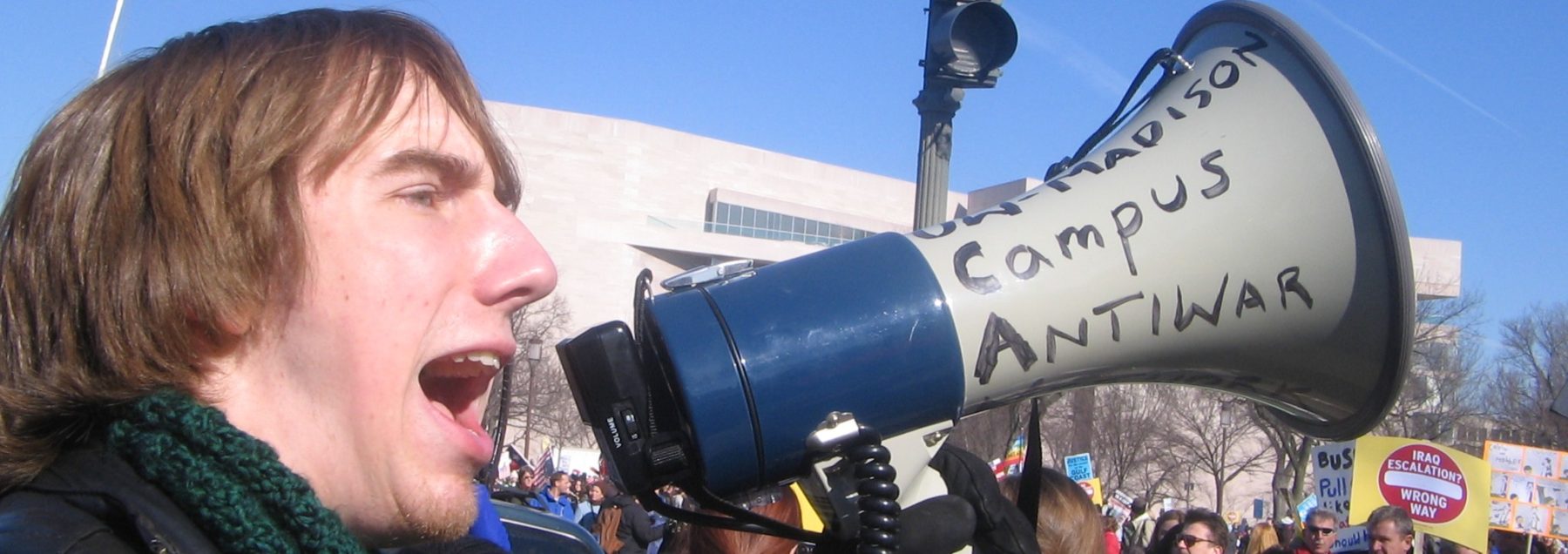
Stop the Surge Protest 2007

A random image. Reload page for more. Want more info?

Category: Social Commentary

  • A different kind of church

    Summer has definitely hit Amman with a vengeance. When I arrived in late August, I was freshly hardened from our mind-meltingly hot and humid Wisconsin weather, and Jordan seemed like a dry, stiff vacation in comparison. It also helped that within a month and a half things had simmered down to a perfectly comfortable 19-21 degrees. But now – the dust is the killer. It just hangs in the dry air and seems to replace all the air in your lungs. It could be worse, though. Khalil and Wajih have told me stories about the Gulf area (Khalil lived in Saudi for 30 years before coming to Jordan) and how it easily gets into the 55-60 range. For your metric-challenged people (I’m sorry) that’s 140 degrees in Fahrenheit. The sun reflects brilliantly off the white sand and dust in Ayn al Basha, causing me to squint pathetically whenever I venture out of my classroom without shades, but strangely enough the Iraqis and Palestinians going to class almost never where sunglasses and seem unaffected. Wajih told me that the light usually just doesn’t bother them, but he admitted that once on a trip to Dubai in August, the sunlight was literally bright enough and hot enough that it almost burned his retinas just as he crossed the street from one of their sealed and air-conditioned buildings to another. Good to know.

    The city is continuously emptying of my friends, and now Silas is next on the list – he’ll be returning back to the states soon. It makes me sad because he was one of my first friends here; without him I never would have joined Dozan wa Awtar. With school being out, I don’t see him nearly as often as before, either – but I made up for it last weekend when I kind of invited myself along with him to a German-language church out on the west side of town. He speaks German fluently, and although my ancestry is definitely close to 50% Germanic, I haven’t kept up quite as well with the family history as he obviously as, or at all. However, I hadn’t been to a Lutheran service here in Jordan before and this seemed like a good chance to not only see how Lutheranism went in Jordan, but also to hear it in its original tongue.

    The liturgies and rhythm of the service was in fact quite identical, and although I had to amuse myself with reading the parables of Jesus from Silas’ Bible during the sermon, I definitely enjoyed myself. Of course, every one of the attendees spoke English with perfect fluency as well and we were all happy to talk about our respective work here, so far from our native homelands. The Germans were all visibly shocked when I informed them that Silas (who was happily chatting away in rapid, guttural Deutshsprachen in another part of the room) was not actually German, and told me that they would have been completely believed him if he had said he was from Berlin. I did learn a little German, too – but, for posterity I can add “ß” (which is actually an “S” sound) right next to Tajik and Russian in my list of “Languages that use letters that look like English but are actually completely different.”

    Speaking of church, I had a really great worship experience last night with Imad, the Egyptian janitor that works at the Christian Academy. The academy is doing some remodeling over the summer while the students and teachers are back in America – fairly major stuff in fact that involves ripping out and replacing all the walls on the 4th and 5th floor, and completely adding a brand new 6th floor on top of everything. He and the administration wanted me to stop by after work so I could dictate how I wanted the new ethernet cables placed in the walls, but I wasn’t able to get over there until almost 10 at night. Over the phone, I apologized to my friend and colleague for my lateness – I knew he had a young wife and new daughter to look after, but the darn thing with Arabs is that they’re so kind and friendly that you’d never know if you actually were disturbing them because they will insist that you will come over and have some food and drinks with them. 🙂 He and I chatted for awhile in his apartment, then headed next door to the school, where I quickly drew up a diagram for where I needed plugs and jacks to be to hook up the various wireless routers I’ll be installing in a few months.

    Back downstairs, Imad introduced me to two fellow Egyptians who were helping with watching the school over the summer. I stepped out to grab a drink of water, and upon my return found myself treated to a fervently spiritual Arabic prayer to Jesus. The three of them kneeled and prayed together for 20 minutes. I learned that Christian Arabic prayers are extremely similar in content and flow to English prayers, with phrases like “Bidoon anta, ma fi Ayesh!” – without you, there is no life, and “Na’iftah qoluubna alayk” – we open our hearts to you. Imad led the two younger men in song, “Tahahl alayna, Yazuah” – Come to Us Jesus. Their high-pitched voices floated effortlessly through the chords in the Arabic style that would have made Pavarotti proud. I was truly honored to be there with them to hear their joy and spiritual strength. I thanked Imad for allowing me to join them, and he chuckled and translated my gratitude to his beaming friends. “You might not be able to to sing with us now, but in Heaven we will all speak the same language together.”

  • Guns and weddings not a good mix

    Many months ago, when I originally arrived in Jordan, I was told about the traditional Arab affinity for firing off weaponry at weddings and the dangerous consequences that have resulted from it, but without any specific details. A couple nights ago, I was sitting with Wamidh at his house, after he and his wife invited me over for dinner, and he started showing me some videos on his computer, including this one here.

    Here’s a link in case the Firefox Flash Bug is preventing you from seeing the embedded video.

    It was the first time that I’d seen video-recorded evidence of the horrible mistakes that can happen when guns are a major part of a wedding ceremony. Wamidh read the Arabic description to me from the side of the Youtube page; it seems that the man had just finished shooting off a 9mm into the air, and his two-year-old son picked it up off the table and started waving it around, trying to be “like daddy” like any little kid would want to do. As you see, the kid shot it directly upward and into his stomach. The man was taken to the hospital, but he had already died on arrival, as the bullet had gone up and through his heart.

    This all happened in the city of Aleppo, Syria, which is only a few hours north from where I’m about to be heading now for the weekend. Dozan wa Awtar has an international choir concert in Damascus, Syria’s capitol, where we’ll be singing with the national Syrian and Lebanese choirs. More information when I get back on Sunday!

  • To America, then back to Jordan

    I returned last night from my Christmas vacation in America with my family and friends, and was instantly struck by how at home I felt in this little country on the other side of the world. It’s completely true that I missed my friends and family back at home very much, and certainly wished that I had more time to see them, but while I was away from Amman I missed my friends here, too. More than that, I really missed Jordan itself, the culture and the landscape and my work. With the exception of delicious Noodles and Company (I’d do anything for their Penne Rosa, really) I really didn’t miss America. I guess when you’re marinated in it for a couple dozen years, it takes a lot longer than 4 months to actually separate yourself from it enough to miss it.

    Nancy drove me to the airport on the night of the 23rd. Her little Chevy Spark (a model that never saw an American release) was positively tiny next to the massive tanks and machine gunner trucks that surrounded the roads on the way into the airport. I’ve gotten used to seeing tanks and missile carriers parked next to important buildings and roads here, and the army guard leaned over, glanced at me and my passport, and Nancy’s blonde hair, and waved us in without a second look; they didn’t even bother to ask for hers. It’s sad that in their own country, Arabs are almost like second class citizens. I first started to see this when I hear Palestinians describe how hard it can be to get official clearance to leave Amman, and when I was at Mecca Mall with Haitham. Outside the mall, there was a crowd of young Arab men, milling about, trying to get into the Mall, but being blocked by five huge bouncers who literally grabbed them by their collars and tossed them aside if they tried to enter. Haitham maneuvered me in front of him, and then he spoke quickly to one of the guards in Arabic while gesturing at me. We were immediately let into the mall; I tried not to make eye contact with the dozens of men who had fallen silent, watching this. “I just told him that you were an American teacher, looking for computer parts for your class,” Haitham explained. “The problem is that this is a family mall, and these boys are only here to look at women and not buy anything. So they only let in families, really…or Westerners.” I felt very awkward about this, a racist form of wusta working in my benefit, and from that point forward I tried to avoid putting myself in situations in which I would be given preferential treatment because of my skin color.

    The flight home was uneventful. My seatmate, a friendly Palestinian businessman named Rami who was returning to his second home in California talked business with me until my eyes crossed, and since I lost 8 hours on the flight home, it felt like a very short ride. The brief layover in New York was interesting. Many of my Arab flightmates were transferring to other parts of the country, like me, and as they scanned all of us entering from another country, I saw a small booth off to the side that people were being directed to. I started towards it, then the guard tapped me on the shoulder and said “you can go through there, dawg, you’re clear.” I did as he directed, but stayed watching for a minute. The racial profiling was obvious…all of the other “white people” were let through like I was (they eyed me curiously as they hurried past me and into the terminal), but every Arab that I watched was directed to this booth, where they were stood at attention, spread-eagled, and then scanned with metal-seeking paddles. Meanwhile, their carryon luggage was opened and sorted through. None of the agents even made an attempt at mitigating the obvious “oh hey, we’re racially profiling Arabs as dangerous” look to their work. They just briskly and efficiently processed the robed men and the covered women. It was rather nauseating to watch.

    My next two weeks at home were a blur of Christmas parties, reuniting with old friends, and being horribly jetlagged. My first few nights, I recall, I fell asleep promptly at 5PM, which is 1AM in Jordan, even as my parents and relatives were asking to see all my photographs (I took about 1,800 over the last four months). I split my time between my family in the country, and my friends in Madison. I saw a lot of people, but didn’t see a lot of people too; the unfortunate fact is that during winter break, a lot of them were home with their own families and I missed out on visiting them. The short winter days of Wisconsin were even shorter with my slowly-receding jet lag, and I found myself astonished by simple things like water pressure in showers and toilets, the comfort of my old bed, and even electrical plugs that didn’t shock me when I touched them.

    Everyone wanted to know, “So, do you like it over there?” I thought of my friends at the school, the morning sun rising through the mist over Jebel Amman from my balcony, the mountains of Wadi Rum, my students shaking my hand vigorously, argeelah, fuul and falafel, and I truthfully answered that I like it a lot. “You could stay here in America now though, if you wanted?” some of them asked. It was true, I admitted; I am technically a volunteer and I’m not held to any irrevocable contracts. I could stay there in America if I had really wanted. But I couldn’t have hurt my friends and colleagues like that, even if I wanted to leave Jordan after only four months.

    All to soon, it was January 7th, and time to leave. The last time I drove out of Madison to return to my parents’ home, I looked at the snowy streets and buildings of my city with sadness. It hit me then that I wouldn’t see any of these places, or these people, again for almost 11 months. I wouldn’t see summer in America until 2010. On the bus to O’Hare Airport, I stared out the window at the snowy fields of southern Wisconsin and thought about sledding and snowball fights. Thinking of dates and lengths of time made me feel quite nostalgic for the simpler days of college when all I cared about was work, friends, parties, and school. But I knew that now travel is in me, and that at this stage in my young life I can’t be happy in one place anymore.

    In Chicago, I wore my red and white checked keffiyeh to the airport, remembering the racial profiling in O’Hare. It was so different then sitting in JFK four months earlier. This time, I found myself listening to conversations in Arabic by habit, automatically (if crudely) translating them in my head. People talking about their kids, what kind of food was in the restaurants, which way was Mecca from the airport. A few Arabs curiously looked at the keffiyeh around my throat, and a couple people asked me where I was from. In the breezeway into the plane, I excused myself past an older woman in Arabic, who answered absently, “ehfuddl,” without turning, then her eyes grew wide when she saw me. However, Arab custom and propriety are known to me now, and I wasn’t surprised when another older woman gave me a worried, sideways look as she took the seat next to me. Her son, a stubbled guy who looked like he was in his mid-20’s, muttered something about haraam, forbidden, and sat down on her other side. In the Arabic world, for a foreign man to be seated next to an Arab woman is considered quite inappropriate, regardless of age difference. It only took a couple minutes before the two of them got up and moved farther into the back of the huge plane, leaving me alone with the empty seats. I shrugged, them stretched out with my book, enjoying the extra space. Hey, whatever works for all parties, right?

    My last bits of remaining jet lag worked to my advantage, as the 12 hour plane ride and +8 hour time change were passed with sleep, ending with the steward gently poking me in the leg and asking me if I wanted breakfast. The dinner the night before had been quite tasty, so I agreed (I’ve always enjoyed airplane food), but processed eggs from a box have never been appealing to me so I tried to avoid those. In another hour, the shores of Israel and the city of Tel Aviv appeared through our portholes. The entire airplane suddenly grew deathly quiet. I discretely looked around. Everyone was staring out their windows at the country below. Some had blank, unreadable faces, others were frowning and shaking their heads. I heard quiet “tsks” rise from the angered passengers. Of course, everyone knew about the attacks and massive slaughter in Gaza from a few weeks ago. The plane was almost entirely silent for about 7 minutes as we flew over Israeli soil. I compared it to the West Bank, which we flew over minutes later. The Israeli land was covered in lush green farmland and crops, freshly fed from the Jordan River. The West Bank land looked much the way Jordan from the air does: brown sand and desert. Israel’s lust for water is literally choking their neighbors to death.

    We landed soon after that. I gently fended off the circling taxi drivers insistently offering to take me into Amman for 20 dinars, looking for the bus that I knew was there from Ahmad’s directions. Between the bus to Seventh Circle and the taxi that took me from Seventh to my home, I spent 5 dinars; I was quite proud of myself. As I stepped out of the taxi into my familiar neighborhood, suitcases in hand, I was surprised by how much at home I felt. My vacation was over, and Wisconsin was 6,500 miles away again – but I was happy to be back.

  • The trouble with taxis…

    We foreigners (or at least those of us with pale skin) must look like goofy, walking targets to some of the less scrupulous taxi drivers that patrol the streets of Amman. Although 95% of the taxi drivers I’ve come across during the last month have been perfectly law-abiding, the remainders take one look at my clothes and skin and assume that I must own at villa and at least two Ferraris.

    Taxis here don’t follow street signs here – if you want to get to someplace out of the way, you have two choices. Either give the driver the name of a nearby, larger landmark that everyone knows about, or if you know exactly where the place is that you’re going from your own experience or a helpful guiding piece of paper that a resident friend/employer has given you (kind of them, really) and give the driver turn-by-turn directions.

    The problem in my case is that taxi drivers seem to know a sucker when they see one, and they see a big tall goofy sucker when I wander up to their door and tentatively ask for “Dawaar Sadis?” – “Sixth Circle?” I thought that it would only be at the beginning of my stay here that I’d get the “Tourist’s Scenic Tour” as my mother dryly called it when I explained it to her: I try to get to Shemeisani and I’m driven in a big loop around my destination before being dropped off as the driver chats with me happily, with a big grin on his face.

    Last night, on my way back from the school at 1 AM after working on the new server for twelve straight hours, I had my first rather nasty run in with one of the Taxi Sharks that I fished up outside of the school. Although my guidebooks explicitly say that rates do not increase, regardless of the time of night, apparently my tiredness prevented me from noticing immediately that the Shark hadn’t turned on the meter. I guestured to it and said, “minfud’luc” (probably proving further that I was just a dumb American who couldn’t speak his language) but he spoke rapidly, pointing to the clock, and told me that after midnight, it was a flat rate of 5 dinars. I sat upright at this. 5 dinars? The trip had always taken 1 dinar before, I protested, but I actually just felt worse because I only had a dinar and a half on me anyway: I’m a good sap; if someone is going to try to cheat my money away from me, I want to make sure he gets as much as possible!

    That story doesn’t even compared to what happened tonight, the impetus for this entry. I had just made a new friend a few days ago through Silas at the school, a young Jordanian medical student named Haytham that had lived with him last year. I had a stroke of luck in meeting him, because Haytham turned out to have a lot of interest in computer construction, and he knew where all the best deals were in town for parts. I needed to get a new sound card for the server anyway, so I called him up this afternoon, and he offered to meet up with me at Mecca Mall on the other side of town. Easy enough for a brainy young man such as myself, especially one who was completely savvy to the possible wiles of Sharks after the previous night…right?

    Wrong. Today’s Shark snapped me up just outside Philip’s house, grinning happily as he weaved through traffic. I was focused on texting Haytham and didn’t notice for thirty seconds that he hadn’t turned on the meter. I tried to ask about it, but he waved it off cheerfully. “No problem, no problem!” he chanted, baring his teeth and patting me on the knee. He asked me about my family and friends, whether I had a wife and children. I answered his questions as best as I could in a combination of English and bad Arabic, feeling more and more uncomfortable at the sight of the darkened meter and the fact that he seemed to be taking me far beyond where I believed Mecca Mall was. I asked him several more times to please, turn on this meter, but he gently refused each time. I finally just lapsed into silence, staring out the window.

    Things started to get really awkward when he started patting my leg more frequently and jovially asked if I liked massages. “I give them, you know – second job at the hammam!” he proclaimed proudly. “Do you like sex?” he continued, rubbing my left shoulder as he steered slowly through the traffic. I laughed uneasily and asked how close we were to Mecca Mall. It turned out we were only a minute away from it, and I tried to figure out what I should pay this strange man.

    I offered him a 5 JD note at first (I didn’t have any bills smaller than that) and I didn’t want to converse with him any more than I needed to. At the sight of the bill in my  hand, his eyes got wide, and he said, “Well…it is more.” I raised an eyebrow, and dug through my wallet to find another dinar to give him. He patted me on the shoulder, and said, “That ten will be fine there.” He handed me the five back, and gave me two single dinar bills back. I furrowed my eyebrows and said, “8 dinar taxi ride? Ghalli Iktheer, very expensive, isn’t that?” He grinned broadly, shrugged his shoulders and said, “It is Eid now,” as if that answered all the questions. At a loss for anything else to say, I got out of the cab and that was it.

    Don’t be a dumb foreigner like me – I wish I had had more taxi experience back in the States so I would know what was typical and what wasn’t. Over the next few hours, I consulted with Haytham, Philip, and Ahmad and figured out the best way to deal with sort of Shark-ish behavior and how to not get cheated by taxis in Amman.

    1. Be direct and insistent, immediately: say “Sheggela Andad, hulla” if they try to give you the “no problem, no problem” bit. “Turn on the meter, now” is more authoritative than just waving at the meter and saying please. “Sheggela Andad, o benzael” is what Haytham told me to say, “Turn on the meter, or I get out”
    2. The law is on your side: any driver who tries to charge a fixed rate, or who doesn’t turn on their meter immediately, is in violation of Jordanian law. Threaten to write down the cab’s name (each registered cab has its own “name” which is written on the side of it) and the driver’s too, if he left out his registration card which has all his personal information. Usually, just the sight of you getting out a piece of a paper and a pen when they know they’ve done something wrong is enough to have them hurriedly wave you out of the car. Oftentimes, Silas has told me, that if you do this they won’t even ask for any money, just beg that you won’t tell the police on them.
    3. Don’t pay them: if all else fails, Philip told me, just don’t pay them if they cheat you. Have a piece of paper written out in Arabic that says, “You violated the law and tried to cheat me by not turning the meter on, even though I asked you a dozen times to do so. Therefore, I am giving you ____ much money instead of what you’re asking for.” There’s not much they can do about this, and I like this one the best.

    Hopefully I’ll never have to use these, but that would assume that I’ll never run into another Shark, and unfortunately, the time will come when I will. This time though, I’ll be ready though and I’ll make sure that whoever tries to take advantage of my nationality doesn’t get away with it.

    Well, I’m exhausted. Almost 3 in the morning, and I still haven’t been able to get the audio working on this server yet. Gotta keep trying though. Getting hard to type coherantly, hope that this post is legible when I read it tomorrow.

  • Denver police’s shirt tacky and tasteless

    Want to see something disgusting?

    I mean, not as disgusting than the pointless loss of human life (both Coalition and Iraqi), the billions of dollars to fund this death and destruction and line the pockets of massive souless corporations, and the media system that brainwashes the citizens of so-called “civilized” countries like America into thinking that it’s all okay, we “need to do this”………….but still pretty disgusting.

    In case you’ve been living under a rock for the past month, you’ve probably heard of the protests against the conventions of the two major political parties – of course people would be protesting the Republicans, you think, but the Democrats too? Although far too many Democrats feel that voting for the right person is going to end this illegal occupation, not everyone feels the same way. In Denver, several days earlier for Obama’s convention, the Democrats saw their own share of protesters.

    I guess it all comes down the people you have working, though. While the RNC protests saw their own share of illegal raids on peaceful young activists and even a ludicrous charge of “conspiracy” to silence them, it ended up being the Denver Police who made commemorative t-shirts through their Union to gleefully proclaim the fun they had getting their rocks off, beating up peaceful activists.

    When I first saw this, I thought it was a sick joke. Even though I’m 6,500 miles away from home, I was following the work and planning that went into these peaceful, lawful protests through my email, and of course I would have been at my brave friends’ sides if I was still in the country, at both Denver for the DNC and Minneapolis for the RNC. To watch these domestic thugs laugh and joke about beating up my friends and colleagues, while getting paid a salary by the Executive branch, and having the gall to sell these shirts for $10 each through their Union – it makes my blood boil. I’m very proud of my brave friends, the ones who actually suffered in the hands of these brutal thugs, for staying rational and being able to discuss this. If it had been me getting beaten and tear gassed, I don’t think I would be able to restrain myself.

    Where do they get off with this filth? When is violence ever a laughing matter? Why is a brutal, thuggish police state even something that the “civilized” country of America could laugh at? The photo of the ape-like police officer, grinning stupidly with his baton and riot gear, staring down at the fleeing crowds of what of course must be protesters, epitomizes everything distasteful of what America’s paramilitary has the potential to turn into.

    Detective Nick Rogers, a member of the Police Protective Association board, said police often issue T-shirts to commemorate big events.

    I’m rational. I know that a country needs a police force in order to keep order from people stealing, murdering, and just to make ordinary people feel safe. And I know that police have a risky job sometimes, especially during possible riots (although, ominously, undercover police agents working with the police are just as likely to start the riots themselves as an excuse to begin brutal “clean-up” actions).

    But this is terrible road to start down. A good police force, working with a just and reasonable executive branch, be it state or federal, has to understand that although their job may involve them inflicting pain on people who may not be guilty of anything, this should not be something “pleasurable” unless you’re a sadist. A lot of trust rides on the police’s shoulders that they will not abuse this power. What sort of image does this send, when they show that they clearly enjoyed inflicting terrible pain on activists that were 97% peaceful? How will antiwar activists in Denver, who have to see these officers all the time, and probably more often when they do their demonstrations at their capitol building, feel as if the police will act in a safe, responsible, and neutral manner towards all parties? How will other police stations react to this? My hope is that this joke of a Union will be censored, other officers will be as disgusted as we are, and this tacky, sickening t-shirt will fade away like a bad memory.

    “We get up early to beat the crowds.” How cute. What a play on words. Simply dizzying intellect, that.

    Well then: we’ll just have to get up earlier, to shine the light of truth on police brutality. It’s not a joke. It’s a crime. And it’s not funny.

    Original story: http://www.thedenverchannel.com/news/17563487/detail.html

  • A good water crisis article

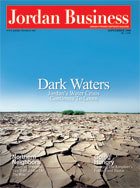
    I had a little bit of free time today, and I happened to come across this article in the Jordan Business magazine that I found lying out in the street (it’s very recycling-friendly to “reuse” magazines that other people toss out of their windows). The author and his guest, His Eminence the former Minister of water/irrigation Hazem Nasser, definitely seem agree with my thoughts on Jordanian water loss and that it’s not hitting the locals hard enough here for them to realize that they’re in very real danger of dying of thirst if they don’t make a radical change in their consumption and reuse policies.

    The average Jordanian consumes 170 cubic meters of water a day; a stark contrast to the 1,000 cubic meters consumed by the average citizen of a water-rich nation.

    When I wrote about working in the Sheraton a couple weeks ago and finding jugs of bottled, filtered water in the trash with only a few sips gone, it just blew my mind that in a country that is estimated to be completely dry within 30 years (at the current rate) people would do something as wasteful as that. Nasser and the author are quick to jump on the idea that I’ve also heard around Jordan in a few weeks here, that agriculture is the most wasteful. You can read the article to get more the statistics about it, but it’s pretty eye opening.

    [Agriculture] consumes 65% of available water while its contribution to the gross domestic product (GDP) has not exceeded 3%. In contrast, the industrial sector receives around 3% of available water and contributes at least 40% to Jordan’s GDP.

    (more…)