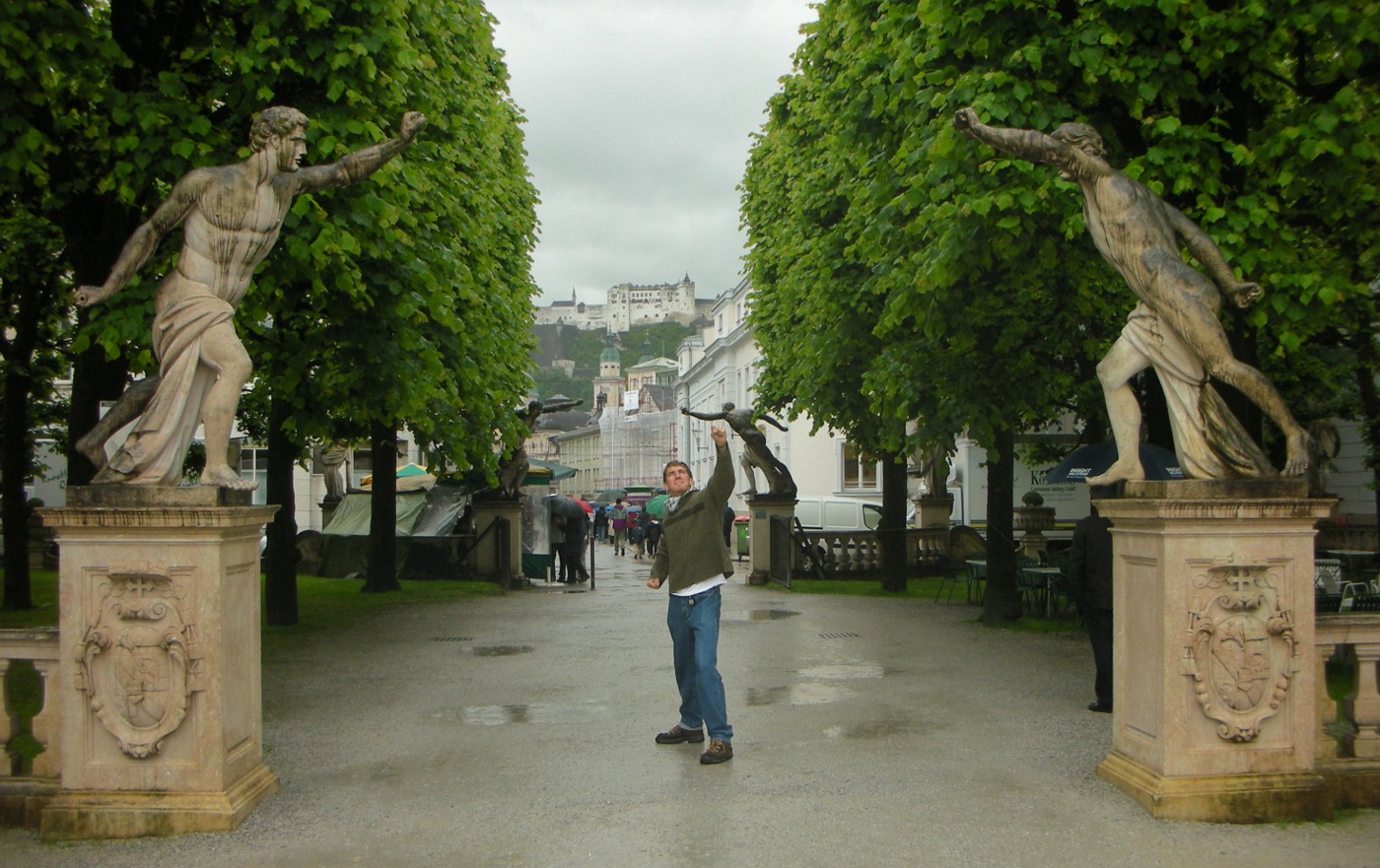
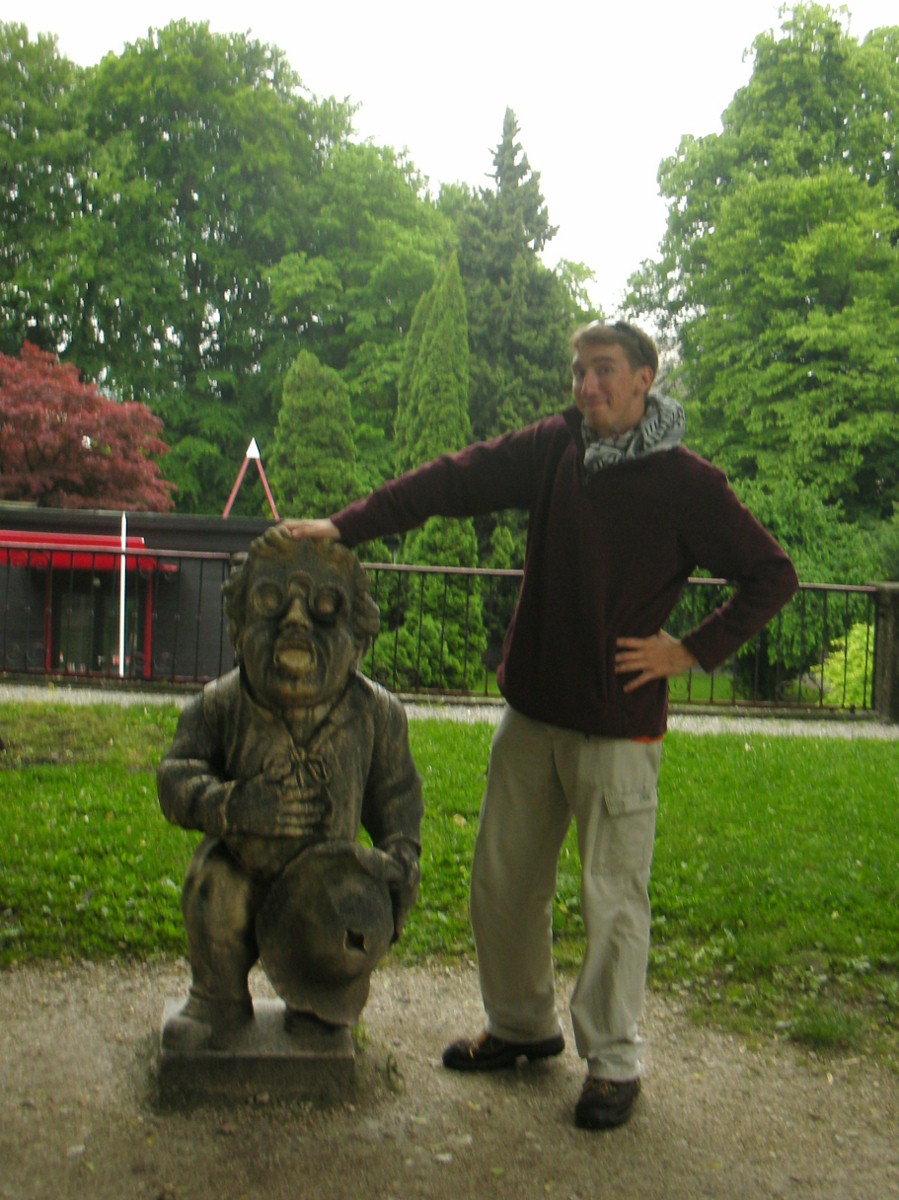
Salzburg! In the Mirabell Gardens from the Sound of Music, with the Hohensalzburg fortress behind
It’s bedraggled and after two days already seems like the stiffness is going out of its joints. But for only 7€ to defend me from the nonstop downpour thar has been coming down in the beautiful Austrian city of Salzburg, it was worth it. The silhouette of Mozart emblazoned on the side is a cute touch.
Hala, Mai, and myself arrived in Salzburg on the first of June, after spending all night traveling and waiting in cold train terminals. Let’s be honest; they weren’t that cold, but considering all of us are used to the Jordanian temperatures in June, I was afraid the girls were going to freeze to death. I was ordered by Mai’s mother to take care of the two of them while we’re all in Salzburg together, and I’m a man of my word!
From Frankfurt, we said goodbye to the rest of the choir group as they busily attempted to distribute their overweighted baggage among each other (this is what happens when you load up on high quality European beer in glass bottles!) and easily found our train down to Munich, where we would transfer to Salzburg. Unfortunately, I misread the signs as to which station in the city we should get off at, and instead of disembarking in Munich’s main station with its transfer to the neighboring country, I haplessly herded everyone off into some podunk village at the edge of the city limits, and its meager, dreary station with one shack on the platform to defend against the wind.
I left the girls huddled in the room in the corner with our only other cohabitant, a bearded old man wrapped in blankets that looked like he had settled in for the long haul. I ventured out to try to find something to eat and drink, and rapidly discovered the predicament I had put us all into. I quickly attempted to figure out how to use the on-platform ticket dispensing machines, and only ended up paying for and printing off two extra ones for a total of five tickets. It was 2.4 euro per ticket, to go to the next station over.
When I got back to our lean-to, I found the girls giggling and laughing and dancing the Jordanian wedding dance, debka, in a circle around the concrete floor, perfectly coordinated and practiced despite their muffled appearance under layers of sweaters. The old man was no where to be seen, but as I took my spot in one of the hard benches, I saw him through the fogged up window, smoking a cigarette and staring into the room with a flabbergasted expression. I rightly figured that it was probably the first time this shack had seen two Jordanian girls dancing a wedding party dance. I caught the man’s eye and shrugged emphatically with a small smile. He nodded back appreciatively, eyebrows raised.
We finally caught our trains, first to the main station and then onwards to Salzburg. After checking in our bags at the Yoho Youth Hostel (although our room wasn’t ready yet because it was only 9 AM) we decided to get started with our sightseeing. The sky looked ominous, but I scoffed at it and when the girls asked me if I had brought an umbrella, I said – “of course not!”
It was a short and light-weighted meander back to the train station without our heavy luggage, but my goal was firmly set in my mind: pick up some of the “Salzburg Cards” that the hostel had touted as being a great bargain for tourists. And were they ever! We each bought 48 hour cards for 35 euro apiece, but besides granting 100% free admission to every museum and exhibit in the city, or free admission to the mountain trams, they also provided free bus service as well. I’m sure that over the course of the next few days, with all the things we visited, we would have ended up spending easily 3 times that to see the same amount.
Our first stops were the Untersberg mountain and Schloss Hellbrun, the former famous for its views and ice caves, and the latter for its mischievous hidden water cannons, oft unleashed on unsuspecting tourists. However, the former was bound to be disappointing because of the clouds; we were only about a third up the mountain before our cable car was utterly shrouded in mist and we could see nothing but blank whiteness in all directions. The girls enjoyed playing out in the snow briefly at the lodge on the top, and I looked forlornly at the sign that said “Ice Caves, 3 hour walk.” The tram operator told me with deadpan seriousness that to attempt the walk up the semi-frozen path, up the side of the mountain, in the whiteout, would be courting certain death.
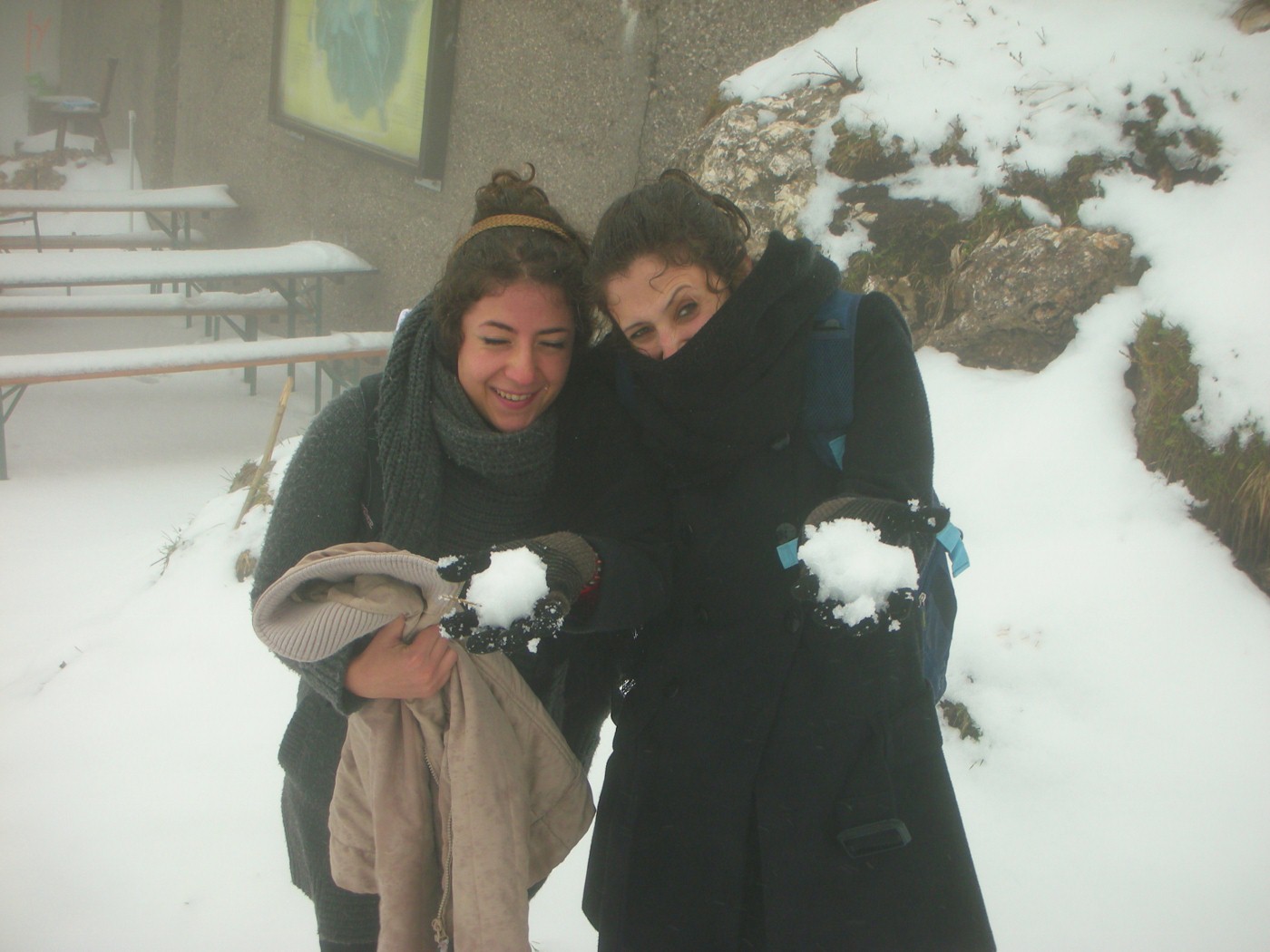
Mai plots evil mischief that she can wrought with that snowball. I had to quickly put the camera away and arm myself in turn!
The Hellbrun schloss (which means castle, in German) was much more inviting, however. The three of us were part of a small contingent of English-speaking tourists, and at first I’ll admit I grumbled mutinously when the guide shoved a loud and rambunctious gang of German middle school students in with us. “There goes my peaceful enjoyment of the park,” I muttered. However, the children turned out to be an amusing boon to our visit because our guide through the Trick Fountains clearly had an ulterior motive. He would shout out instructions to their group in German first, instructing them where to stand or sit or walk, then switch off his microphone and murmur to us in English where we should stand to watch the fun unfold safely. As most of us older people were carrying cameras of varying expensiveness, we appreciated his candor. For the half an hour tour, we watched the kids get blasted by hidden jets as they shrieked with surprise, and then mirth. There were tricks like hidden jets hidden in their chairs, hidden in the tips of a deer statue’s antlers, hidden in fishes’ mouths, and in every archway and pathway we came through. Other nifty tricks involved a “birdsong” room that was entirely created by water pressure moving through an old-fashioned tooth/wheel music box. That was the really incredible thing though – of course, electricity didn’t exist when the palace was built, so every fountain and water trick was powered entirely by pressure and valves. I left feeling very impressed by the engineering behind the place!
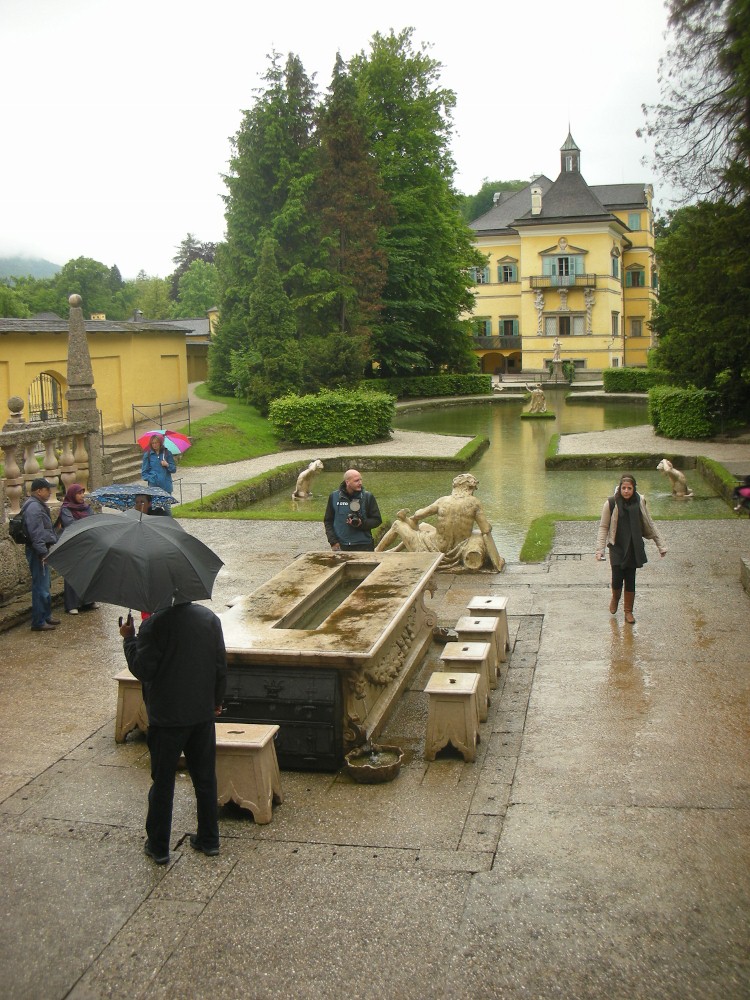
Feel pretty safe and confident there, eh kids?
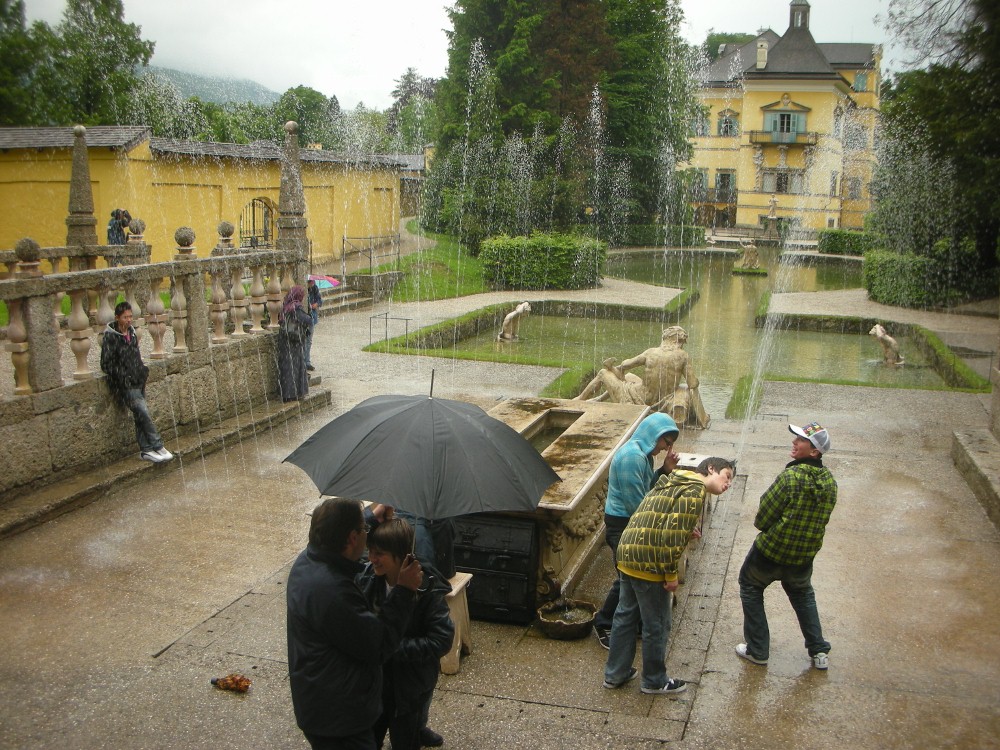
At least, until the jets of water shoot out of the seats into your rump
By the time we returned to Salzburg itself from the country castle, it was starting to drizzle, and then as we wandered through the famous Mirabell Gardens, it was coming down hard enough that I was worried about taking my camera out from its pouch. After posing in several Sound of Music-esque positions, I grudgingly admitted to my companions that they had been right, and that I definitely would need to get an umbrella just to be on the safe side. We were only a block away from Mozart’s living quarters, so it seemed fitting that his profile should adorn the black umbrella I purchased.
After we returned to the hostel and finally checked in officially, Hala wanted to nap but Mai and myself were still interested in doing more hiking. The brooding dark green mountain of Capuchinberg was right outside our hostel window, so we decided just to walk up that and see how far we could go before nightfall at nine. It made for a wonderful climb, starting from the lower hills covered in strange Catholic dioramas depicted the various stages of the crucifixion of Christ. Each one of these diorama boxes had a crumbling, faded-paint statue or two within, and in the fading evening light, was downright eerie. The shadowy forms of three crosses with slumped figures on them, when we came across them suddenly, was a little too much!
We spent the last hours before darkness scaling the mountain, searching for the best lookout points over the city, with the imposing white shape of the Hohensalzburg (high salt castle, literally) visible over the river, almost at eye level with us because of our height. Amusingly, the highlight for Mai was coming across a chamois goat reserve, which she got so excited about that she seriously debated climbing the fence and trying to go over and pet them. “I’ve never been this close to a wild animal before!” she exclaimed. Luckily she was too short to make it over! At the top of the mountain, we had a few minutes to absorb the beautiful view over the city, finally unimpeded by trees over our heads, and with the Frankinburg castle behind us. I sheepishly admit that I had forgotten my new umbrella back in the room, and when the skies suddenly opened up again, Mai scolded me good-naturedly and gave me her hat for protection, “or you’ll catch a cold I’m sure!” We scurried down the mountain in the dwindling daylight, past huge slugs and orange-and-black salamanders that sloughed wetly across the asphalt paths. Mai and I stopped to stare at them with equal fascination; creatures that require that much moisture to survive just aren’t common in Jordan! We made it off of the mountain with 3 minutes to spare before the sun went down and shrouded the city in gray, impenetrable mist.
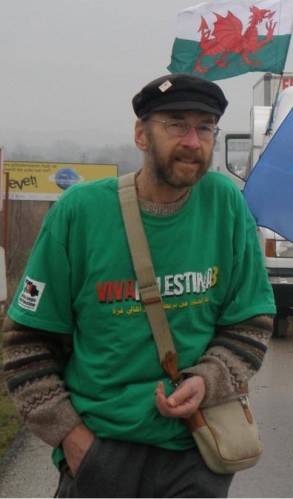 Back in March, before I got caught up in planning my trip to Egypt and completely lost track of my blog’s former punctuality, my dear English friend and former fellow trainer at Ayn al Basha came back to Jordan after a 6 month leave. As