HeiseHeise.com

The Personal Blog of Zach Heise

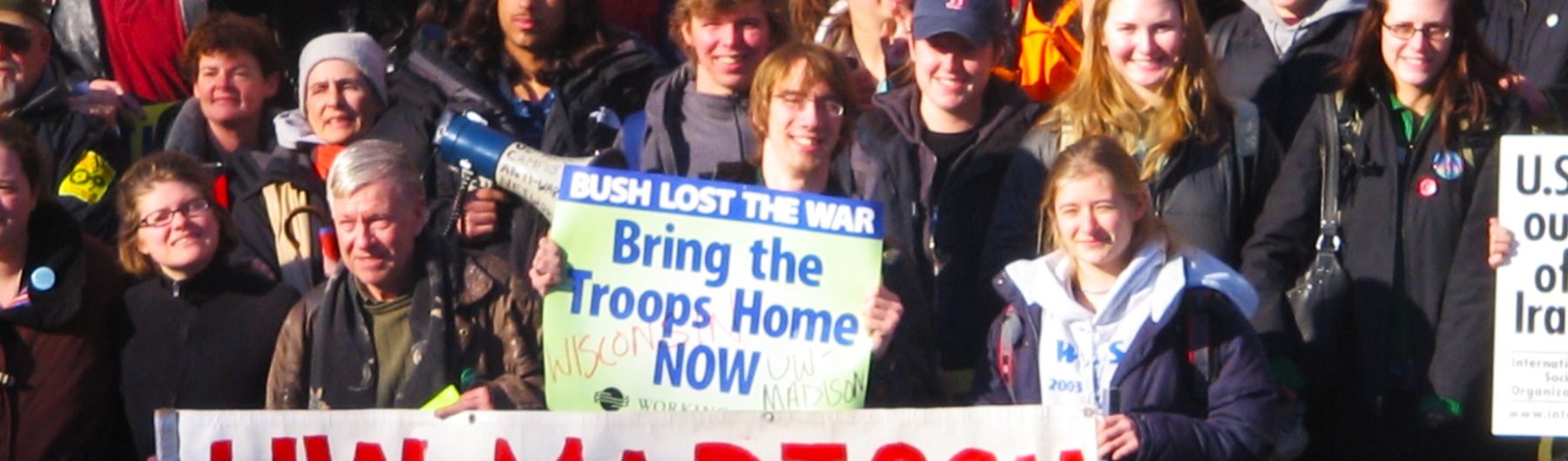
Stop the Surge Protest 2007

A random image. Reload page for more. Want more info?

Month: August 2010

  • Ramadan Excursions – Wadis of Superlatives

    Under the 2nd largest waterfall, courtesy of Nelle's waterproof camera
    Under the 2nd largest waterfall, courtesy of Nelle's waterproof camera

    It’s odd, but before I came to Jordan I had no knowledge of the beautiful semi-tropical canyons and verdant palm expanses of the Dead Sea basin that are known as ‘wadis.’ A wadi, which is Arabic for ‘valley’ can be used for naming the famous Wadi Rum that is one of the prime tourist camping sites, but is used more frequently for the numerous warm rivers and springs that slowly meander their way through the sandstone crags of the mountains that descend towards the lowest point on Earth.

    After the fun three-day camping experience that we had in Wadi Hasa several months ago, I’ve been anxious to get back out there again to see more of Jordan’s wadis before departing. Most of my friends that were present for that hike have since departed back to America, but Nelle and Jeff were happy to indulge my entreaties for a hike, and two weekends ago Nelle selected Wadi Himara from her dog-eared and water-smudged wadi guidebook.

    Wadi Himara

    Wadi Himara means “Valley of the female donkey,” but its claim to fame doesn’t tend towards braying asses but instead to the massive 80 meter waterfall that crowns the end of the journey. I couldn’t find any pictures of the waterfall online prior to the hike, but Nelle assured us that friends of hers had hiked it last year. With the addition of Liam, an English friend of a choir friend, our band of four was complete, and we started off early on Sunday morning from Amman in Nelle’s rented car.

    Like my visit to the neighboring Wadi Zarqa’ Ma’in in late June with my Arab friends, we had some difficulty determining which one of the yawning, unmarked canyon entrances that strew the coastline of the shimmering Dead Sea was the one we wanted. Thankfully we had Nelle’s guidance and descriptions to assist us, and we even found a fairly wide shoulder to park the car on before leaping over the bridge wall and tumbling into the scrub brush of the wadi below us. Thick concrete shield pillars greeted us only a few meters in, with entire trees splintered and crushed into their gray teeth – a testament to the sheer awesome force of the floods these wadis see in the rainy springtime month.

    However, there was nothing to fear now – a few minutes later and we found the pathetic trickle that the river is reduced to in the blazing summer months. No danger of being swept away like we had worried about in Hasa in April. Just like that wadi, we were greeted by nervously skittering little crabs, waving their claws at us angrily before they would scurry away under boulders. Small waterfalls from little streams joined our meager river as we walked eastward away from the sea.

    The waterfalls got progressively larger as we continued, including one large enough to have possibly stymied our progress if not for some other kind hiker’s installation of a nylon rope. That’s not to say that we couldn’t have reached our end destination, as Nelle proved – she climbed up over a nearby mountain instead and reached the other side with only an extra five minutes expended.

    She almost got up to the top, too!
    She almost got up to the top, too!

    And there it was, in front of us! Maybe. Although huge and impressive, it didn’t look like it was 80 meters tall, or else my knowledge of the metric system was badly flawed. We snacked on apricots, dried sweet dates, and water in the shadow of the fall as Nelle informed us that this one was only the first of two, and the other one was supposed to be larger – although none of us could imagine a taller waterfall than this in Jordan! To reach it would be much harder: we’d need to backtrack and find a path through the noontime sun, up the side of wadi, and rejoin the river on the higher plateaus above this waterfall.

    From my panoramio collection (click to check it out)
    From my panoramio collection (click to check it out)

    The next phase of the hike was just as tiring as Nelle had predicted. Some distance back before the rope-guided smaller waterfall behind us, we found an area where the wadi’s walls sloped enough to be climbable, and slowly and cautiously scaled the 100 meters to the top across gravel and scree that threatened to toss us into the rocks below with every step. We drank from our water bottles greedily as the sun burned directly above us, but at the summit we could see much further east than before – towards a green, shadowed and gigantic rock wall still a kilometer distant. If we squinted, we could see a narrow white line flinging itself from the heights and vanishing behind some lower cliffs. It was the waterfall, we knew – and if we could see it from here, it had to be gigantic.

    See that tiny shaded valley in the upper left corner? And the even tinier white line if you click to maximize? That's it!
    See that tiny shaded valley in the upper left corner? And the even tinier white line if you click to maximize? That's it!

    It took another half an hour to cross the baked and shattered plateau and get back into the cooler and shaded streams of the wadi. Interestingly, I noted that most of the rocks around this area were of a pitted and lightweight volcanic variety, and recalled reading that millennia ago, there had been an active volcano in lower Jordan – secular scholars claim that it was responsible for the destruction of the sinful cities of Sodom and Gomorrah of Biblical times, the ruins of which are supposed to be only a few kilometers from where we were now standing. Even more telling were the black rocks that jutted impudently from the regular sandstone. These rocks had the lines of magma flows, and the “popped bubble” surfaces that said they had once been subject to a heat so intense that the stones themselves had bubbled in the heat, only to have those thin stone membranes popped by the elements in the proceeding centuries.

    Popped-bubble volcanic rocks trapped in the wadi, which might have been first carved by a volcano, before the water...
    Popped-bubble volcanic rocks trapped in the wadi, which might have been first carved by a volcano, before the water…

    Back inside the wadi itself, it was exciting to see the distant waterfall growing ever-closer as we ascended and descended the cliffs, watching it appear and disappear behind the trees and stones. The warm water was clogged with green algae in every side pool, much more than what we had encountered in Hasa. It was obvious that the strength of the sun in these months was the cause. The strong-smelling glop forced us to tread carefully as we climbed trees and rock walls through the wadi; none of us relished the thought of falling into one of those stinking pits.

    If the smell was strong, it was matched by the beauty and tranquility of the tallest waterfall in Jordan when we pushed through the last of the oleander bushes to reach the iridescent blue pool at its base. We could barely see the mouth of the fall from here at its base, and the August-thinned gush of water came down and struck the rocks at the base with loud and echoing force. From what I could see of the clearness of the pool before Jeff and Liam rushed across it to reach the fall, it was filled with a grayish, vertical-growing species of algae that hung motionless in the water and looked at first like miniature towers jutting from the bottom. As soon as the silent water at the shore was disturbed by our feet, though, a thick cloud of blue-gray silt and muck rose from the bottom like we were walking through the Nile delta in flood season.

    al-Waterfall Akbaaaar!!
    al-Waterfall Akbaaaar!!

    On the far side of the pool, under the waterfall itself, Jeff and Liam had already started inspecting a strange formation that had slowly grown out of centuries of mineral and sand-filled falling water. From a distance it looked like a huge pockmarked piece of pumice, but upon closer inspection, its slick surface was made out of loosely-compressed sand particles that were slowly forming stalactites from the cliff wall towards the pool below. We debated eating the rest of our lunch in the cool depths of the cave that this formation had created, but the small size and the unceasing dripping water forced us to backtrack a few dozen meters back into the wadi to relax under the shade of a huge and ancient palm tree surrounded by oleanders.

    (more…)

  • Ramadan Choral Quiz Night 2010

    You haven't heard anything until you've heard the high notes in "Prelude in C" hit in a perfect falsetto
    You haven’t heard anything until you’ve heard the high notes in “Prelude in C” hit in a perfect falsetto

    After the full-house all-out success of 2009’s Ramadan Quiz night, my choir, Dozan wa Awtar, decided that we’d pull off the same feat a year later, except with available seating for another hundred guests. Last night, we had a great show at the Action Target shooting range/go-karting club just south of Amman’s city limits.

    Although we started selling tickets weeks ago, there were some times when it was touch-and-go about whether we’d be able to sell enough tickets to be able to justify the concert to our always-generous sponsors. Last year we had no trouble, but this year, Ramadan’s movement of two weeks earlier means that school isn’t yet in session again, unlike last year. Both foreigners and Arabs alike with the means to justify 23 dinars per person for a dinner and a show often leave the country in the summer, and I was unable to find a single friend still in Jordan who was able to go.

    I couldn't imagine a better place to hold an iftaar show - looking out over the distant lights of Amman
    I couldn’t imagine a better place to hold an iftaar show – looking out over the distant lights of Amman

    Thankfully, the fact that our choir is still majority Arab, with large families and strong familial ties, meant that we were able to pull through in the nick of time and get the sales we needed. Action Target had a great stage set up for us (although it was probably not for us but for their singer a few nights ago, the “Voice of Jordan” Omar Abdullat) complete with outdoor seating, below-lit palm trees, and a bar that was still serving alcohol – amazing. I saw more than a few people in the crowd casually and furtively emptying silver flasks into glasses though; ahh, the tradition of Ramadan fasting and the government closing all liquor stores and most bars is only equaled by the tradition of circumventing these laws, both religious and secular alike.

    All and all, we were there from around 5 to warm up and get ready til 11:30. The sun set at exactly 7:25 and people immediately dug into the buffet line of pastas, Chinese stir-frys, and of course the required Arabic mezze appetizers like hummous, salads, and kubbeh. Still no mensaf, though (the traditional Jordanian dish) – frankly, I’m always disappointed when these massive restaurant/catered iftaars can’t carry the national dish. Haven’t seen a single one do it thus far.

    Seating was done in big tables of 10. If you didn't bring quiz night teammates with you, you could make some new friends at your table!
    Seating was done in big tables of 10. If you didn’t bring quiz night teammates with you, you could make some new friends at your table!

    The quiz aspect of the night’s events started soon after the meal, with the full choir only doing a few small numbers and the majority of our time onstage dedicated to solos or duets of popular music. We had musicals – both Western and Arab – and Disney music to sing. Amusingly enough, apparently Egypt’s massive film industry translates Disney classics into Egyptian colloquial and so we had people doing “Bibbity Bobbiby Boo” and “Hakuna Matata,” in Egyptian. For that reason, we were sure to remind people that their quiz night teams should definitely be made up of people from both cultures – what a great way to foster intercultural cooperation!

    Personally, I did “Kiss The Girl,” from The Little Mermaid. Some of the women in the choir volunteered to be the “sha la la la” girls in the background, doing their own little dance, and Um Tulip provided a couple snorkel headpieces, too. By the time I had practiced this piece and our choreography, I was sad that we were only doing little bits of each song…I wanted to sing the whole thing!

  • Ramadan Excursions: Karak Castle

    Time is running out for me to see all the parts of Jordan that for whatever reason, I’ve missed out on over the past two years. The wheels lift on my outgoing plane exactly three weeks from today, so I started off my last month by doing not one, but two trips outside of Amman to some of Jordan’s beauties, first to Karak Castle, an ancient and well preserved Crusader castle in the south, and then to Wadi Himara, a scenic semi-tropical valley that feeds into the Dead Sea, and is home to the two largest waterfalls in the entire country. I’ll be writing about Wadi Himara and my upcoming trip to Wadi Ibn Hammad next week.

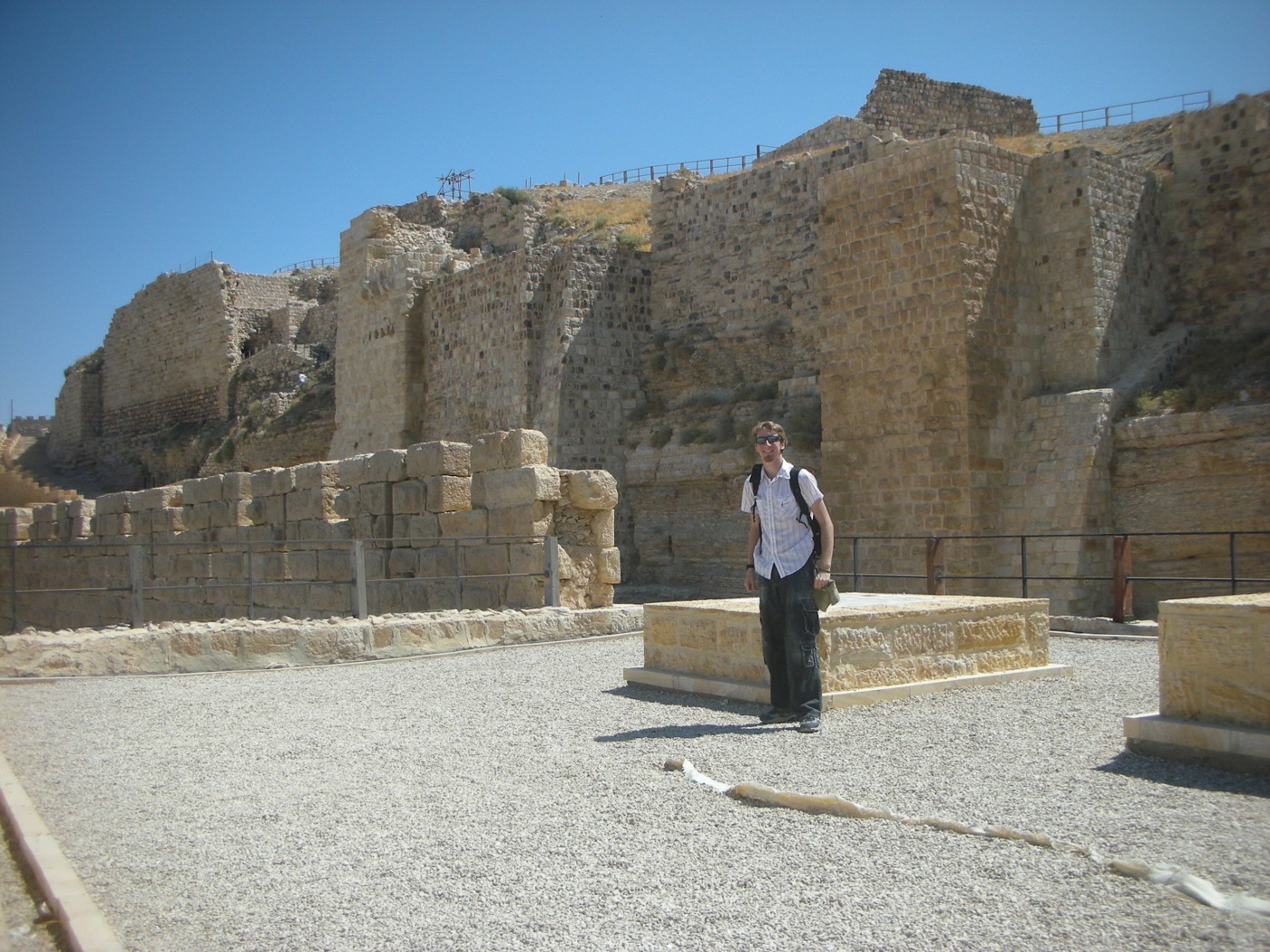
    I'm standing on the remains of the south-western guard tower, with the walls of the High Court behind me
    I’m standing on the remains of the south-western guard tower, with the walls of the High Court behind me

    Both of the trips were hastily planned – in fact, I had forgotten about Karak Castle for at least a year until a friend from New Zealand that I met in Nazareth last month, and then again in Amman several weeks later, mentioned that he had visited it. Hearing stories about his casual trips around the area, without even knowing either Semitic language, made me remember that I could certainly navigate Jordan’s cheap and plentiful bus system, especially to a relatively large city like Karak.

    What I didn’t count on was how long I’d spend waiting for buses! The combination of it being early, being the Friday holy day, and Ramadan fasting having started on the 10th, meant that I almost spent as much time waiting for buses to leave, as sight-seeing! Notice that I say waiting to leave, as opposed to arrive. Not for the first time, I’ve realized that the reason why a two hour, 90-km journey from Amman to Karak costs less than $2.50 is because they will simply refuse to leave the bus stop if they’re not at 95% capacity – at least! When I pay $50 for a one-way ticket from Beloit to Chicago O’Hare, I’m paying for all those empty seats, too. Money is one thing that most bus-riding Jordanians do not have a lot of…but time to burn, waiting in these dark, musty buses, is plentiful.

    I arrived at Karak at 9:30 AM, having left my home at 7. My neighbor Marwan warned me to get to the bus early, because there might not be a second one ‘til the afternoon! He was almost certainly correct – I shudder in sympathy to think of the poor souls who arrived at the station mere moments after we left at 8:15 – the driver estimated nonchalantly to me that between empty and departure, he’d been waiting for passengers for almost three hours.

    It amuses me to think that the first and only previous time I’d been in Karak was over two and a half months ago, when our band of eight foreigners passed through briefly on our way to Wadi Hasa. I remember drowsily wondering where the famous castle was in the quiet city, and then getting distracted by something else. We stopped at the same station, and the driver pointed up…and up…to where worn stones palely shimmered in the morning light. The castle had been directly above my head some 150 meters, had I bothered to look up! Download this Google Earth KMZ file to see Karak from my perspective.

    I strolled leisurely up the quiet hill, listening to the sound of sheep calling to each other in the valleys surrounding the city. The call to prayer had been hours ago, and the next one would be in another few hours. During these sleepy times when no smoking, eating, or drinking were allowed, many Muslims stay indoors as much as possible, parked in front of fans and trying to keep as much moisture and calories within. I saw some laborers building a shed in the shade of a taller apartment, looking like it was about to topple off of the edge of the hill, and caught the slightly nasal-sounding accent of Egyptian slang. It seems that nothing keeps them from working, Ramadan or not!

    The admission was only a single dinar, the same as what my guidebook from 2006 told me. The ticket seller informed me that in his twenty years of working in Karak, he’d never heard a foreigner speak such good Arabic, to which I replied “praise God for curing your deafness,” but I probably messed up the wording on this complicated phrase and I don’t think he caught the joke. I promised myself I’d write it in the blog later so at least someone would.

    For my first few hours in the castle, it was only me, the twittering birds, and a few grumpy-looking old Bedouins who looked as if they’d rather be sleeping instead of adding to the castle’s authenticity as a post-Crusader outpost. Apparently, after the glorious Salah al-Din (better known as Saladin to us Westerners) conquered the castle in 1187, it was re-used by governors and even by visiting Sultans during the Mamluk period. The more I read about the chivalrous and noble Kurdish warrior whose name means “the Righteousness of the Faith,” the more I’m impressed by him and his impeccable manners and character, especially compared to how embarrassing underhanded and foul the European invaders often were. In fact, it was the overseer of Karak Castle, the traitorous and sadistic Reynaulds, that earned Salah’s greatest ire by violating a treaty and attacking peaceful caravans trying to pilgrimage to Mecca, and after the castle’s capitulation, Salah personally decapitated the Frenchman – the only time in the Crusades that the Islamic leader executed a surrendered foe. Legend says that several years earlier, during a failed assault of the castle by Muslim forces, Reynauld’s heir was celebrating his wedding night in one of the towers, and after Salah inquired as to which tower contained the nuptials, he forbade his men to attack it.

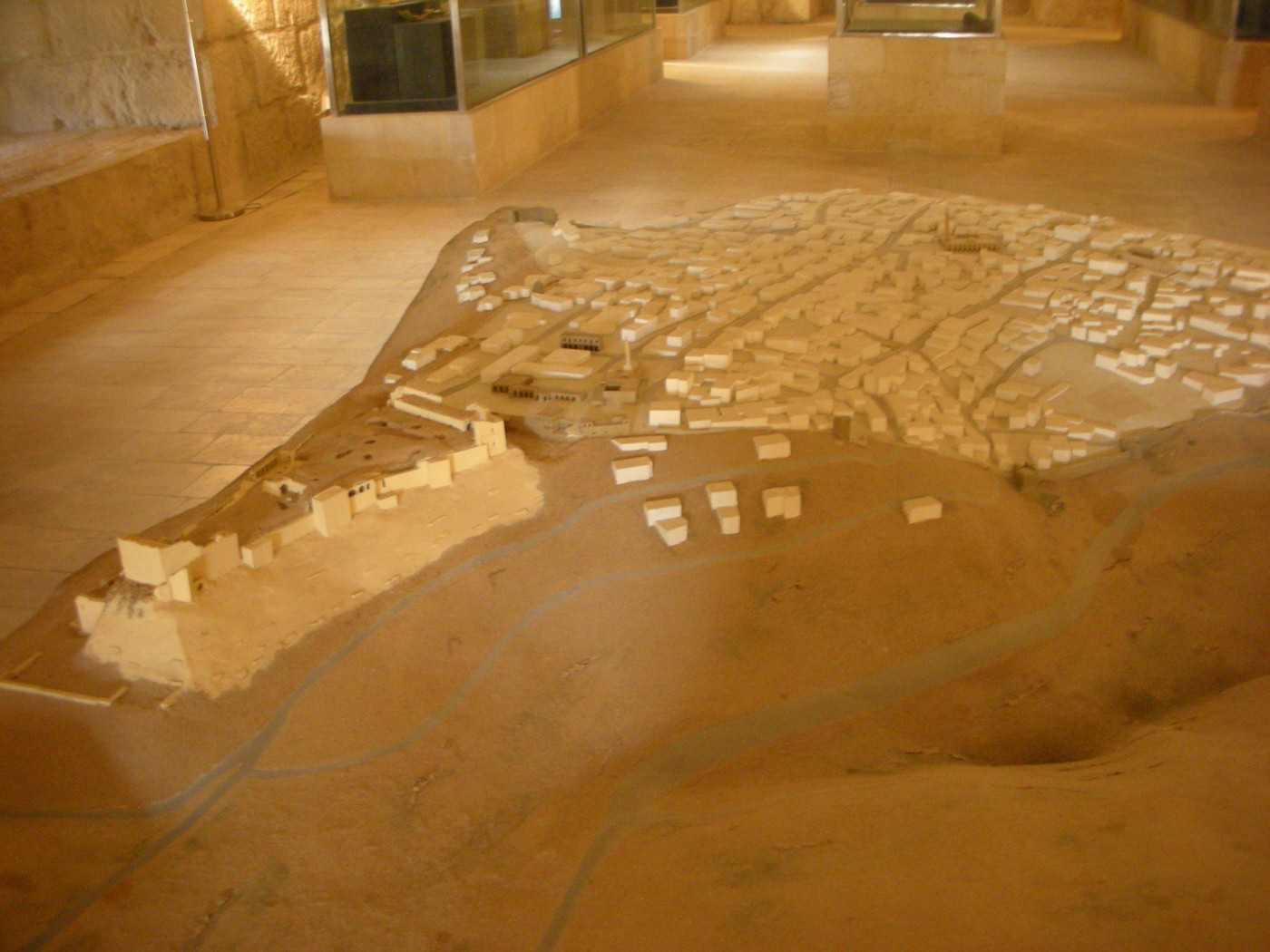
    This 2x2 meter model of Karak and its high-ground castle are prominently featured in the small museum
    This 2×2 meter model of Karak and its high-ground castle are prominently featured in the small museum

    The wedge-shaped castle is situated on the southernmost corner of the fan-shaped city, and after walking all around it, both inside and out, I could see why attack was almost impossible with medieval weaponry and a patient siege was the only way that the Arabs eventually won. Arrow slits line every wall, and the small but tidy museum inside the castle walls showed pictures of the various defensive weaponry the Crusaders had at their disposal. After making the rounds through the museum and around the “lower court,” I went up some steps to the castle’s “high court,” a long, dusty plateau on which I could still see the lumpy remains of rocks and air pipes into the warrens below. Those rooms themselves were as dusty, dim, and rough-looking as I’m sure they were a millennium ago, and it was lucky that it was a sunny day or I probably would have been banging into more of the walls and possibly causing the whole structure to collapse on me. I could dimly make out ancient torch-niches on the walls, and sincerely wished they were still in use!

    After climbing up to the high point of the Mamluk fortress on the southern edge of the castle, I called my friend from choir, Yanal, whose ancestors are originally from Karak. “Guess where I am?” I cheerfully told him as I looked out over his city. “My beautiful Karak!” he gasped to me over the phone. “If only you had told me you were going, I would have driven with you down there!” He extolled to me the virtues of Karak and Karaki people as proudly as ever, as I chuckled and agreed with him on every point.

    (more…)

  • Amazon video review: Live from Jordan

    I sent an email to author Benjamin Orbach a few days ago telling him how much I enjoyed his book, Live from Jordan. He wrote back thanking me for the input and with some links to some programs he works with, like America’s Unofficial Ambassadors and Creative Learning, that are aimed at encouraging interaction between the East and West.

    Click the picture above to go to the Amazon review page with the video
    Click the picture above to go to the Amazon review page with the video

    I made a video review for the book at Amazon. It’s the first time I’ve ever made a video review for anything, and although it took me quite a few takes to make it look like I wasn’t brain dead and a gibbering idiot, I think it turned out okay, thanks to the magic of Windows Movie Maker (which is actually a terrible program and an embarrassment to the otherwise-great Windows Live suite of programs).

  • Pepsi or Coke? Simple question over here

    One thing that we Americans always can count on is our ability to take sides in the admittedly-petty battle of “Pepsi versus Coke.” With the exception of sponsor-bought restaurants and county fairs, we know that any store we go to will sell either one of the dark brown soft drinks and we can have our pick. It seems that no matter how old we get, everyone takes a side in this and most are quite proud to admit a clear favorite between the two. It tends to be a family thing. If you drink Coke, it’s because your father drinks Coke, and his father did too, and his grandfather drank Smith-Willington Fortified Bubbly Tonic Water (guaranteed to prevent diphtheria!) or something like that. The Heises have always been a Coke family.

    But Coke is not common here in Jordan, even though the penetration of tiny 6×6 meter mini-markets into Amman, called “dukkans,” is incredibly high, at a rate of probably around 3 per city block. Without fail, 9 out of 10 of them will stock only Pepsi, their beloved “Beebsee.” I don’t know why they had to pick the one that has two instances of the letter that doesn’t even exist in Arabic. The Tulip family has heard me ponder this lack of Coke before, and gave me some possible theories.

    Decades ago, back when all sorts of international trade deals to bring Western products to the Middle East were being signed, Israel and Coca-Cola became affiliated together, and Pepsi went to the Arab countries. Now, with Palestinian refugees and their descendants making up over half of the residents of Amman, old grudges die hard and Coke is still seen as a symbol of Israel. The industrious Palestinians are known as the merchants and importers of Jordan, and own a disproportionate percentage of the dukkans that provide soft drinks to the citizens. I’ve asked about the lack of Coke, point-blank, to some of my local dukkanjis, such as Marwan. Without fail, the response is always “The people don’t ask for Coke, they only want to drink Beebsee.” It’s a classic example of chicken-and-egg. When the markets only sell Pepsi, and the buyers are all either Palestinian or grew up around Palestinians, it’s easy to see how this one-sided market got started.

    A picture of a can from last month's trip to Nazareth. And I thought the Arabic script of كوكا كولا was hard to read!
    A Coke can with Hebrew writing, from last month's trip to Nazareth. And I thought the Arabic script of كوكا كولا was hard to read!

    I’ve found myself craving Coca-Cola for the past few weeks. I think I can attribute it to my trip to Nazareth in northern Israel/Palestine in mid July, where I was surrounded by the usual unsubtle signage of the Middle East; massive billboards advertising for Coke that I hadn’t seen in months. I know one dukkan in my neighborhood that sells Coke, and I’ve been buying a two liter every few days. I have been watching his fridge stock and can tell that I’m the only one who’s buying the bottles so I know exactly when to clear my throat politely and remind him that he needs to buy new stock. I guess there’s one advantage to being the only Coke drinker in the neighborhood.

    I was in the Shemeisani district yesterday afternoon, killing some of my copious summertime before the third choir practice of the season in the evening. Astute readers may remember that I wrote about the bustling business and banking region of the city in late 2008, because Entity Green had its first office in a tall building on its main thoroughfare. I had just finished eating a particularly salty kebab at the Damashqi Schwarma (Damascus) stand, and although they of course had Pepsi available, I decided that I needed a Coke. I wandered down the familiar main street of Shemeisani, looking in the dukkans I used to frequent for an elusive red-labeled bottle instead of the never-ending lines of blue.

    Five minutes of walking through the sultry afternoon heat became fifteen as I re-circled the streets, trying to find more dukkans that had either sprung up like unruly dandelions in my absence or that I’d missed two years ago. My mind was now grimly set towards Coca-Cola, and I cast a baleful eye over the rows of 7-Up, Pepsi, and the Arab-made soft drink called “Shani,” which like most things here contains enough sugar to render a camel into diabetic shock. Three dukkans became four, and then six, and as I walked farther and farther up through the dusty blocks, finally eight dukkans. The owners, sweating in the heat and slumped in lawn chairs under dirty old fans, regarded me curiously as I gazed into their refrigerators. “Beebsee?” they queried me helpfully, and then politely apologized when I asked them if they had Coke hidden in some other cooler. “Beebsee is best!” a few reminded me with a friendly smile.

    I knew that somewhere in the heart of Shemeisani there was a full grocery store and mall, but I’d never been in there before, and the large residential zone I was in now on the far edge of the district was utterly unfamiliar. I asked some lounging Egyptian construction workers crouching around a massive bowl of fu’ul whether they knew where the store was, and although they did, a passing young man offered to take the finicky foreigner straight to it. The man was a few years younger than me, in a stiff looking suit, and with a briefcase under one arm. He told me that he had just graduated from university, and I correctly guessed that he was touring the banks and looking for a job. We had only been a few blocks away from the Food City supermarket, and with his guidance, I was inside the blasts of the air conditioning within ten minutes.

    I had been walking for almost fifty minutes now in this mad search for the fabled Coca-Cola of Jordan, and I rasped at the security desk. “SOFT DRINKS.” A tall man immediately leaped up and took me directly and proudly to a Pepsi product display located in the center of the store, making a Vanna White-esque gesture towards it. “The other brand,” I told him in Arabic. “I need Coca-Cola.” Startled, he led me to a second, smaller display in the back of the large supermarket with the familiar red highlights.

    I picked up a two liter and cradled it lovingly. The man probably thought my brain had melted in the heat and he gently tried to put the bottle in a plastic bag for me right there in the aisle, which I equally gently prevented him from doing. I have searched for this bottle for almost an hour through eight dukkans, I told him. “But Beebsee is better!” he protested, then “…are you an American?” “Yes.” I replied. “My people need Coca-Cola to live.”

    (more…)

  • It’s all those non-English words

    I saw this on someone else’s blog, and couldn’t help being curious. Now that I know sort of writing style this anonymous algorithm has determined I use, I’m more curious than ever to know how it arrived at this determination.

    I write like
    H. P. Lovecraft

    I Write Like by Mémoires, Mac journal software. Analyze your writing!

    If I had to guess, it would be because the blog content I used for it to create this analysis was from my previous birthday/biking related entry, which has a few Arabic words that I wrote their English transliterations out. I mean, “shish tawooq” isn’t quite as much of a mouth-twister as “Cthulhu” but perhaps that’s where they got the idea.

    I do enjoy his writing style and books though, so I’m going to choose to take that as a compliment.

    My birthday two weekends ago turned out well; a few Cycling-Jordan  friends came out to see “Inception” with me, and then some EGT and choir friends came to the bar for dinner and some drinks afterward. Came back home by 11, read a little bit of the fifth book in the “Dune” series, and went to bed. A relatively quiet birthday but it was a good, relaxing day.

    My third Ramadan is going to be starting in only a few days now. In the two years I’ve been here, it’s moved up the calendar almost a month, as lunar holidays tend to do. Unlike Western or Jewish lunar holidays though, the Islamic calendar is never “reset” back so that you can rely on holidays falling in a certain Gregorian month – it’s always moving. In another half-decade, Ramadan will be falling in the spring months instead of in the blazing summer. If I were a fasting Muslim that was abstaining from even drinking water during the holy month, I’d definitely be looking forward to that part of the lunar cycle!