I’m really starting to wish I had brought my laptop with me. There’s a definite dearth of open wifi access points in the buildings we’ve been staying in thus far rendering my iPod touch moot. I thought I could get by with just borrowing my friends’ laptops but since there’s no wifi in the housing I usually can’t do that either.
So for the second time i’ve dusted off the WordPress application from the iPhone app store and hooked it into my blog. Nothing fancy and I won’t be able to upload any pictures til I get to a place where I can dump the 860 off my camera from the past week, but this slow and tedious method of entry will have to do.
Ugh, I just realized this text editor doesn’t even have an automatic URL making system. Again, ah well. Mub’da’iyen, as we say in Arabic. Let me see if I can type it and it will work on this little keyboard… مبدئياً. Yep, no problem.
Anyway, this link here will lead you to the official musica sacra photography page. For some reason they call us by the old name “Aswatuna” instead of “Dozan wa Awtar” which is what we use these days. You can search for our particular concerts between May 22 through 25 I believe, and they’ll be updating it for our concerts tomorrow and the day after in Belgium, where we’re sitting at this moment.
Hopefully I’ll be able to update more frequently from Austria but I can’t count on it!
Yesterday was the last day of the Musica Sacra Festival, the international music exposition involving a dozen choirs sharing their culture and religion with the German people. I can’t believe how quickly time has flown past since we arrived in Frankfurt, then Münich on the morning of the 21st. We have a few more concerts to put on separately in Worms and then in Belgium tomorrow, but other than that, Dozan’s first European foray is almost at a close.
While our layover between Amman and Münich was in layover in Frankfurt, I thought it would only be right to sample the famous sausage-based food that bears the city’s name. Sadly, I probably should have listened to the advice that an airport would not be the best place to taste test. My five euros got me a forlorn looking pale frankfurter, a couple small slices of rye bread, and a few packets of mustard (premium mustard!). However offputting it looked, it was tasty.
We rendevoused with our new German guide in the airport, Melanie, and she escorted us to our waiting bus to take us to the Music Academy of Marktoberdorf, the hub of activity for all things festival-related. I remember I was entralled with the landscape we were driving through that cloudy afternoon. Huge forests of spruce trees, damp-looking and inviting, waited just meters from the highway, and twisting vines curled their way up elderly concrete walls that separated the highway from farmland in places. Fields of yellow flowers were waving in the breeze and neat, trim, unpainted blackwood barns stood in the distance in them.
It was like I hadn’t seen a familiar summer in years…and then I realized that I hadn’t. German weather and agriculture in Bavaria look quite similar to that of Wisconsin and it’s been two years since I’ve seen summer there, having only gone back to America in the winter.
After arriving at the venerable-looking white-stone Academy building, we had a bit of time to look around before practicing. The building and its companion church of St. Martins sit high on a hill above the small city of Marktoberdorf, surrounded by trees and hayfields. Surprisingly, I learned that the church is Catholic, and that in fact most of the Germans who live in southern Germany were utterly unaffected by the Reformation and that by far the majority population is Catholic, not Lutheran/Protestant like I had always naively assumed they were.
When we visited the Konzertsaal (Concert Hall) that we’d be performing our introductory short-concert in that night, I visibly took a step back in shock after entering the performance hall and seeing a massive Israeli flag flung over the center of the far wall. Noticeably smaller representations of other country’s flags, including Jordans, were arranged around it. In some sort of unintentionally ironic twist they had positioned the huge Israeli flag over one of their security cameras, which blinked in warning at us, as if we were being dared to question the flag’s presence as the largest and central fixture of the room.
We were introduced to the owners of those flags that night at the introductory concert in that hall, where each choir group had a chance to put on a shortened version of their show for all of the festival attendees. Besides ourselves, the Israelis, and several German choirs, there was an Indonesian dancing/singing squad, a Turkish singing band, an incredibly talented octet of Swedes, elaborately dressed Ukrainians who were selling their album everywhere I looked, a Tibetan Buddist, and a tag-team duo of a Dane and Indian who did some incredible meditive music and throat singing. The Indonesians were by far the crowd favorites though, including my own. Their squad was a team of around two dozen highly skilled young Islamic women whose dance choreography as they did a “worship” prayer to Allah was impeccably timed and mezmerizingly intricate. As I watched them pound the floor with their tiny hands and shake their heads upward in unison while ululating “Allahu Akbar,” I was amazed by how the interpretation of prayer and feminine roles in Islam had changed between the religion’s birthplace in Saudi and on their little clusters of islands.
Yanal and I had been assigned to a host family together, and the two of us hit it off with our new family right away. We were met in the Koncertsaal by Reinhard and his daughter Lucy, both tall and slender with easy quiet smiles and good-natured dispositions. Although Elizabeth, our sole German-American in the choir had joked with us that Germans don’t have the American trait of smiling happily when they see someone, Reinhard and Lucy seemed to be an exception to her estimation.
The two of them took Yanal and I to their village of Stötten, to the southeast of Marktoberdorf, with my choir friends Joe and Lou’ai who were staying with a host family just down the street from us. Lou’ai, always the joker, pointed out his host mother’s name on the piece of paper we’d all gotten. “Gaw…denz…ia?” he muttered, and then repeated it. “Sounds like some sort of soldier’s name,” he then reasoned, and then roared in a gutteral voice, “Gaw-denz-ia!!!” We all thought it was fairly amusing until he did the same thing from of the woman herself. Gawdenzia giggled and said, “Ensy wil do fine if you want,” to which Lou’ai growled back again, “Yes Gawdenzia.” Because she lives just down the street from Reinhard’s house, she and Reinhard have been taking turns over the past few days carpooling the four us from Stötten, to the Academy, and back.
I know that over the next few entries I’ll be able to talk about the concerts and the venues in more detail (before all the churches we’ve sang in over the past few days blur together like some sort of brain mush) but right now I know I should get to bed. We’ve been singing so long now that I’ve been coming back home to my host family host exhausted each night, too tired to do anything more than have a cup of tea before falling into bed.
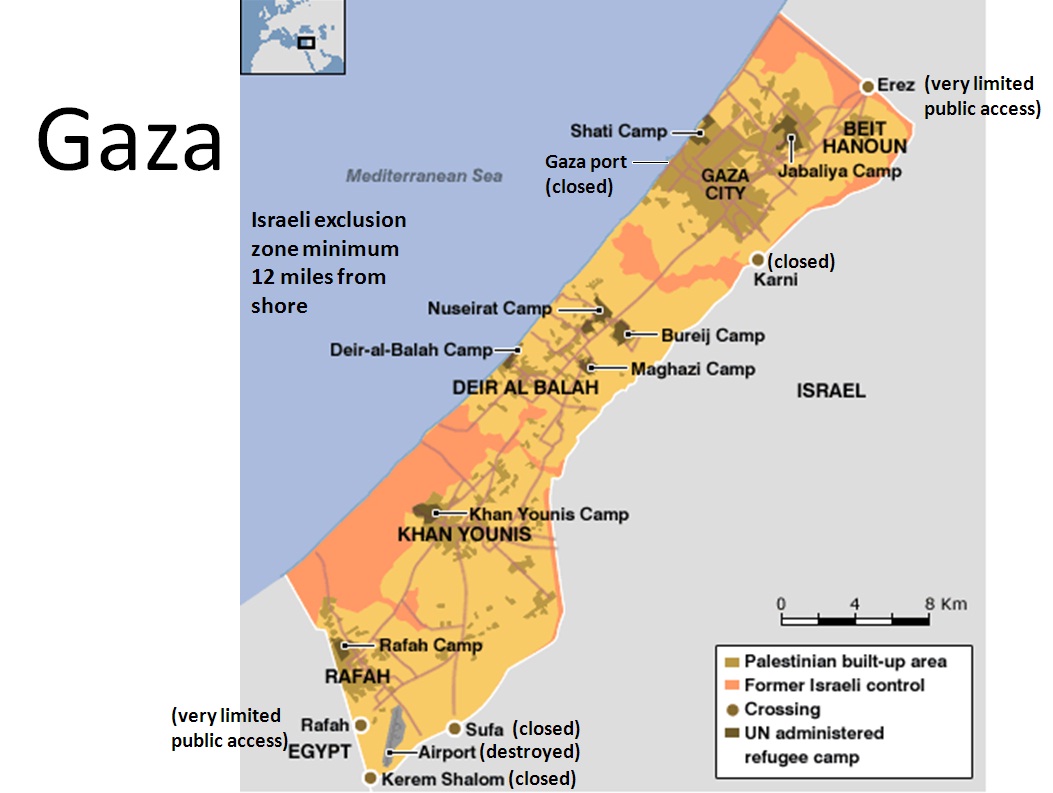
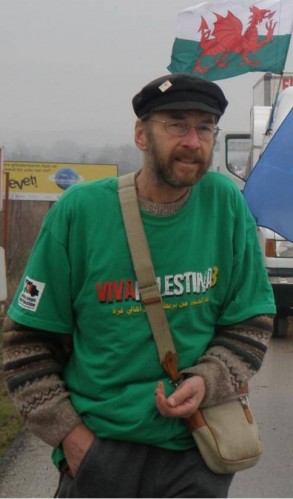
Back in March, before I got caught up in planning my trip to Egypt and completely lost track of my blog’s former punctuality, my dear English friend and former fellow trainer at Ayn al Basha came back to Jordan after a 6 month leave. As Nicholas and I were catching up, it turns out that he had actually been back “in” Jordan, however briefly, back in December 2009 when I was in America on holiday. He was part of the massive Viva Palestina international relief mission from his hometown of York, bringing supplies to the beleaguered people of the Gaza Strip to mark the official one-year anniversary of Israel’s horrific attacks on the Strip.
I wish I could say that I had been more punctual with this entry, but I wanted to specifically wait until I had permission from Nicholas to post these two Powerpoint files. A few days before I left for Egypt, Nicholas threw a special seminar detailing and describing his journey with the brave women and men journeying from Europe, America, and Turkey into the Occupied Territory. The people of York donated an ambulance, which you can see in several of the slides.
Without further ado, please take the time to download these two Powerpoint files, reproduced here with permission from Nicholas, his fellow travelers and hopefully the creator of the files (Stephen Shroud, judging by the name in the .pptx metadata). This first one is about 20 MB and serves as background information, and the second one is 25 MB and contains maps, excellent photography, and some soundclips from the trip. I only wish that I had some way of also reproducing Nicholas’ mesmerizing way of describing everything that he saw and experienced!
If you want more information on the Gaza Strip, and specifically Viva Palestina, please check out my friend Adriano’s website, The Sitch: Gaza Dispatches. He and used to be fellow college activists together in the Campus Antiwar Network, and he was part of Viva Palestina’s American contingent…way to go!
I think I’ve set a new record so far for non-updating in the month of May. I feel like I’m either getting lazier with the blog or just getting busier in general and the two are definitely proving to be mutually exclusive. Having done the amateur blogging “thing” for the past 3 years now (mid May 2007 when I left for Great Britain) I’m constantly amazed when I find other talented bloggers and see how they can juggle jobs and near-daily writing. Maybe my hands are just getting old and stiff. That probably can’t be good in my line of work.
Technically, the content is (currently) much like the former. But the potential for greatness is much higher!
I just finished off the Cycling Jordan website yesterday and made it live. The new site has some cool updates which I mention on its front page. Like the EntityGreen.com and WhitmanAcademy.org sites, they’re all based on the incredible WordPress open-source engine. I have to hand it to those guys, they really have brought personal web publication to the masses; I can crank out sites in 2-3 weeks with their software if I wanted to.
Saad and I first started working on this site back in January, though. I was really busy with some other projects at the time, namely the Training for Trainers (ToT) educational program for Iraqi vocational trainers. I gave him a ballpark estimate of a couple months, and although I got it finished within that time frame, between our two busy schedules and our friend Sari, who will be managing the site, we never got around to making it live until just now.
The old site was also WordPress, but the company that designed it were incompetent and also never taught Saad how to update it himself
So, if you’re ever in Jordan and looking for the best cycling experience that the country can offer. I’ll go so far as to say indisputably, because the other two (Tareef and Bike Rush) aren’t even in the same level of competition and don’t even sell bicycles.
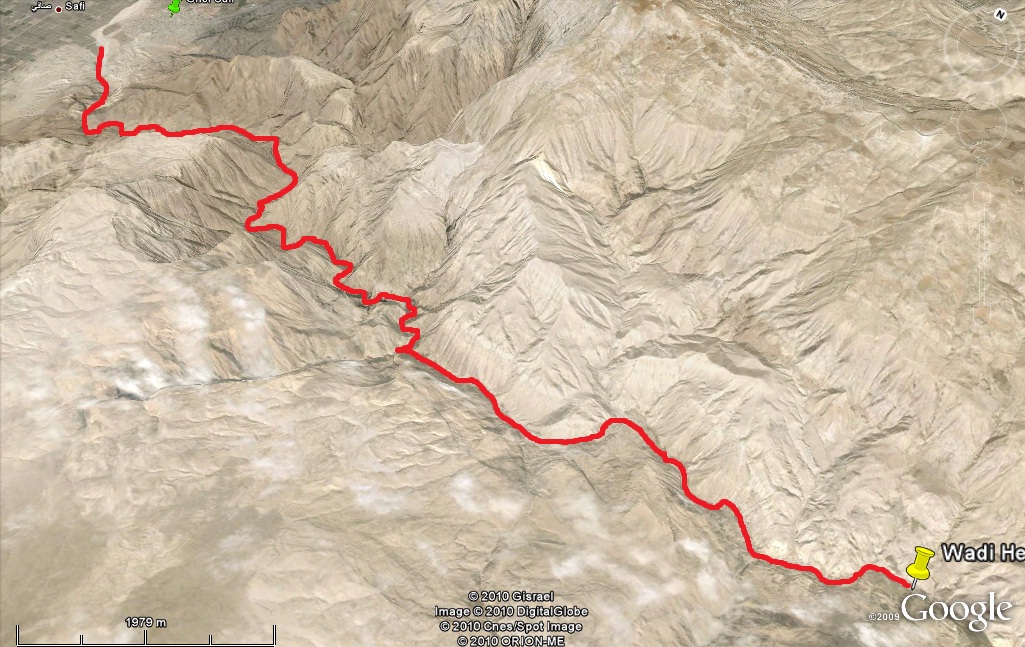
Last week, I was invited to join some friends from choir, church, and Whitman in a weekend camping and hiking trip to Wadi Hasa. I eagerly accepted, always ready to see some more of Jordan’s famous natural Wadis. Although Wadi Rum is by far the most well-known tourist wadi, the more adventurous seek the kilometers-long canyons and valleys of the “true” wadis, filled with waterfalls, palm trees, and of course the still-present and meandering river that originally carved it out millenia ago.
These wadis can of course be treacherous. Our two leaders, Ruth and Janelle, had both visited Wadi Hasa last year and carefully gave the other six of us lists of what we should bring and what we could expect. Deep water, lots of biting insects, and oatmeal. Without a water filter and iodine water purification tablets essentially impossible to find in Jordan, we’d be bringing our entire weekend water supply with us in our hiking packs.
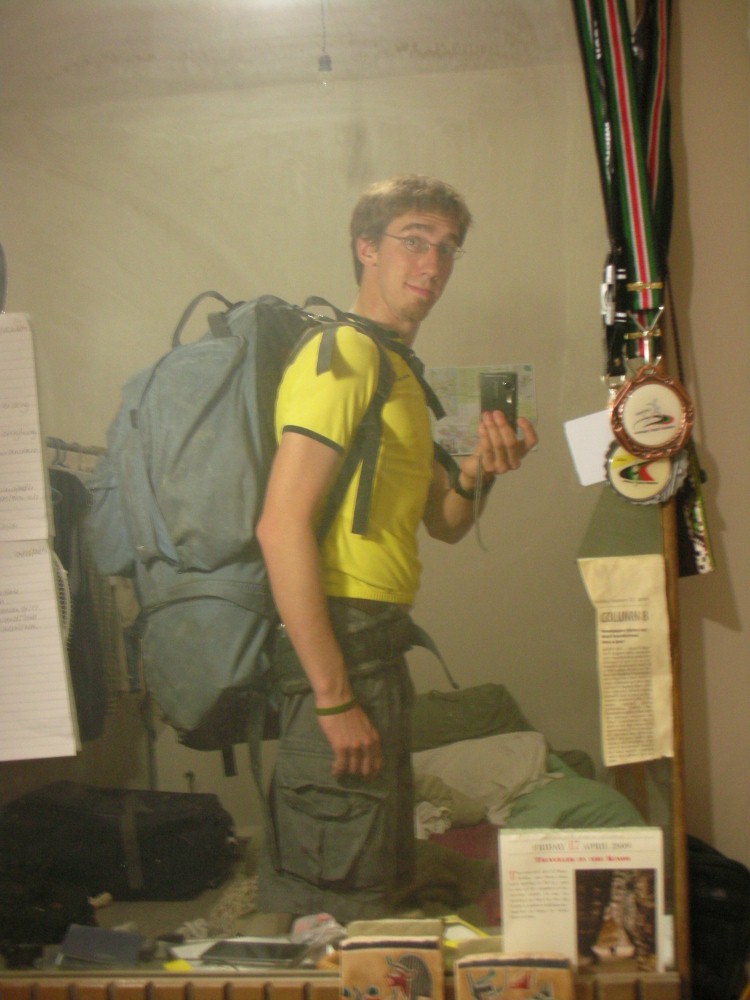
I didn’t have a hiking pack, and neither did most of us other hikers, but through our contacts throughout the expat community and the boy scouts in Whitman, we were all eventually provided with stout and sturdy hiking backpacks. In my case, double emphasis on the stout part; I had difficulty fitting through my front door when the thing was finally loaded with water, granola bars, instant coffee, and an extra set of shoes.
"He was last seen wearing a massive hiking pack and a goofy expression"
Fellow Whitman teacher Jon lives right down the street from me, so he and I met up at 6:30 in the morning on Friday, and walked the short distance to where Janelle and Ari live. He and I were the last to arrive, and came to their apartment where the others were already busily stuffing double-ziplocked bags of food and other items deep into our massive bags. Jon and I had made quite the sight walking up the street in the early morning hours. Traffic is always at almost zero on the Islamic holy day, and people stopped and stared at us with their usual gape-jaw at the two foreigners with bags almost as large as the bearers. A taxi pulled up next to us and honked about 20 times. “HEY HEY WHERE YOU GO.” Friday mornings in Amman.
Now successfully rendezvoused, the eight of us flagged down a couple nearby taxis (not the one from earlier) and were able to neatly stuff all of our huge bags into the trunks; it was like the taxis had been designed for wadi-hikers. In a few more minutes, we found ourselves outside the southernmost bus station in Amman, and grizzled men were eyeing the four women in our group and directing us raucously to get into this bus here to go to city of Karak, the first of two bus trips we’d need to take to reach the wadi’s entrance.
The bus ride took about two hours. The girls sat in the back and tried not to inadvertently show too much exposed leg to the men on the bus. Of course, we were the only foreigners on the bus. I chatted with my seatmate to pass the time – his name was Mahmoud, he was a Palestinian refugee, and he was going back to Karak for the weekend to visit his mother and father. He enjoyed looking at the wadi guidebook Janelle had brought with her, showing trails and photos of dozens of Jordan’s best wadis. He told me he’d love to do something like that himself someday, but he needed to work all the time to support his parents.
Once in Karak, we were able to quickly rent another mode of transportation to take us the rest of the way. Janelle quickly found a microbus, and negotiated a price of 35 JD for the transportation to the wadi’s head. Our driver was a cheerful young man who helped us toss our heavy packs into the back of us bus, and hummed to himself as we drove farther south through the mountains. Jon and I sat in the front seat, and the others sat smashed in the rear passenger section.
Perhaps it was my front-seat location or the fact I was wearing a bright red Jordanian keffiyeh on my head like some sort of sheikh but when we were stopped by a military checkpoint who demanded to see our passports, the driver and the two soldiers turned to me for an explanation. They wanted passports and they weren’t interested in the fact that we didn’t bring anything as valuable as our primary identification with us to get drenched in a wadi. “This has never happened before,” said Janelle from the backseat. The girls were about to try the usual tactic of “distract the Arab men by looking cutely out the window,” but I took things into my own hands. “My dear friend!” I cried to the officer. “We’re just American tourists going exploring in the wadi. These are my coworkers. I work with Iraqi refugees, to help them in their sad condition.” The officer gestured for me to exit the car, then adjusted my keffiyeh on my head, kissed me on both cheeks several times (I’ve gotten used to this sort of affection by now) and sent us on our way. Sometimes you’ve just got to play the works-with-refugees card; and I had brought business cards with me for that reason just in case.
Janelle and Ruth directed the driver to drop us off on a desolate hill next to a gravel path that led away down a hill and disappeared into reeds at the bottom. We unloaded our packs, heaved them onto our backs, and started down the hill, enjoying the surprisingly cool breeze and the bubbling sound of a creek below us.
There was a family of Tufilans at the bottom of the wadi, having a picnic under a tree. Tufila is a medium-sized city in the southern desert that has a “reputation” in Jordan as being the hillbilly province. My biking buddy Omar has a Tufila family name, and he’s always greeted with an amused smirk and chuckle from other Jordanians whenever he goes anywhere. I’d never met any authentic Tufilans, but they were all pleasant to us, shaking hands all around and inviting us to sit and have tea with us. The women in their group gazed in awe at our female hikers, noting their clothing, and greeted them with a smile (per usual cultural dictate, the men and women didn’t speak to each other).
After what we thought was a safe distance away, the girls stopped to change their clothes into something more wadi-suitable behind some rocks, but were stymied when a couple curious farmers came out of the reed fields on the other side of the river and attempted to crane their necks to peer behind the rock, as if their ears were keenly tuned to people undressing in fields.
The small creek that we had splashed through next to the Tufilans almost immediately sank down into the rocks and became what we had been looking for: Wadi Hasa. We had arrived, and now we just needed to find a way back down into it so that we could get started. We spent 15 minutes hunting around for cracks in the rocks that would allow us to drop down into the water, and Ruth finally found a sloping path through some thorn bushes that would allow us to slowly slide ourselves and our packs down into the water.
We splashed into the water at about 10:30 AM, and immediately sank up to our waists in the cold green river. Janelle and Ruth commented that it was much deeper than last year, which could probably be attributed that we were visiting a month earlier in the year than they had. The closer you visit to the flood season in early March, the higher the water is in Jordan’s wadis.
Tragedy struck after only a few minutes. Janelle went forward down the river to investigate, and leapt into a waterfall which turned out to be over 10 feet deep, far more than anything than we had ever seen in any other wadi. Ari and Jeff volunteered to climb up over some rocks above the water and hand our packs down to us, as Janelle tread water below us. I reached to my chest to unbuckle the straps holding my pack in place, and then suddenly Jon said, “uh, there goes the camera, Zach.”
Janelle had given me custody of her water-and-shock proof (wadiproof, she had jokingly termed it) camera to sate my photo-happy urges for our trip. I had strapped its case to my pack a few minutes earlier before climbing into the water, and already taken about 30 pictures during our journey and arrival. A low moan escaped my throat as I whipped my head around and watched the small green pack bob up once in the water, and then shoot off the edge of the waterfall and hit the depths below. It sank instantly and was lost from sight in the murky green water. Jon and I dove into the water to search for it, trying to fight the powerful current from the waterfall to feel for it on the ground, but it was to no use…the camera was gone and with the water like it was now, there was no chance of retrieving it.
 Back in March, before I got caught up in planning my trip to Egypt and completely lost track of my blog’s former punctuality, my dear English friend and former fellow trainer at Ayn al Basha came back to Jordan after a 6 month leave. As