
First, I have to say shame on you Vienna for not offering the ‘City Name’ Card the same way that Innsbruck and Salzburg do. Although I’ve enjoyed my time in the city and the weather has been at Jordan-levels of lovely, it’s been a lot more difficult for me to see things within the city because of the comparatively high prices. I spent the first day, poised with umbrella in hand (the forecast said rain, although it didn’t, and after being caught unaware in Salzburg, I don’t get fooled again) searching for sights to see.
Daniel was right about being over-castled, museumed, and churched in Vienna (several new words I’ve invented, I see). My hostel was only about a 10 minute walk from the edge of the old section of town, and when I reached the large main street separating the official “old” from the new, a huge statue of either Brahms or Beethoven was there to greet me. I could see several church steeples poking up through the trees and buildings ahead of me, each one of them more ornately coated with carvings than the previous, like monstrous upside down ice cream cones. I didn’t know what to see yet, or where to go, so I basically tried to find the tourist information center, just like the previous two cities, and take it from there.
Inside the center, my somewhat cross-eyed desk clerk handed me a packet of information describing the “Vienna Card.” He asked me how long I was staying in the city, and I told him it would only be for two days. “You don’t want one of these cards then,” he said. “They’ll only save you a euro per exhibit you visit. You won’t recover the cost on them unless you are visiting a lot of places.” I pondered it a moment, and told him I wanted to buy the 18 euro card because of the free transport services too. He looked at me severely (or he may have been looking behind me severely; I couldn’t quite tell). “Listen to me son, if that’s all you want, just get the Transport card for 10 euros and you can ride wherever you want.” His advice seemed sound, and it sounded like he was bored enough that he was willing to keep arguing if I objected, so I bought the Transport card and for the first time, let the city keep its odious tourist card.
With my new and extremely detailed street map in hand, I laid out my plans for the next days. There was a place called the Prater that looked interesting, an Islamic Center on the other side of the Danube river, and of course the two massive castles, the Hofburg Palace and the Schönbrunn Palace. Other than that, I figured I would play it by ear and see what I could find!
I used my new transport card to navigate the clean and well-labeled metro system northward from the old city to the Prater, in what was originally a hunt to find an open grocery store but when I saw a massive Ferris wheel over the trees, I figured that since I was in the area I would visit it (as you can probably tell, I was much more relaxed in my sightseeing now that I didn’t have a card granting me automatic free entrance everywhere). The small park linked to above is home to the world’s oldest Ferris wheel, the Riesenrad, which was built in 1897 and rebuilt after its almost total destruction during WWII. For eight euros I took a ride on it, looking out over the old city to the south and the modern skyscrapers on the north side of the Danube to the other side. The afternoon sunset was catching the glass on the Milennium City tower, almost blinding as our conglomeration of ancient spokes and hub rotated slowly for 20 minutes. I shared the cabin with an amorous young Italian couple and a half dozen American women who seemed to be quite concerned about the safety of the wheel (the Italian couple had more important things to think about, such as making out as much as possible in one corner and completely ignoring the scenery).
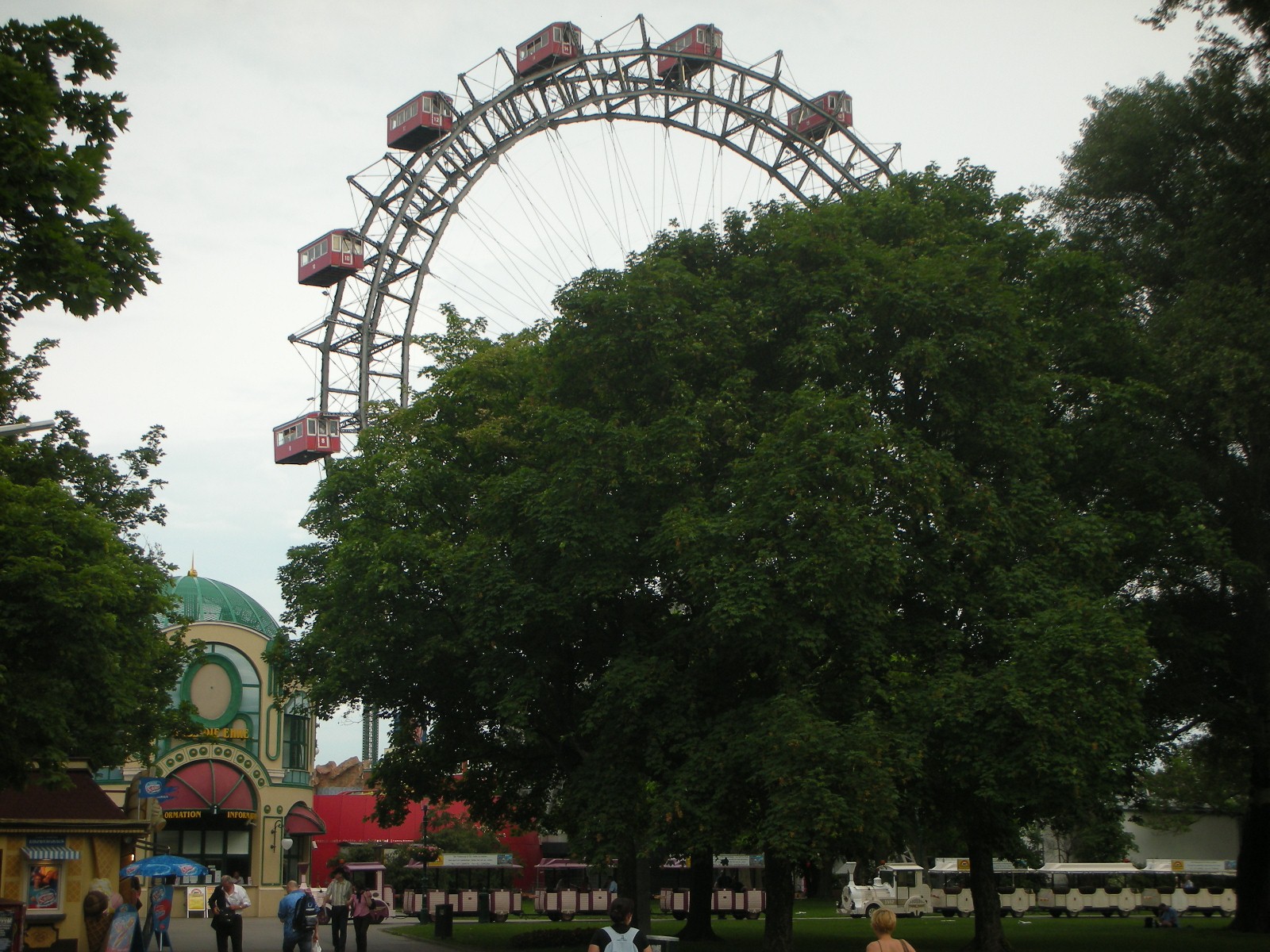
Grocery store not yet found, I settled for an expensive slice of pizza in the amusement park before heading back to the metro station and going to the Schönbrunn Palace. The station was close to the palace, but after taking a couple hours that evening touring the massive and free public gardens behind the Palace, I’m surprised the city didn’t just bite the bullet and build the station directly into the massive grounds. The palace itself had been closed for hours, but I was surrounded by tourists, joggers, and mothers with strollers enjoying the perfect weather and neatly manicured lawns of the grounds.
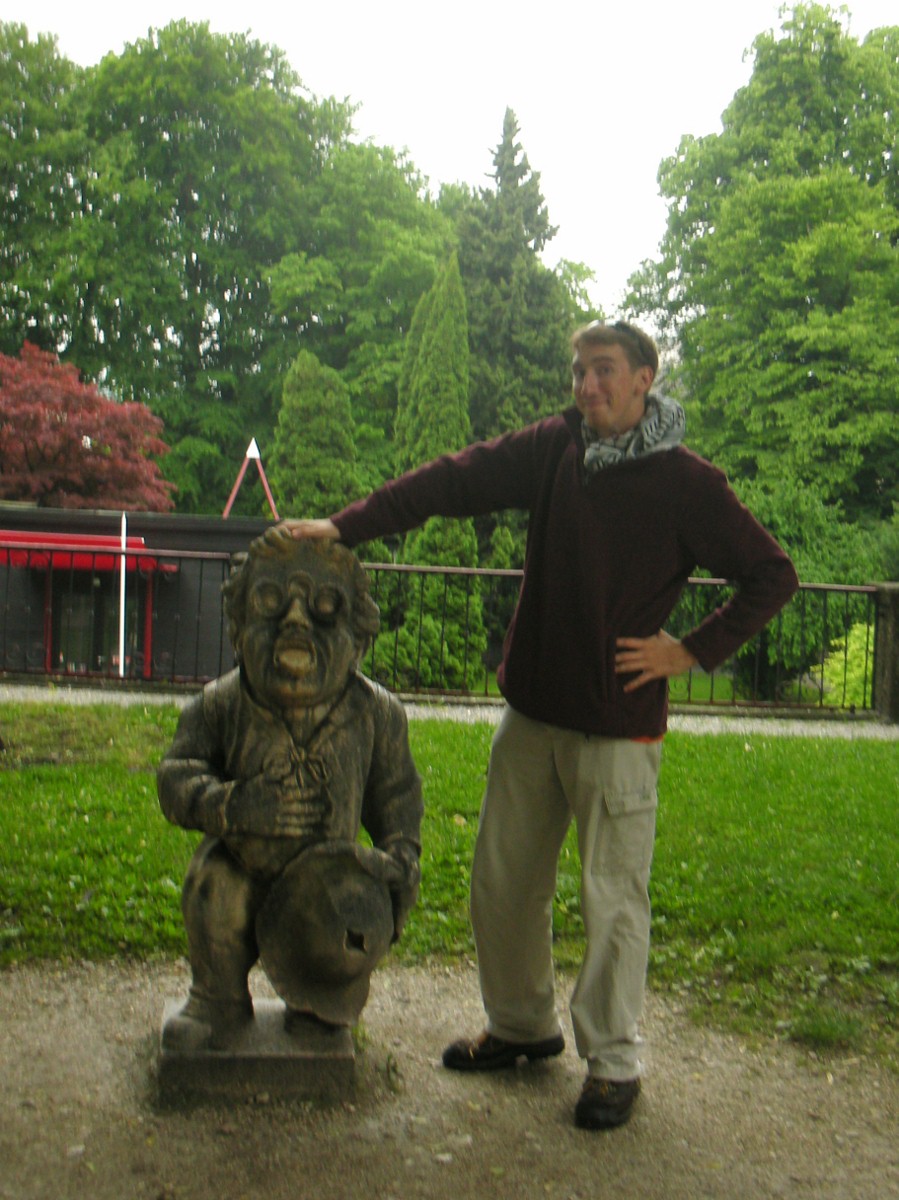
To my joy, the Wiener Philharmonic Orchestra was setting up on stage a couple hundred meters behind the church, and although tickets weren’t free to get into the seats, the speakers were large and I wasn’t the only casual tourist leaning against the fence watching the activities. It looked like only a half dozen people had actually purchased tickets and were sitting in the first ten rows, but I’m sure they were having the time of their lives. Cameras zoomed about on cables suspended over my head, and the setup crew for the stage sat on boxes near me and chatted amicably with the Austrian joggers (I assume it was amicably although of course I had no idea). The show started a few minutes after I arrived, and I stayed for 15 minutes leaning against that fence and watching them warm up, and even as I journeyed on to continue walking up the hill pictured at the top of this post, small hidden speakers all over the grounds carried their beautiful chords to my ears, iPod-less for one of the rare times in the trip.

I knew that I would be coming back again to tour the palace itself, so I made my exit via a side route from the grounds, and spent another hour trying to find a working metro line that would get me back to my hostel. It’s interesting to note that while I was in Vienna, the metro line I was using happened to break both days I was there, but while I was in Cairo two months earlier, there was nary a hitch in metro operation. I sat there in the thankfully well-ventilated train cars with dozens of other bored-looking commuters, wishing that I understood what the voices on the speakers were saying and relying on momentary descriptive kindnesses from the other passengers who saw my bafflement and explained to me that something was broken, again.
Another interesting thing I’ve noticed about all the buses and metro lines throughout Austria (and it was the same in Bavaria, too) is that all of the ticket lines are entirely unmonitored. The turnstiles at the metro entrances have had their ticket collectors removed, and the ticket boxes are just credit card/euro-handling machines that makes it very easy to go for hours of travel without ever interacting with a person. There are signs up that state that to use the metro without a ticket is subject to the choice of an 80 euro fine or an immediate arrest, but they don’t mention that this is only if they catch you. Throughout my 10 days in Austria, using buses everywhere else but the metro in Vienna, I didn’t see a single ticket checker. It was the same way on the short-ride train on the first day to go from the small Munich station to the large one – and that was the one I bought 3 extra tickets for it because I thought I had accidentally stamped the first ones too early! Waste of 7.50 euro, but oh well. I never risked it myself; leery about 80 euros or arrest and with too tight a schedule to risk either of them, but I know that other people had less qualms and got away with minor lawbreaking without a problem. I couldn’t imagine the same system being enforceable in Cairo or New York City, could you? It makes me curious as to what Austria’s mindset about this was when this idea was brought up; as it’s obvious there used to be ticket collecting machines.